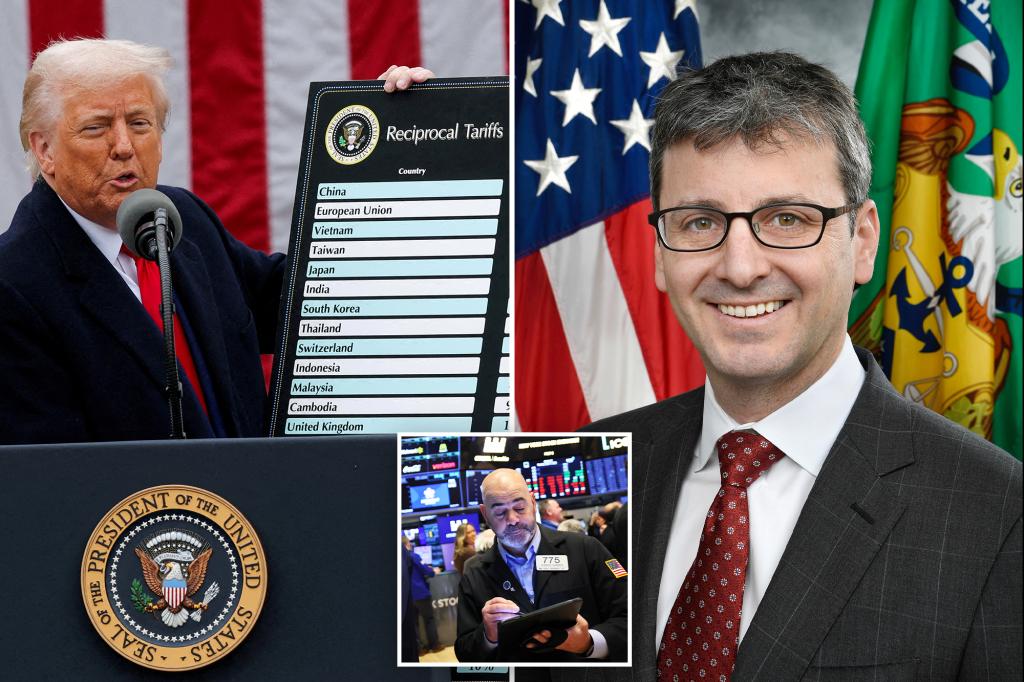
Economic Expert Reveals Surprising Misuse of His Research by Trump Administration
Renowned economist Brent Neiman has publicly expressed shock after discovering the Trump administration misused his academic research to justify controversial tariffs in 2018. The misapplication, which Neiman called “a gross oversimplification,” raises concerns about how policymakers selectively interpret economic studies to fit political agendas. The revelation emerged during a recent review of trade policy impacts.
How Neiman’s Research Was Misinterpreted
Neiman, a professor at the University of Chicago Booth School of Business, co-authored a 2016 paper analyzing how multinational corporations allocate profits across tax jurisdictions. The Trump administration repurposed his formula to claim tariffs would boost domestic employment by discouraging profit-shifting—a connection Neiman insists his work never supported.
“Our research focused on tax avoidance, not trade policy,” Neiman stated. “Applying it to justify tariffs was like using a weather forecast to predict stock prices—it’s not just wrong, it’s misleading.” Internal documents later revealed officials omitted key variables to make the data appear favorable.
The Broader Implications for Policy Integrity
This incident highlights a growing tension between academia and policymakers. A 2021 Journal of Economic Perspectives study found that 68% of economists believe their work is often misrepresented in political debates. Dr. Alicia Pierce, a Georgetown University policy analyst, noted, “When research is cherry-picked, it erodes public trust in both science and governance.”
- Selective citation: The administration cited only portions of Neiman’s model while ignoring its limitations.
- Lack of peer review: Policy decisions relied on unpublished adjustments to academic work.
- Economic fallout: The tariffs ultimately cost U.S. businesses $46 billion in 2019 alone (U.S. International Trade Commission data).
Defending the Administration’s Approach
Former trade advisor Peter Navarro defended the policy, arguing, “All administrations adapt research to real-world scenarios. The core insight—that incentives matter—was valid.” However, MIT economist David Autor countered, “Adaptation isn’t the issue. Fabrication is.”
Proponents of the tariffs point to short-term boosts in manufacturing jobs, but Census Bureau data shows those gains were offset by losses in agriculture and retail due to retaliatory tariffs.
Moving Forward: Safeguards and Transparency
Neiman has called for stricter disclosure rules when research informs policy. “If officials had consulted us, we’d have flagged the errors,” he said. Proposed reforms include:
- Mandatory peer review for studies used in major policies
- Public archives of methodological adjustments
- Penalties for deliberate misrepresentation
The Long-Term Impact on Economic Discourse
This case underscores the vulnerability of academic work in polarized climates. As think tanks and lawmakers increasingly commission “bespoke research,” experts warn of a slippery slope toward policy-driven evidence rather than evidence-driven policy.
“The stakes are higher than one tariff,” said Dr. Pierce. “When research becomes a political football, everyone loses.” For citizens, the takeaway is clear: scrutinize the footnotes behind bold policy claims.
Want to stay informed on how research shapes policy? Subscribe to our newsletter for expert analysis on the intersection of academia and government.
See more CCTV News Daily