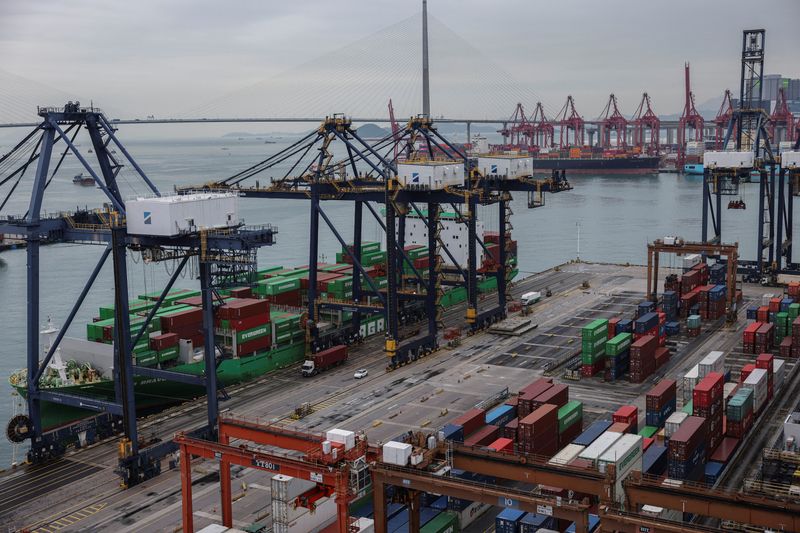
China Advocates for Tariff Repeal to Resolve US Trade Tensions
In a strategic push to de-escalate longstanding trade conflicts, China has formally urged the United States to abolish punitive tariffs imposed during the Trump administration. The appeal, made during bilateral talks this week, marks a potential turning point in the trade war that has strained economic relations since 2018. Analysts suggest the move could pave the way for renewed cooperation amid global economic uncertainty.
Background: The US-China Trade War and Its Economic Toll
The US-China trade war began in 2018 when the Trump administration levied tariffs on $360 billion worth of Chinese goods, citing unfair trade practices and intellectual property theft. China retaliated with tariffs on $110 billion in US exports, triggering a cycle of escalation that disrupted global supply chains and slowed growth. Key impacts include:
- GDP Slowdown: The IMF estimates the conflict reduced global GDP by 0.8% in 2019 alone.
- Supply Chain Disruptions: Industries from electronics to agriculture faced higher costs and delays.
- Consumer Prices: US tariffs added an average 3.4% to import costs, per the Federal Reserve.
Despite a 2020 Phase One trade deal, tariffs remained largely intact. China’s latest proposal signals a shift toward compromise. “Both economies are feeling the pinch of inflation and sluggish demand,” says Dr. Lin Wei, a trade economist at Peking University. “Repealing tariffs could be a win-win.”
China’s Rationale: Economic Recovery and Global Pressures
Beijing’s push aligns with its broader economic stabilization efforts. With China’s Q2 2023 GDP growth at 6.3%—below projections—officials seek to revive export sectors hampered by US tariffs. Meanwhile, the Biden administration faces domestic pressure to curb inflation, which tariff rollbacks could address. Key arguments from China include:
- Inflation Relief: The Peterson Institute estimates repealing tariffs could reduce US inflation by 1.3%.
- Supply Chain Resilience: Lower trade barriers might ease semiconductor and manufacturing bottlenecks.
However, skepticism persists. “Tariffs are leverage, not just costs,” argues former US Trade Representative Robert Lighthizer. “The US shouldn’t concede without structural reforms from China.”
US Response: Balancing Politics and Pragmatism
The Biden administration has yet to commit to China’s proposal. While some officials advocate tariff relief to combat inflation, others warn against premature concessions. Notably:
- Bipartisan Resistance: Lawmakers from both parties oppose easing tariffs without addressing China’s subsidies and IP policies.
- Strategic Industries: Tariffs on tech-related imports (e.g., semiconductors) are likely to stay for national security reasons.
Commerce Secretary Gina Raimondo recently stated, “We’ll consider adjustments where they benefit American workers and industries.” Experts suggest targeted repeals—such as on consumer goods—could emerge as a middle ground.
Global Implications: A Test for Multilateral Trade
The outcome could reverberate beyond bilateral relations. The EU and ASEAN nations, which rely on stable US-China trade flows, have cautiously endorsed dialogue. “A détente would boost investor confidence worldwide,” notes WTO Director-General Ngozi Okonjo-Iweala. Conversely, prolonged tensions risk fragmenting global trade into competing blocs.
What’s Next? Scenarios for Resolution
Observers outline three potential paths forward:
- Partial Tariff Rollback: The US lifts select tariffs in exchange for Chinese purchases of US goods.
- New Negotiations: Both parties revisit the Phase One deal’s unfulfilled commitments.
- Status Quo: Political hurdles stall progress, prolonging economic friction.
With the 2024 US election looming, timing is critical. “The window for compromise is narrow,” warns Brookings Institution analyst David Dollar. “Delays could harden positions indefinitely.”
Conclusion: A Pivotal Moment for US-China Relations
China’s tariff repeal appeal underscores the high stakes of the trade war’s next phase. While economic logic favors de-escalation, geopolitical rivalries and domestic politics complicate the path forward. Businesses and policymakers worldwide should prepare for both breakthroughs and setbacks. For actionable insights, subscribe to our trade policy newsletter for ongoing analysis.
See more CCTV News Daily