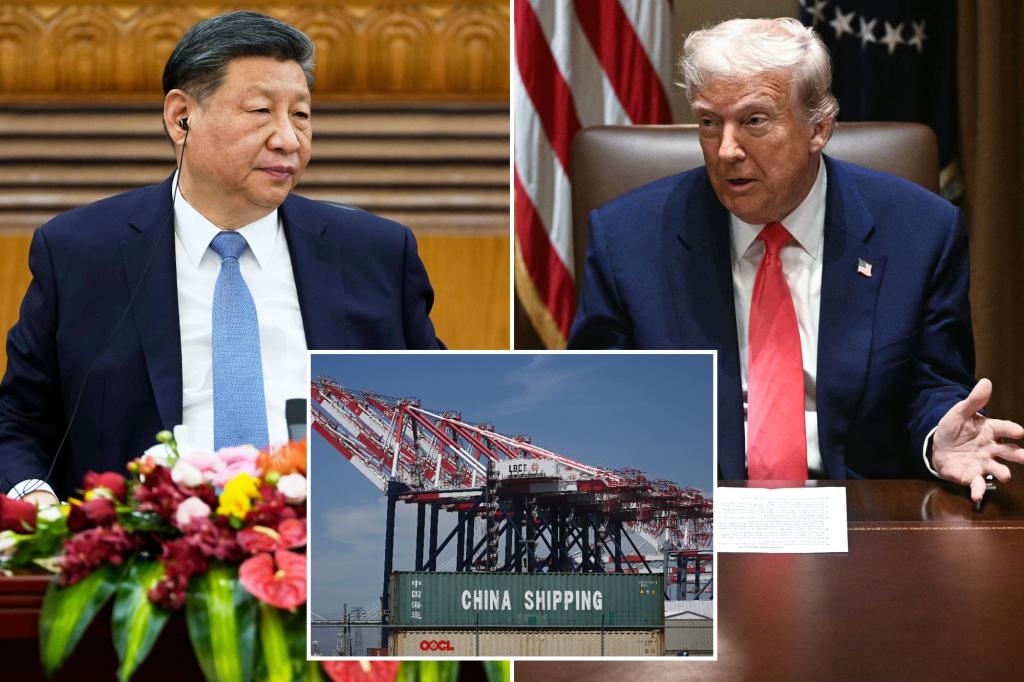
China Escalates Trade Tensions with Dramatic Tariff Increase on U.S. Goods
In a sharp escalation of trade hostilities, China has raised tariffs on $18 billion worth of U.S. imports from 84% to 125%, effective immediately. The move, announced by China’s Ministry of Finance on Monday, targets key American exports including electric vehicles, semiconductors, and agricultural products. This retaliatory measure responds to recent U.S. restrictions on Chinese technology and is expected to disrupt global supply chains while triggering market volatility.
Immediate Impact on Global Markets
Financial markets reacted swiftly to the news, with Asian stocks dipping 1.8% and U.S. futures falling sharply in overnight trading. The tariff hike particularly affects industries already strained by pandemic-era disruptions:
- Automotive sector: EV imports face 125% duties, up from 25% in 2023
- Technology: Semiconductor tariffs doubled to 100%
- Agriculture: Soybean levies increased to 90%, threatening $12 billion in annual trade
“This isn’t just a trade skirmish anymore—it’s becoming a full-scale economic confrontation,” said Dr. Lin Wei, senior economist at the Beijing Institute of International Trade. “The 41-percentage-point jump represents China’s most aggressive move since the 2018 trade war.”
Roots of the Escalation
The tariff surge follows months of mounting tensions. In April, the U.S. imposed sweeping bans on Chinese AI technology exports and increased steel tariffs to 25%. China’s Commerce Ministry called those measures “economic coercion” in a 2,300-word white paper released last week.
Historical context reveals a troubling pattern:
- 2018: Initial U.S.-China trade war begins with $34 billion in reciprocal tariffs
- 2020: Phase One deal temporarily reduces tensions
- 2023: Tech restrictions reignite conflicts
Professor Michael Tan at Georgetown University notes, “Both nations are playing high-stakes poker with the global economy. China’s latest move suggests they’re willing to absorb short-term pain for long-term strategic positioning.”
Industry-Specific Consequences
Automakers Face Existential Challenges
The automotive sector braces for seismic shifts. Tesla’s Shanghai Gigafactory, which exports 30% of its production globally, may need to completely restructure its operations. Meanwhile, Chinese EV makers like BYD could gain domestic market share but lose crucial export opportunities.
Key data points:
- U.S. EV imports to China totaled $1.4 billion in 2023
- Analysts predict 60% drop in American auto part exports
- European manufacturers scramble to avoid collateral damage
Tech Sector Braces for Supply Chain Disruptions
Semiconductor manufacturers face particularly acute challenges. The 100% tariff on chips comes as the industry already struggles with:
- A global chip shortage dating to 2021
- TSMC delaying Arizona plant openings
- Memory chip prices rising 18% year-to-date
“This could set back 5G rollout timelines by 12-18 months globally,” warned Sanjay Patel, CTO of a major telecom equipment provider. “When two tech superpowers clash, everyone gets hit with shrapnel.”
Political and Diplomatic Fallout
The White House has promised “proportionate countermeasures” within 48 hours. Observers speculate these may include:
- Expanding export controls on quantum computing
- Restricting Chinese access to cloud computing infrastructure
- Accelerating reshoring incentives for critical industries
Meanwhile, the EU finds itself in a delicate position. “Europe must navigate between protecting its own industries and avoiding alignment with either bloc,” said Brussels-based trade analyst Clara Mertens. “The middle ground is shrinking daily.”
Long-Term Economic Projections
Economic models suggest concerning scenarios if tensions persist:
- Global GDP growth could slow by 0.8% in 2025
- Inflation may spike another 2-3% in developed nations
- Supply chain diversification could cost corporations $1.2 trillion
However, some analysts see potential silver linings. “This acceleration may force both nations back to the negotiating table faster,” suggested former USTR negotiator James Fowler. “Sometimes you need to hit the iceberg before changing course.”
What Comes Next in the Trade Standoff?
As the situation develops, businesses should prepare for several likely developments:
- Immediate commodity price volatility, especially in tech and agriculture
- Increased scrutiny of multinational supply chains
- Potential secondary sanctions affecting third-party nations
The coming weeks will prove critical as both economic superpowers test each other’s resolve. With midterm elections approaching in the U.S. and China’s Fifth Plenum scheduled for October, political calculations may drive further escalation before any de-escalation occurs.
For continuous coverage on how these tariffs affect specific industries, subscribe to our trade policy newsletter.
See more CCTV News Daily