China Responds to UK-US Trade Agreement: Decoding the ‘Poison Pill’ Clauses
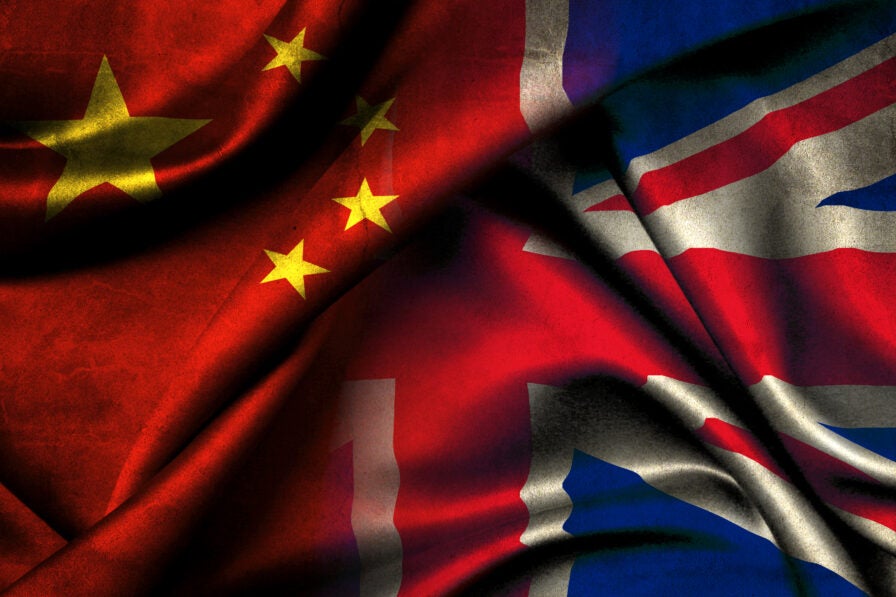
China has sharply criticized the newly signed UK-US trade agreement, accusing it of containing “poison pill” clauses designed to undermine its economic and geopolitical interests. The deal, finalized in late June 2024, includes provisions that could restrict trade with nations labeled as “non-market economies”—a clear reference to China. Analysts warn these measures may escalate global trade tensions and reshape supply chains.
What Are the Controversial ‘Poison Pill’ Clauses?
The agreement’s most contentious elements include:
- Market Economy Exclusion: Allows either party to terminate preferential terms if the other engages in significant trade with “non-market economies” (a term often applied to China).
- Supply Chain Restrictions: Imposes hurdles on sourcing critical materials from certain countries, particularly in tech and green energy sectors.
- Data Localization Rules: Limits cross-border data flows to nations deemed security risks, affecting cloud computing and digital trade.
“These clauses are clearly targeted at China,” says Dr. Lin Wei, a trade policy expert at Peking University. “They represent a new form of economic containment disguised as trade rules.”
China’s Strong Reaction and Countermeasures
Within 48 hours of the agreement’s announcement, China’s Commerce Ministry issued a statement calling the provisions “discriminatory” and “a violation of WTO principles.” Officials hinted at potential retaliatory actions, including:
- Accelerated anti-dumping investigations against UK and US goods
- Revised investment screening for Western companies
- Fast-tracking trade deals with alternative partners
Trade data underscores the stakes: China accounts for 13% of UK imports (£63 billion annually) and 18% of US imports ($536 billion in 2023). Any disruption could ripple through global markets.
Global Trade Implications: Beyond the UK-US-China Triangle
The agreement’s ripple effects extend far beyond the immediate parties:
- EU Concerns: Brussels worries similar clauses might appear in future US deals, complicating Europe’s China policy.
- ASEAN Opportunities: Southeast Asian nations may benefit as companies diversify supply chains away from China.
- WTO Challenges: Legal experts predict disputes over whether the clauses violate most-favored-nation treatment rules.
“This isn’t just about trade—it’s about writing the rulebook for 21st-century economic blocs,” notes Georgetown University professor Mark Harrison. “The risk is fragmenting the global system into competing spheres.”
Historical Context: Trade Wars Then and Now
The current tensions echo but differ from past conflicts:
| Conflict | Peak Tariffs | Resolution |
|---|---|---|
| 1980s US-Japan Auto Wars | 100% on select models | Voluntary export restraints |
| 2018 US-China Trade War | 25% on $370B goods | Phase One deal (2020) |
| 2024 UK-US-China Clauses | Non-tariff barriers | Ongoing |
Unlike straightforward tariff wars, these “poison pill” measures create structural barriers that may prove harder to negotiate away.
What Comes Next? Three Likely Scenarios
Industry analysts outline potential developments:
- Limited De-escalation (40% probability): China moderates response to avoid isolating Western investors while seeking WTO mediation.
- Regional Bloc Formation (35%): Accelerated growth of China-led trade networks like RCEP versus Western-aligned groups.
- Tech Decoupling (25%): Full separation in critical sectors like semiconductors, with parallel supply chains emerging.
The Bank of International Settlements warns scenario #3 could reduce global GDP growth by 1.2% annually through 2030.
Expert Takeaways for Businesses and Policymakers
As tensions simmer, stakeholders should:
- Diversify supply chains beyond single regions
- Increase compliance teams to navigate complex rules
- Engage in policy consultations to shape future agreements
“Companies must become ‘bilingual’—understanding both Western and Chinese trade rulebooks,” advises former USTR negotiator Claire Davidson. “There won’t be one global system anymore.”
For ongoing coverage of this developing story, subscribe to our trade policy newsletter or follow our expert analysis on LinkedIn. The next 6-12 months will prove decisive in determining whether these “poison pills” become standard in trade deals or face successful pushback.
See more CCTV News Daily