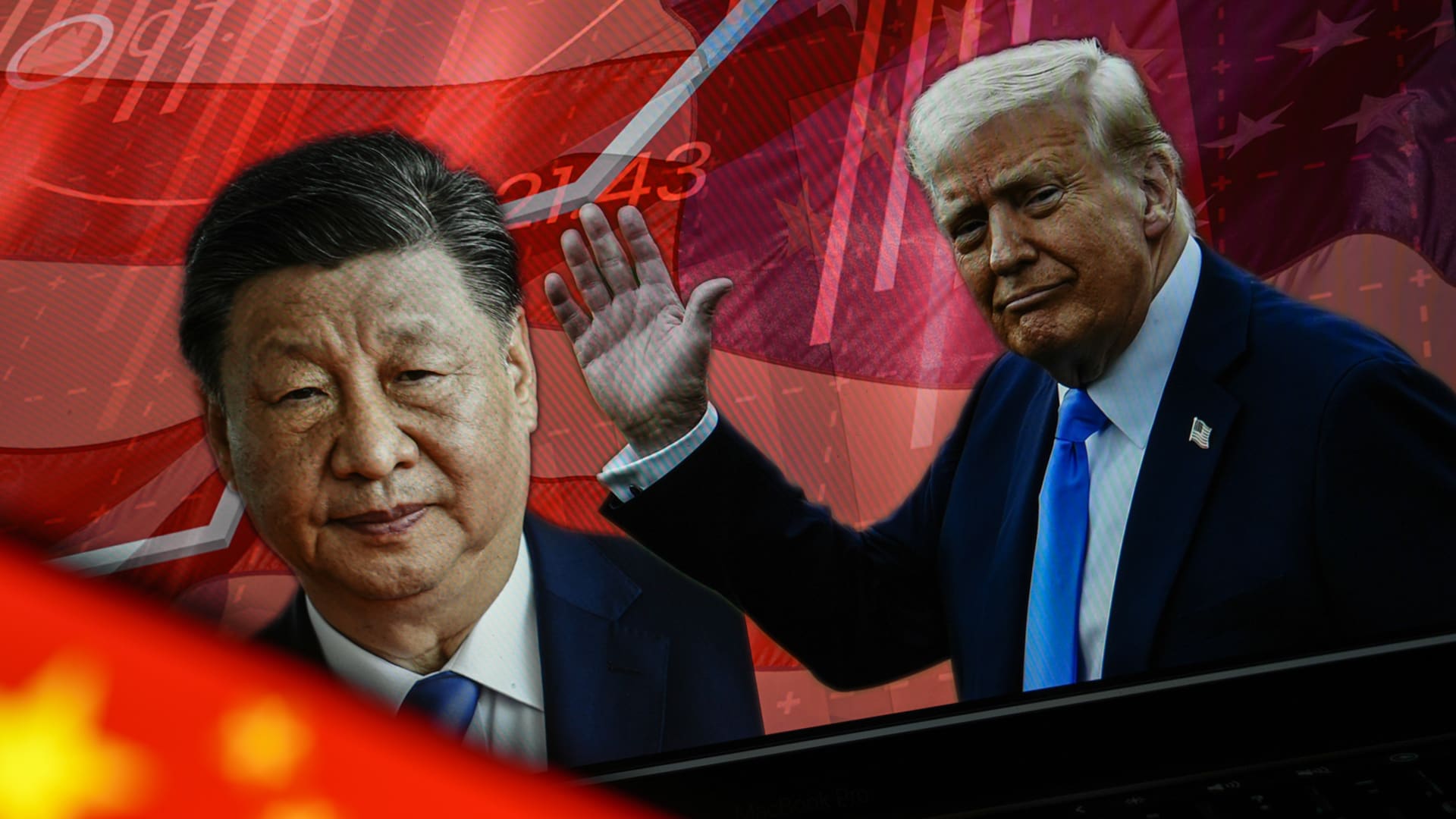
China Strikes Back: Targeting U.S. Services Amidst Escalating Tariff Tensions
In a calculated retaliation against recent U.S. tariff increases, China has announced sweeping measures targeting American service sectors, dismissing Washington’s trade policies as “meaningless.” The move, confirmed by Chinese trade officials on Tuesday, marks a significant escalation in the ongoing economic conflict between the world’s two largest economies. Analysts warn this strategic pivot toward services—including finance, logistics, and technology—could disrupt global supply chains and intensify geopolitical friction.
The Strategic Shift from Goods to Services
China’s latest countermeasures represent a departure from traditional tariff wars focused on manufactured goods. Instead, Beijing is leveraging its massive consumer market to pressure U.S. service providers, which accounted for $58 billion in exports to China last year. The targeted sectors include:
- Financial services (investment banking, insurance)
- Cloud computing and data infrastructure
- Logistics and maritime operations
- Entertainment and intellectual property licensing
“This is economic jiu-jitsu,” remarked Dr. Lina Wong, trade policy fellow at the Hong Kong Institute of Economics. “By redirecting pressure to America’s high-value service exports, China exposes vulnerabilities in sectors where the U.S. maintains a competitive edge.”
Economic Impact and Immediate Consequences
Preliminary estimates suggest the measures could affect over 1,200 U.S. firms operating in China, with particular impact on Wall Street giants and Silicon Valley tech firms. Data from the U.S.-China Business Council reveals:
- U.S. financial services exports to China grew 18% annually since 2020
- American cloud providers control 65% of China’s cross-border data services
- Entertainment royalties from China represent 12% of Hollywood’s global licensing revenue
J.P. Morgan and Visa saw immediate 3-5% stock dips following the announcement. Meanwhile, Chinese regulators delayed approval for three pending Disney film releases, signaling potential cultural sector repercussions.
Political Calculus Behind the Move
Observers note the timing coincides with heightened U.S. election rhetoric on China. “Beijing is demonstrating it can inflict pain without firing a single tariff,” said former U.S. trade negotiator Robert Ellison. “Targeting services hits corporate America where it hurts—quarterly earnings calls.”
Chinese state media framed the action as a “proportionate response” to what they characterize as U.S. economic bullying. However, Commerce Ministry spokesperson Wang Xin emphasized China remains “open to dialogue,” provided Washington shows “equal respect.”
Global Supply Chain Implications
The service sector offensive introduces new complexities for multinational corporations:
- Tech firms may face data localization requirements
- Financial institutions could encounter delayed licensing approvals
- Shipping companies might see port clearance times increase
Supply chain analyst Maria Gutierrez warns: “When you disrupt the invisible infrastructure of global trade—the banking, logistics, and data flows—the ripple effects dwarf traditional tariff impacts.”
Expert Perspectives on the Escalation
Opinions diverge on China’s strategic endgame. Harvard economist Dr. James Wilcox suggests: “This is calibrated pressure—enough to get corporate America lobbying Washington, but not so severe it triggers capital flight from China.”
Conversely, Atlantic Council fellow Li Wei sees darker implications: “The service sector has fewer WTO protections than goods trade. China may be testing how far it can push before facing unified Western response.”
What Comes Next in the Trade Standoff
Market watchers anticipate several potential developments:
- Possible U.S. countermeasures targeting Chinese fintech firms
- Increased EU mediation efforts to prevent global trade fragmentation
- Corporate boardrooms reevaluating China market exposure
The Biden administration faces pressure to respond without further destabilizing economic relations. As Treasury Secretary Janet Yellen cautioned last month: “We risk entering a spiral where both economies lose.”
For businesses caught in the crossfire, the advice is clear: diversify supply chains, accelerate local partnerships, and prepare for prolonged uncertainty. Those seeking deeper analysis can access our interactive trade war timeline tracking all major developments since 2018.
See more CCTV News Daily