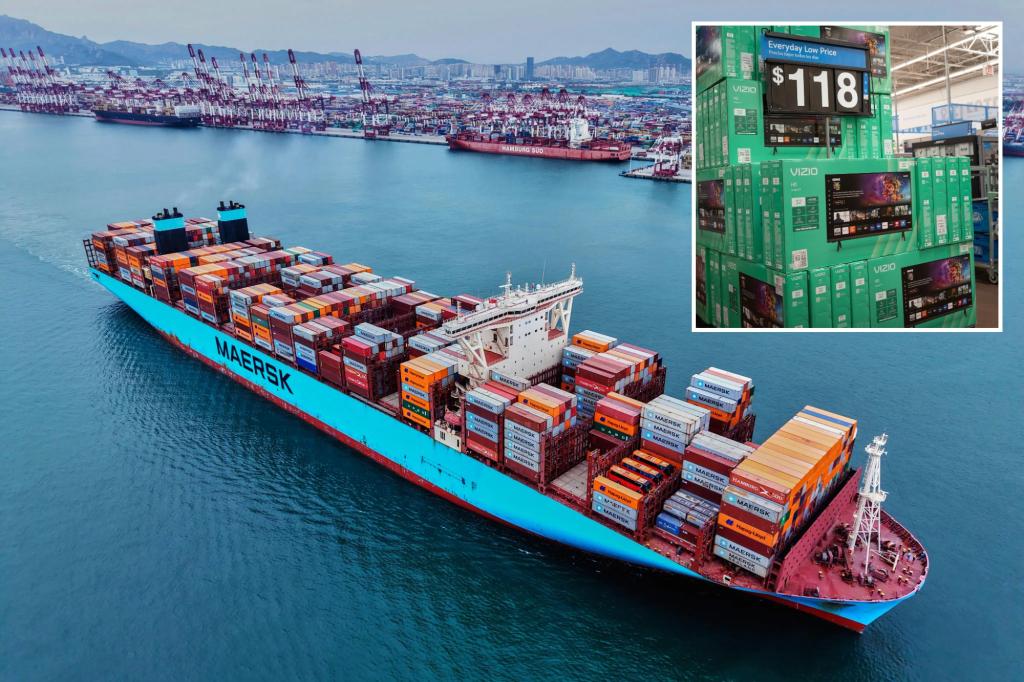
U.S. Slashes ‘De Minimis’ Tariff on Chinese Imports: Trade Implications
In a major trade policy shift, the Biden administration announced on July 12, 2024, that it will reduce the “de minimis” tariff threshold for Chinese imports from 120% to 54%, effective September 1. The move aims to curb tariff evasion and level the playing field for U.S. manufacturers while potentially raising costs for e-commerce consumers reliant on cheap Chinese goods.
Understanding the ‘De Minimis’ Threshold Change
The de minimis rule allows imported goods valued below a set threshold to enter the U.S. duty-free. Previously, shipments under $800 avoided tariffs—a policy critics argue China exploited by splitting large orders into smaller parcels. The new 54% rate applies to Chinese goods specifically, marking the first country-specific adjustment to de minimis rules since 2016.
- Previous threshold: 120% of fair value (averaging $800 per shipment)
- New threshold: 54% of fair value (estimated $350–$450 per shipment)
- Affected imports: 685 million Chinese packages entered the U.S. duty-free in 2023
Why the U.S. Is Targeting Chinese Imports
The Treasury Department cited a 300% surge in de minimis shipments from China since 2018, with e-commerce platforms like Temu and Shein accounting for 60% of such imports. “This isn’t about small purchases—it’s about systemic loopholes,” said trade analyst Miranda Cheng of the Peterson Institute. “Chinese sellers were gaming the system by undervaluing bulk orders.”
Data from U.S. Customs supports this claim: • 92% of de minimis imports from China were commercial shipments disguised as personal purchases • Estimated $12 billion in lost tariff revenue annually
Mixed Reactions From Businesses and Economists
U.S. manufacturers applauded the decision. “This corrects a distortion that put American factories at a $10/hour labor disadvantage,” said National Association of Manufacturers CEO Jay Timmons. However, small businesses voiced concerns. Sarah Lin, owner of an Ohio gift shop, warned, “My suppliers say prices on AliExpress could jump 20%—that’ll hurt margins.”
Economists are divided on the consumer impact: • Pro: Brookings Institution projects 2-3% price increases on affected goods • Con: J.P. Morgan analysis suggests possible 8% inflation on fast-fashion items
Geopolitical Context and China’s Response
The move coincides with heightened U.S.-China tensions over electric vehicles and semiconductors. Beijing called the tariff adjustment “discriminatory,” threatening to challenge it at the WTO. Meanwhile, the European Union is reportedly considering similar de minimis reforms targeting China.
What’s Next for Trade and Consumers?
Industry experts anticipate three key developments:
- Short-term delivery delays as logistics firms adapt to new customs checks
- Shift in sourcing to Vietnam and Mexico for sub-$500 shipments
- Potential legislation to make de minimis thresholds inflation-adjusted
As the September 1 implementation date approaches, businesses are urged to audit their supply chains. “Importers should run cost scenarios now,” advised trade attorney David Wilkins. “The days of frictionless micro-shipments from China are ending.”
For ongoing updates on trade policy changes, subscribe to our daily briefing.
See more CCTV News Daily