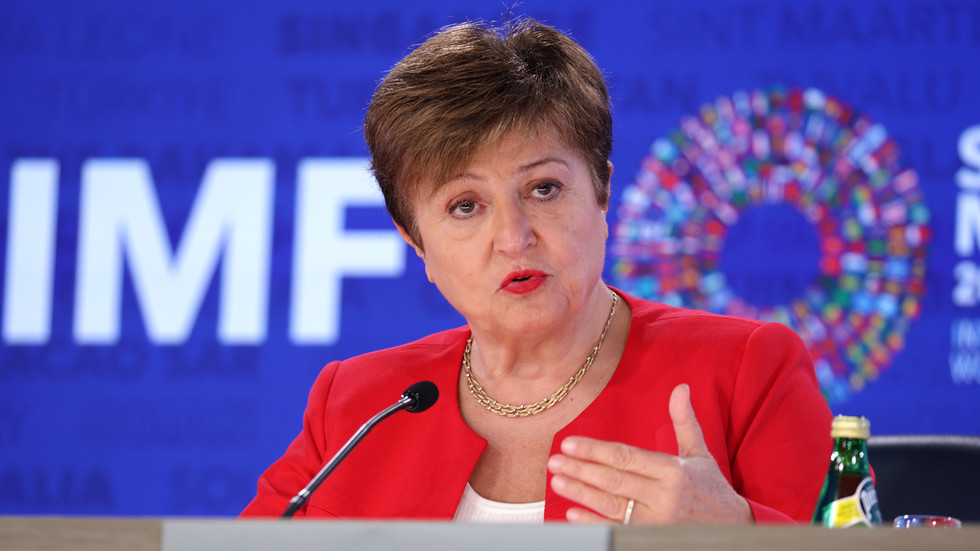
IMF Sounds Alarm: What’s Next for the Global Economy?
The International Monetary Fund (IMF) has issued a stark warning about mounting risks to the global economy, citing geopolitical tensions, persistent inflation, and financial instability as critical threats. In its latest report released this week, the IMF highlighted slowing growth projections for 2024, urging policymakers to brace for potential shocks. Here’s what this means for businesses, governments, and everyday citizens.
Geopolitical Tensions and Economic Fragility
The IMF’s report underscores how escalating conflicts, such as the war in Ukraine and rising U.S.-China trade frictions, are disrupting supply chains and fueling uncertainty. Global trade growth is projected to slow to just 2.4% this year, down from 5.1% in 2022. “Geopolitical fragmentation could erase up to 7% of global GDP in the long term if left unchecked,” warned IMF Chief Economist Pierre-Olivier Gourinchas.
Emerging markets are particularly vulnerable. Countries reliant on energy imports, like India and Turkey, face soaring costs, while export-driven economies grapple with weakening demand. “The ripple effects are undeniable,” said Dr. Elena Rodriguez, a senior economist at the Brookings Institution. “Smaller economies risk being caught in the crossfire of great-power rivalries.”
Inflation and the Tightrope of Monetary Policy
Despite aggressive interest rate hikes by central banks, inflation remains stubbornly high in many regions. The IMF predicts global inflation will hover at 6.6% in 2023, well above pre-pandemic levels. While the U.S. Federal Reserve and European Central Bank signal further tightening, experts caution against overcorrection.
- U.S. inflation: Stuck at 4.9% year-over-year, far from the Fed’s 2% target.
- Eurozone struggles: Core inflation hit a record 5.7% in March.
- Developing nations: Currency depreciations exacerbate food and fuel crises.
“Central banks are walking a tightrope,” noted financial analyst Mark Thompson. “Raise rates too much, and you trigger a recession; hold back, and inflation becomes entrenched.”
Debt Crises Loom as Growth Slows
The IMF slashed its 2023 global growth forecast to 2.8%, citing weaker manufacturing output and reduced consumer spending. Meanwhile, public debt has surged to 92% of GDP in advanced economies—a post-World War II high. Low-income nations, already strained by pandemic-era borrowing, now face crushing repayment burdens.
Ghana and Zambia have already defaulted, and the IMF warns that 60% of low-income countries are at risk of debt distress. “Without coordinated relief efforts, we’ll see a cascade of defaults,” said Rachel Ngoma, a debt specialist at Oxfam. “This isn’t just an economic crisis—it’s a humanitarian one.”
Divergent Recovery Paths
While the U.S. shows resilience, Europe teeters near recession, and China’s rebound falters. The IMF revised China’s growth outlook downward to 5.2%, citing weak consumer confidence and a property sector crisis. In contrast, India remains a bright spot, with growth expected to hit 6.1%.
“The world is splitting into haves and have-nots,” observed economist David Chen. “Countries with strong domestic demand, like India and Indonesia, are weathering the storm better than export-dependent ones.”
What’s Next? Policy Recommendations and Future Risks
The IMF calls for multilateral cooperation to address trade barriers, climate financing, and debt relief. Key proposals include:
- Strengthening global safety nets: Expanding IMF lending capacity for vulnerable nations.
- Targeted fiscal support: Subsidies for low-income households to mitigate inflation pain.
- Green investments: Accelerating renewable energy projects to reduce oil dependence.
Yet, political gridlock threatens progress. With U.S.-China relations deteriorating and populism rising in Europe, the path forward is fraught. “Policymakers must choose between short-term fixes and long-term stability,” Gourinchas emphasized.
The IMF’s warning is a wake-up call. Businesses should diversify supply chains, investors must brace for volatility, and governments need contingency plans. While recession isn’t inevitable, preparedness is key. For actionable insights, follow our ongoing coverage of global economic trends or consult the IMF’s full report for detailed analysis.
As the world grapples with overlapping crises, one truth emerges: In an interconnected economy, no nation is an island. The choices made today will shape the recovery—or unravel it.
See more CCTV News Daily