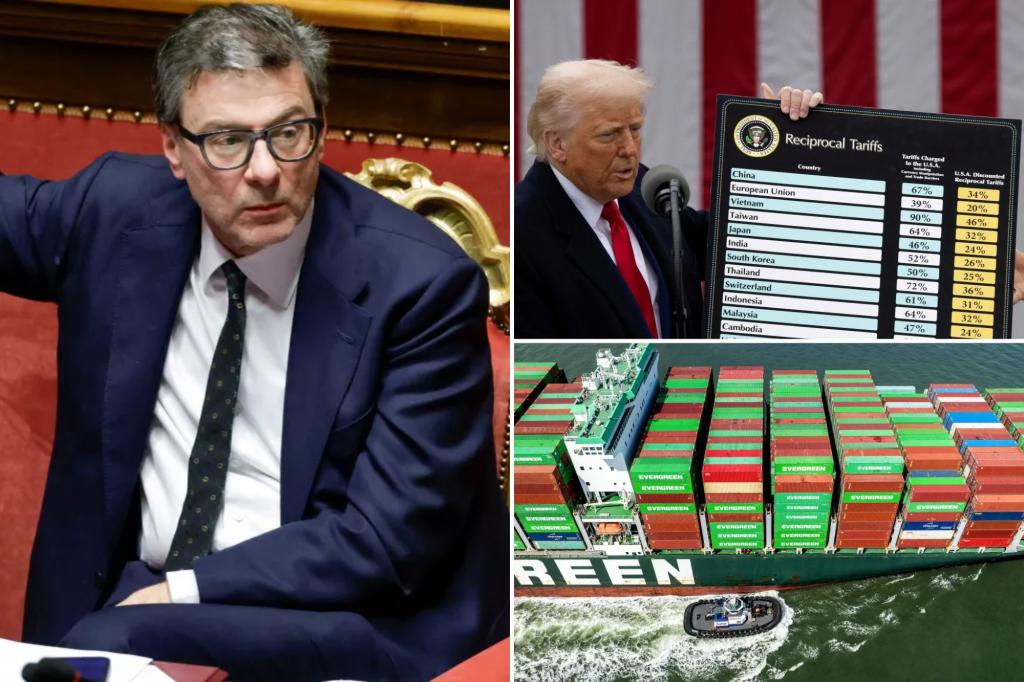
Italy’s Caution: The Risk of Retaliatory Tariffs on the US and Call for Fiscal Flexibility
Italy has warned against imposing retaliatory tariffs on the United States amid escalating trade tensions, urging the European Union to prioritize fiscal flexibility to safeguard economic stability. The caution comes as the EU weighs responses to recent U.S. trade policies that could disproportionately affect Italian industries. Italian officials argue that countermeasures could backfire, exacerbating inflation and supply chain disruptions. Rome is pushing for diplomatic solutions and adaptive budget policies to navigate the brewing trade storm.
Escalating Trade Tensions Between the EU and US
The friction stems from recent U.S. tariffs on steel and aluminum imports, which have hit European producers hard. Italy, a major exporter of luxury goods, automotive parts, and agricultural products, fears retaliatory measures could trigger a damaging trade war. According to the Italian Trade Agency, U.S.-Italy bilateral trade reached $73 billion in 2022, with Italy running a $32 billion surplus.
“Retaliatory tariffs might seem like a strong response, but they risk hurting our exporters more than they help,” said Marco Bellandi, an economist at Bocconi University. “The U.S. market is critical for Italian fashion, machinery, and food products—any disruption could cost thousands of jobs.”
Key sectors at risk:
- Luxury goods: The U.S. accounts for 30% of Italian luxury exports.
- Automotive: Ferrari, Lamborghini, and Ducati rely heavily on American buyers.
- Agriculture: Parmesan cheese and Prosecco face potential tariffs of up to 25%.
Italy’s Push for Fiscal Flexibility
Prime Minister Giorgia Meloni’s government is advocating for relaxed EU budget rules to mitigate economic fallout. Italy’s debt-to-GDP ratio, already at 144%, limits its ability to cushion trade shocks without breaching EU fiscal targets. Rome proposes temporary exemptions to fund industry support programs and tax incentives for affected businesses.
“We need room to maneuver,” stated Finance Minister Giancarlo Giorgetti. “Strict austerity now would strangle growth. Flexibility is not a luxury—it’s a necessity.”
However, EU Commission economists caution that unchecked spending could destabilize the eurozone. “Italy’s debt is a perennial concern,” noted Brussels-based analyst Clara Reinhardt. “While short-term relief may be justified, long-term discipline remains essential.”
Potential Economic Fallout of Retaliatory Tariffs
A study by Confindustria, Italy’s industrial lobby, projects that matching U.S. tariffs could:
- Reduce Italian GDP growth by 0.8% in 2024.
- Increase unemployment by 120,000 jobs, particularly in manufacturing hubs like Lombardy and Emilia-Romagna.
- Raise consumer prices by 1.2%, worsening inflation.
Small and medium enterprises (SMEs), which comprise 80% of Italian businesses, would bear the brunt. “Tariffs are a blunt instrument,” said Lucia Bianchi, head of the Italian SME Association. “Big corporations can absorb costs or relocate. Our artisans and family firms don’t have that option.”
Diplomatic Channels vs. Trade Warfare
Italy prefers negotiation over confrontation, aligning with France and Germany in seeking a revised Transatlantic Trade and Investment Partnership (TTIP). Foreign Minister Antonio Tajani recently met with U.S. Commerce Secretary Gina Raimondo to discuss compromises, such as:
- Phasing out tariffs over five years.
- Expanding U.S. liquefied natural gas exports to offset EU energy shortages.
- Joint subsidies for green technology to counter China’s dominance.
Yet hardliners in the EU Parliament demand a tougher stance. “The U.S. can’t bully Europe indefinitely,” said MEP Paolo De Castro. “If diplomacy fails, we must defend our interests.”
Broader Implications for Global Trade
The standoff reflects wider fragmentation in international trade. The World Trade Organization reports a 15% surge in protectionist policies globally since 2020. Italy’s dilemma—balancing retaliation with restraint—mirrors challenges faced by mid-sized economies worldwide.
“We’re in a geopolitical chess game,” warned Bellandi. “Every move has cascading effects. Italy’s call for flexibility isn’t just about tariffs—it’s about surviving in an increasingly polarized world.”
What’s Next for Italy and the EU?
With the EU set to finalize its trade strategy by October, Italy faces critical decisions:
- Lobby for bloc-wide consensus on targeted, reversible countermeasures.
- Secure transitional fiscal waivers from the EU to protect vulnerable sectors.
- Diversify exports to Asia and Africa to reduce U.S. dependency.
For businesses, the message is clear: prepare for turbulence. “Review your supply chains and hedge currency risks now,” advised Bianchi. “This won’t blow over quickly.”
As Rome walks a tightrope between defiance and pragmatism, its success could define Europe’s trade future. Stakeholders worldwide should monitor upcoming EU summits for signals of escalation or compromise.
See more CCTV News Daily