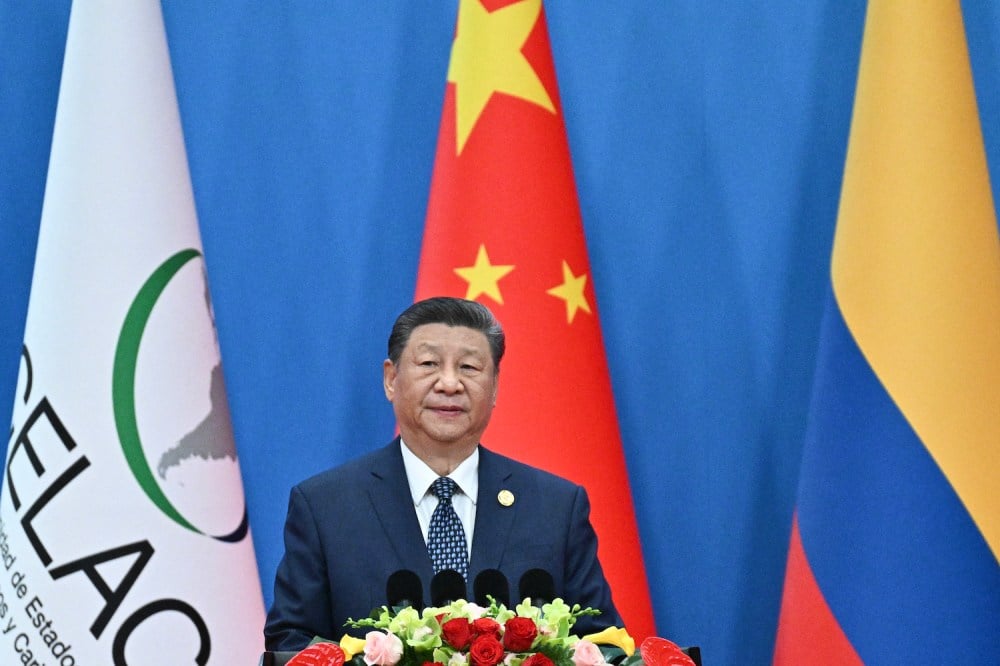
Latin America’s Economic Shift: Turning to China Amid U.S. Aid Cuts
Facing reduced financial support from the United States, Latin American nations are increasingly pivoting toward China to fuel economic growth. Over the past five years, China’s trade with the region has surged by 45%, while U.S. aid has declined by nearly 30%. This strategic realignment raises critical questions about the geopolitical and developmental consequences for a region long influenced by Washington.
The Decline of U.S. Influence and Rising Chinese Investments
Since 2020, U.S. foreign aid to Latin America has dropped sharply, with the Biden administration redirecting funds toward domestic priorities and global conflicts like Ukraine. Meanwhile, China has stepped in, offering loans, infrastructure projects, and trade deals. In 2023 alone, China pledged $25 billion in investments across the region, focusing on energy, mining, and technology sectors.
“The U.S. withdrawal has created a vacuum, and China is filling it with speed and precision,” says Dr. Elena Márquez, a geopolitical analyst at the Latin American Policy Institute. “For many countries, Chinese capital is now the only viable option for development.”
- Trade Growth: China-Latin America trade reached $485 billion in 2023, up from $330 billion in 2018.
- Infrastructure Projects: Over 50 major Chinese-funded projects are underway, including ports in Peru and railways in Argentina.
- Debt Concerns: Several nations, like Ecuador and Venezuela, now owe over 20% of their GDP to Chinese creditors.
Why Latin America Is Embracing China
Latin American governments cite China’s no-strings-attached approach as a key appeal. Unlike U.S. aid, which often comes with human rights or environmental conditions, Chinese financing is primarily tied to economic returns. Brazil, for instance, recently secured a $10 billion deal for renewable energy projects without political stipulations.
However, critics warn of long-term risks. “China’s model prioritizes resource extraction over sustainable development,” argues Carlos Ruiz, an economist at the University of Buenos Aires. “We’re trading short-term gains for potential debt traps and environmental damage.”
Geopolitical Repercussions and U.S. Response
The shift is altering regional alliances. Nicaragua and Honduras recently switched diplomatic recognition from Taiwan to Beijing, while Panama joined China’s Belt and Road Initiative in 2022. The U.S. has responded tepidly, with Secretary of State Antony Blinken acknowledging “strategic competition” but offering no major counterproposals.
Some experts suggest the U.S. could regain ground by reengaging with tailored policies. “The Americas Act, proposed in Congress, would boost trade incentives,” notes Márquez. “But without swift action, China’s foothold will become irreversible.”
Future Outlook: Opportunities and Risks
The trend shows no signs of slowing. China aims to double trade with Latin America by 2035, leveraging its demand for soy, copper, and lithium. Yet reliance on a single partner carries vulnerabilities. Falling commodity prices or political disputes could leave economies exposed.
For Latin America, the challenge lies in balancing immediate needs with long-term sovereignty. As Ruiz puts it, “Diversification is crucial—otherwise, we risk swapping one dependency for another.”
To stay informed on evolving global trade dynamics, subscribe to our newsletter for weekly insights.
See more CCTV News Daily