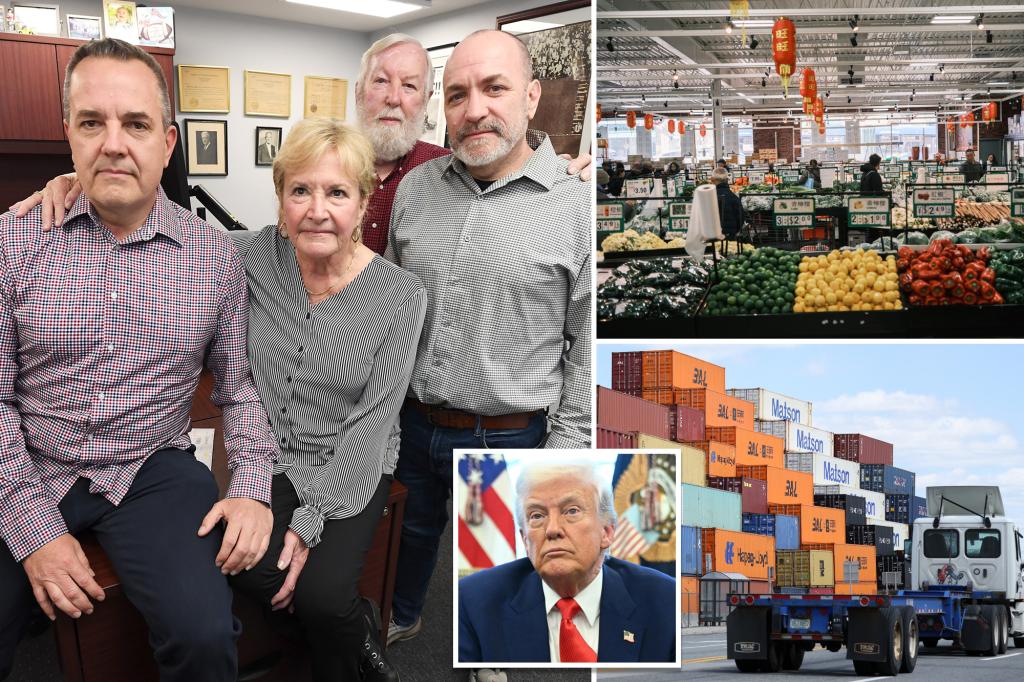
New York City importers are holding their breath as the Trump administration temporarily pauses tariffs on select goods, leaving businesses in limbo. With the respite set to expire in early 2025, wholesalers and retailers across the five boroughs are scrambling to adjust supply chains, renegotiate contracts, and hedge against potential cost surges. Industry experts warn that prolonged uncertainty could disrupt everything from electronics to textiles, forcing companies to choose between absorbing losses or passing costs to consumers.
The Tariff Tug-of-War: A Temporary Reprieve
The Biden administration had maintained Trump-era tariffs averaging 19.3% on $300 billion worth of Chinese imports until last month’s surprise suspension. While the White House frames this as a diplomatic overture, NYC’s import sector—which handles 40% of East Coast maritime trade—views it as a stay of execution. “This isn’t relief; it’s a timeout,” says Columbia Business School trade economist Dr. Lila Chen. “Importers are now playing chess with a clock ticking in the background.”
Key industries affected include:
- Consumer electronics (23% of NYC’s import volume)
- Apparel and footwear (18%)
- Furniture and home goods (15%)
Contingency Plans Take Shape
At the Hunts Point Produce Market, distributors like B&H Import Co. are stockpiling non-perishables while tariffs remain inactive. “We’ve increased our warehouse inventory by 30% since June,” reveals CFO Mark Rinaldi, pointing to pallets of Vietnamese ceramics. “If tariffs snap back, we’re covered for six months at current demand.”
Meanwhile, fashion importers in the Garment District are pursuing dual strategies:
- Diversification: Shifting 20-40% of production to India and Mexico
- Localization: Exploring Brooklyn-based microfactories for premium lines
Data from the NYC Economic Development Corporation shows a 17% year-over-year rise in businesses applying for “reshoring” grants, suggesting structural shifts beyond temporary adjustments.
The Ripple Effect on Retail and Consumers
While wholesalers adapt, retailers face impossible calculations. “Do we lock in prices now or gamble on tariffs staying low?” asks Sofia Alvarez, owner of three home goods stores in Queens. Her suppliers have offered a 5% discount for upfront orders—a tempting but risky move if consumer spending slows.
Economists project two potential scenarios:
- If tariffs resume, NYC consumer prices could jump 3.8% on affected goods
- A prolonged pause might stabilize costs but delay critical supply chain overhauls
The Metropolitan Museum of Art’s retail arm exemplifies the dilemma. Their bestselling $29.99 silk scarves, sourced from Hangzhou, would need to retail at $34.99 to maintain margins under reinstated tariffs. “Cultural institutions can’t just raise prices like Starbucks,” notes retail director Jeremy Woo.
Global Trade Winds Shift Local Strategies
Some importers see opportunity in the chaos. “We’re using this window to test African suppliers for cocoa and textiles,” says Global Sourcing Partners CEO Aisha Johnson. Her firm has redirected $2 million in orders from China to Ethiopia and Ghana since March, leveraging the African Growth and Opportunity Act’s duty-free benefits.
Yet challenges persist:
- Longer shipping times (45-60 days vs. China’s 30-day standard)
- Higher minimum order quantities
- Cultural/language barriers in quality control
Port Authority data reveals a 9% decline in Chinese cargo at JFK and Newark this quarter, contrasting with a 14% uptick in shipments from ASEAN nations—a trend that may accelerate if tariffs return.
Preparing for the Next Wave
As political winds shift, NYC’s business community isn’t waiting for clarity. The Brooklyn Chamber of Commerce now hosts monthly “Tariff Survival Workshops,” teaching members to:
- Leverage foreign trade zones for duty deferment
- Restructure procurement contracts with flexible pricing clauses
- Navigate Customs and Border Protection’s Section 301 exclusions
“The smart money isn’t betting on if tariffs return, but when,” warns international trade attorney David Klein. He advises clients to prepare for three eventualities: full reinstatement, selective tariffs targeting specific industries, or a new hybrid approach post-election.
Conclusion: Weathering the Storm Through Adaptation
For NYC’s import-dependent economy—where 1 in 7 jobs ties to global trade—the tariff limbo represents both peril and possibility. Businesses that diversify suppliers, embrace technology for supply chain visibility, and engage policymakers now will likely emerge strongest. As the November election looms, the only certainty is uncertainty itself.
For actionable insights, join the NYC Importers Alliance’s September 12 webinar “Tariff-Proof Your Business” featuring customs experts and logistics strategists.
See more CCTV News Daily