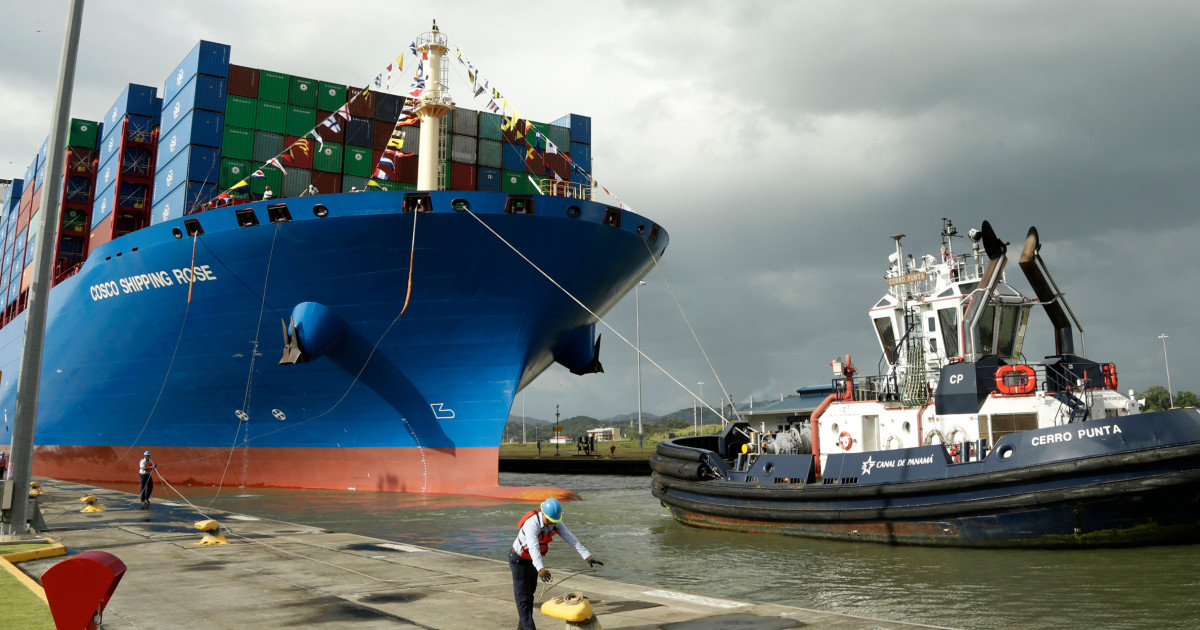
The Panama Canal: A Strategic Asset in the Ongoing Global Trade Landscape
As global trade tensions escalate and supply chains face unprecedented strain, the Panama Canal has re-emerged as a critical linchpin in international commerce. Completed in 1914, this 50-mile waterway connects the Atlantic and Pacific Oceans, handling 3.5% of global maritime trade annually. With shifting economic alliances and climate challenges disrupting traditional routes, the canal’s strategic value has skyrocketed, positioning it as both a economic lever and potential geopolitical flashpoint in 2024.
Why the Panama Canal Matters More Than Ever
The canal’s importance stems from its unrivaled ability to shorten maritime routes. A vessel traveling from New York to Shanghai saves approximately 8,000 nautical miles by using the Panama Canal instead of circumnavigating South America. This translates to:
- 20-30% reduction in fuel costs per voyage
- 14 days saved in transit time
- $270 million in daily global trade value passing through its locks
“The Panama Canal isn’t just infrastructure—it’s a force multiplier for global commerce,” explains Dr. Elena Marquez, a maritime economist at Georgetown University. “In an era where just-in-time delivery dominates manufacturing, those saved weeks mean everything for supply chain viability.”
Climate Challenges and Operational Pressures
Despite its engineered resilience, the canal faces mounting environmental threats. A severe 2023 drought reduced Gatun Lake’s water levels, forcing authorities to implement transit restrictions that continue into 2024:
- Maximum vessel drafts reduced by 2 meters (6.6 feet)
- Daily transits capped at 32 ships, down from 36-40 in normal conditions
- 20% increase in premium passage auction fees
“We’re witnessing climate change impact trade routes in real time,” says Captain Hiroshi Tanaka, a veteran shipping consultant. “When the canal sneezes, global trade catches a cold. These restrictions have already caused ripple effects across Asian and North American ports.”
Geopolitical Tensions and Alternative Routes
The canal’s strategic position has drawn increased attention from global powers. China’s growing influence in Latin America, coupled with U.S. reliance on the route for energy exports, has created delicate diplomatic balancing acts. Recent developments include:
- Chinese investment in Panamanian port facilities increasing 400% since 2017
- U.S. LNG exports through the canal reaching record 1,034 shipments in 2023
- Russia exploring Arctic shipping alternatives to bypass Western-controlled chokepoints
Meanwhile, some shipping giants are reconsidering traditional routes. Maersk recently diverted 15% of its Asia-East Coast traffic to Suez Canal routes, despite longer distances, citing predictability concerns. “The Panama Canal remains our preferred route,” states Maersk’s Chief Trade Officer Vincent Clerc, “but we can’t put all our eggs in one basket given climate and geopolitical variables.”
Economic Implications for Global Trade Policies
The canal’s operational challenges arrive during a fragile moment for global trade. With the WTO projecting just 1.7% growth in merchandise trade volume for 2024—down from 3.4% in 2022—efficiency bottlenecks carry outsized consequences. Key impacts include:
- 20-30% premium on container shipping rates for Panama routes
- Reshoring discussions accelerating among U.S. manufacturers
- Increased scrutiny of Central American infrastructure investments
Panamanian officials emphasize their commitment to modernization. “Our $2.5 billion water management investment will future-proof the canal,” asserts Ricaurte Vásquez Morales, the canal’s administrator. “By 2028, we’ll have climate-resilient systems ensuring reliable transit regardless of rainfall patterns.”
The Future of the Panama Canal
Looking ahead, the canal’s role will likely evolve rather than diminish. Expansion projects and green initiatives aim to maintain competitiveness:
- Electrification of tugboat fleet by 2025 (cutting 35% of operational emissions)
- AI-powered traffic management systems reducing wait times by 15%
- Potential fourth set of locks study underway
As global trade enters a new era of uncertainty, the Panama Canal stands at a crossroads. Its ability to adapt to climate change, navigate geopolitical currents, and maintain operational excellence will determine whether it remains the Western Hemisphere’s premier maritime shortcut or becomes a cautionary tale about infrastructure vulnerability. For businesses and policymakers alike, understanding these dynamics is no longer optional—it’s essential for navigating the turbulent waters of 21st-century commerce.
Want to stay updated on how global trade routes are evolving? Bookmark this page for our quarterly Panama Canal traffic analysis and its impact on your supply chain.
See more CCTV News Daily