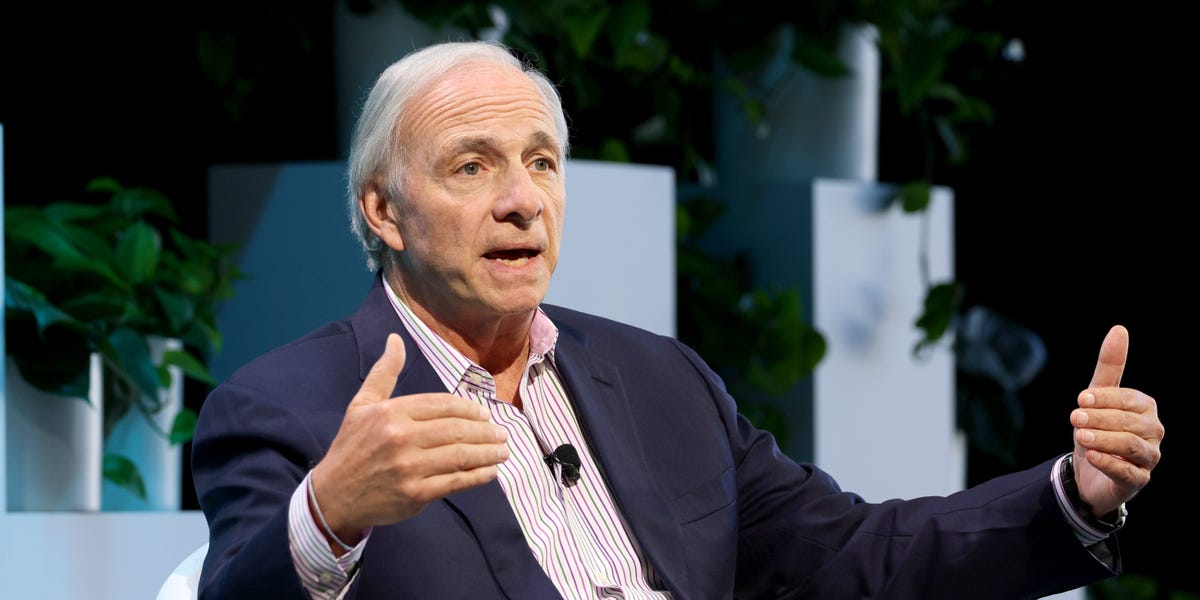
Ray Dalio’s Stark Warning: Tariffs as Disruptive as ‘Throwing Rocks’ at Production
Renowned investor Ray Dalio has issued a sharp critique of former President Donald Trump’s tariff policies, comparing their economic impact to “throwing rocks” into a finely tuned production system. Speaking at a financial conference this week, the Bridgewater Associates founder warned that such measures disrupt global trade, raise consumer costs, and threaten long-term stability. His comments come as tariffs regain political attention ahead of the 2024 U.S. election.
The Economic Fallout of Tariffs
Dalio’s analogy underscores how tariffs—taxes on imported goods—create friction in supply chains. “When you impose tariffs, you’re not just targeting foreign competitors; you’re destabilizing the entire machinery of production,” he argued. Historical data supports this: a 2019 study by the National Bureau of Economic Research found that Trump’s tariffs on $350 billion of Chinese goods cost U.S. companies and consumers $51 billion annually, with heavy losses in agriculture and manufacturing.
Key consequences of aggressive tariff policies include:
- Higher consumer prices: The U.S. International Trade Commission estimated tariffs added 0.5% to inflation in 2021.
- Retaliatory measures: China’s counter-tariffs slashed U.S. soybean exports by 75% in 2018.
- Supply chain bottlenecks: Companies face delays and redundancies when shifting production to avoid duties.
Global Trade at a Crossroads
Dalio’s warning arrives as geopolitical tensions reshape trade alliances. The U.S. and EU are debating new tariffs on Chinese electric vehicles, while Trump has proposed a 10% universal baseline tariff if re-elected. “This isn’t just about economics; it’s a political domino effect,” said Dr. Elena Rodriguez, a trade policy analyst at the Brookings Institution. “Tariffs invite retaliation, and suddenly, everyone’s throwing rocks.”
Proponents argue tariffs protect domestic industries. The Coalition for a Prosperous America claims steel tariffs saved 16,000 U.S. jobs. However, a 2023 Peterson Institute report countered that these gains were offset by higher costs for downstream industries like auto manufacturing.
Alternative Strategies for Economic Resilience
Instead of tariffs, Dalio advocates for investments in workforce training and infrastructure. “Competitiveness comes from innovation, not barriers,” he emphasized. Other experts propose:
- Subsidies for critical sectors: The CHIPS Act’s $52 billion for semiconductor production is a cited model.
- Multilateral trade agreements: Expanding partnerships like the Indo-Pacific Economic Framework (IPEF).
- Currency adjustments: Addressing trade imbalances through monetary policy rather than tariffs.
The Path Forward: Risks and Opportunities
With the 2024 election looming, tariff policies remain a divisive issue. While some voters view them as tools for job protection, economists caution against unintended consequences. “History shows tariffs rarely deliver as promised,” noted Rodriguez. “The Smoot-Hawley tariffs of 1930 deepened the Great Depression by shrinking global trade.”
Dalio’s critique serves as a rallying cry for evidence-based policymaking. As debates intensify, businesses and governments must weigh short-term protectionism against long-term growth. For readers seeking deeper analysis, subscribe to our trade policy newsletter for weekly insights on global economic trends.
The stakes are high: in an interconnected world, the rocks thrown by tariffs may ripple far beyond their intended targets.
See more CCTV News Daily