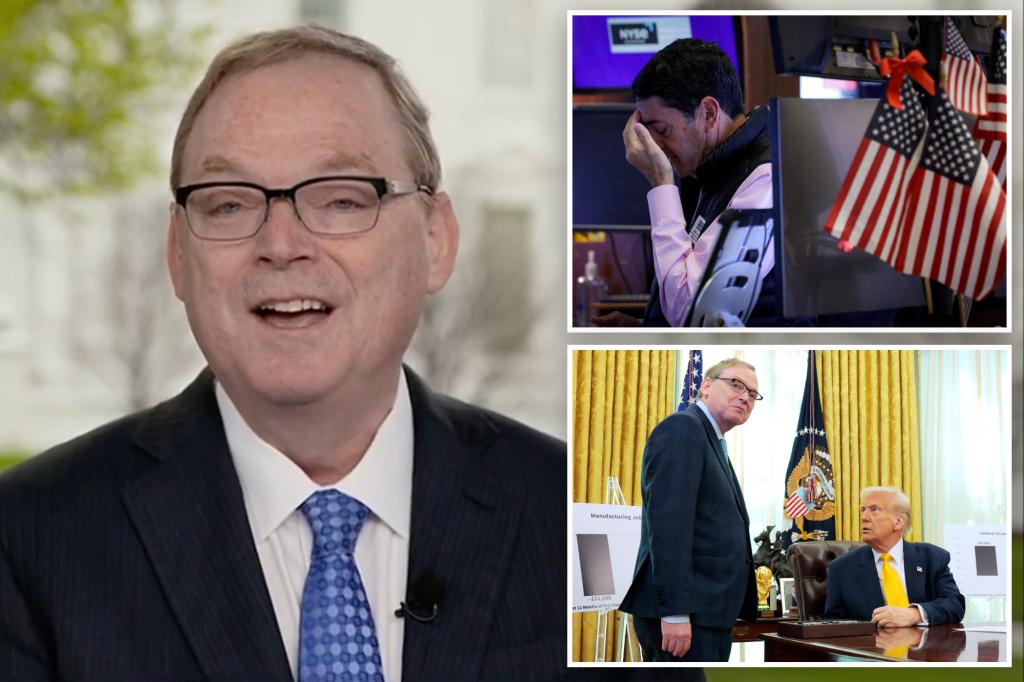
Unwavering Optimism: Trump’s Economic Advisor Dismisses Recession Fears
In a striking declaration, a senior economic advisor to former President Donald Trump has asserted that the U.S. economy remains robust, with no recession looming in 2024. The advisor, speaking at a conservative policy forum in Washington, D.C., this week, cited strong employment figures and resilient consumer spending as key indicators of stability. The statement contrasts sharply with lingering concerns among some economists about inflation and global economic headwinds.
Key Economic Indicators Fueling Confidence
The advisor’s optimism hinges on several recent economic metrics that paint a picture of a healthy economy:
- Unemployment rates holding steady at 3.7%, near historic lows
- GDP growth exceeding 2% in Q1 2024, defying earlier slowdown predictions
- Consumer Price Index (CPI) showing inflation cooling to 3.1% annually
“The fundamentals are simply too strong for a contraction,” the advisor stated. “When you see small business optimism rising and manufacturing output holding steady, these aren’t the signs of an economy in trouble.”
Diverging Views Among Economic Experts
While the Trump advisor’s outlook remains bullish, other economists urge caution. Dr. Alicia Monroe, chief economist at the Brookings Institution, notes: “The inverted yield curve we’ve seen since late 2022 still suggests caution. Historically, this indicator has preceded six of the last seven recessions.”
Additional concerns raised by skeptics include:
- Credit card delinquencies rising to 3.1% (up from 1.7% pre-pandemic)
- Commercial real estate vacancies hitting 18.7% in major metros
- Global economic slowdowns in China and the EU potentially impacting U.S. exports
Political Dimensions of Economic Forecasting
The timing of this optimistic assessment coincides with the ramp-up to the 2024 presidential election, raising questions about potential political motivations. Historical data shows that economic advisors from both parties tend toward more favorable projections during election years.
“There’s always a risk of confirmation bias in these forecasts,” notes political scientist Dr. Robert Chen of Georgetown University. “When your team wants to highlight economic success, there’s a natural tendency to emphasize positive indicators while downplaying risks.”
Sector-Specific Strengths and Weaknesses
Digging deeper into the economic landscape reveals a mixed picture across industries:
Thriving Sectors:
- Technology (AI investment surging 47% year-over-year)
- Energy (domestic oil production at record highs)
- Healthcare (continued post-pandemic expansion)
Struggling Sectors:
- Retail (multiple major chains announcing store closures)
- Banking (regional banks facing liquidity concerns)
- Automotive (EV adoption slower than projected)
Historical Context: Predicting Recessions
Economic forecasting remains an imperfect science. The National Bureau of Economic Research (NBER) notes that only 11 of the last 48 recessions were predicted more than one quarter in advance. This track record suggests that even expert assessments carry significant uncertainty.
“The economy has shown remarkable resilience post-pandemic,” acknowledges Federal Reserve Chair Jerome Powell in recent testimony. “But we remain vigilant to multiple risk factors, including geopolitical instability and debt levels.”
Consumer Sentiment as a Wild Card
The University of Michigan’s Consumer Sentiment Index presents another layer of complexity. While improving from 2023 lows, it remains below pre-pandemic levels, suggesting many Americans don’t yet share the advisor’s rosy outlook.
“There’s a disconnect between macroeconomic data and how working families experience the economy,” observes labor economist Dr. Janice Williams. “When polled, 63% of Americans still describe economic conditions as ‘fair’ or ‘poor’ despite positive indicators.”
What Comes Next for the U.S. Economy?
As debates about recession risks continue, several factors will prove decisive in coming months:
- The Federal Reserve’s interest rate decisions at their June and July meetings
- Q2 GDP growth figures due in late July
- Global oil price stability amid Middle East tensions
- Congressional action (or inaction) on expiring tax provisions
For investors and policymakers alike, the path forward requires balancing optimism with preparedness. As veteran market strategist David Keller notes: “Hope for the best, but plan for multiple scenarios. That’s just prudent economic stewardship in uncertain times.”
Stay informed on evolving economic trends by subscribing to our daily financial newsletter for expert analysis delivered to your inbox.
See more CCTV News Daily