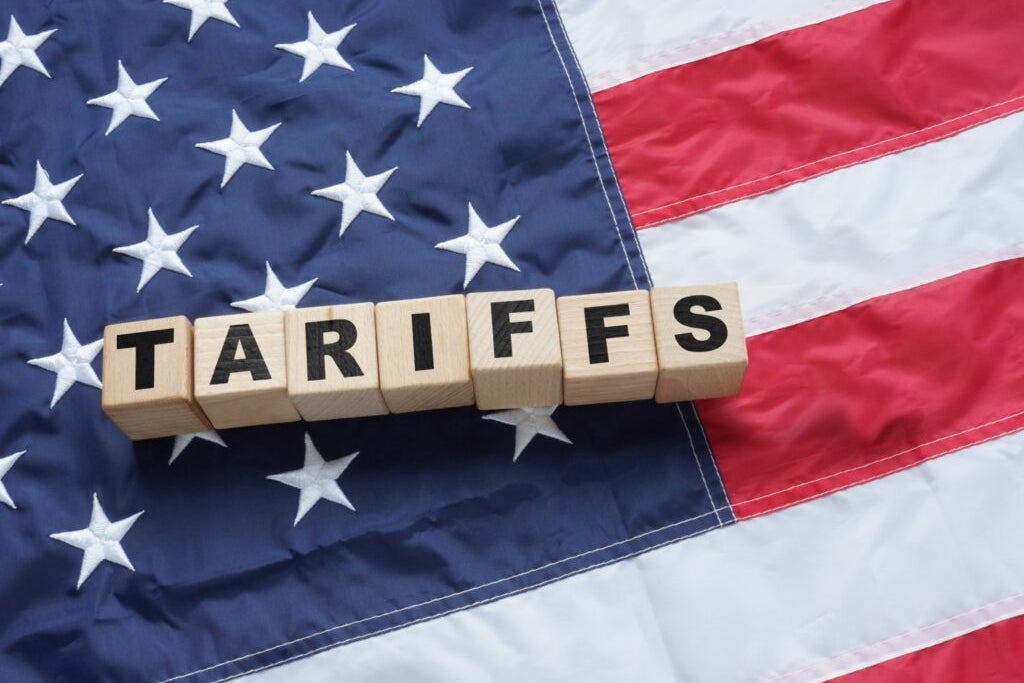
A CEO’s Bold Challenge to Buffett: The Complex Truth Behind Tariffs
In a direct challenge to Warren Buffett’s long-held stance on trade, a prominent Fortune 500 CEO has argued that tariffs are neither universally good nor bad—but must be evaluated as either “smart” or “stupid.” The executive, who leads a global manufacturing firm, contends that Buffett’s characterization of tariffs as economic “weapons” oversimplifies their strategic role in modern commerce. The debate, reignited during a recent economic forum, highlights deepening divisions over how nations should navigate an era of geopolitical tensions and supply chain disruptions.
The Tariff Debate: Buffett vs. the New Guard
Warren Buffett, the 93-year-old investing legend, has consistently warned against tariffs, famously comparing trade wars to “shooting yourself in the foot.” However, the unnamed CEO—whose company operates in 12 countries—counters that strategic tariffs can protect critical industries without sparking runaway inflation. “Blanket opposition to tariffs is like refusing to use a scalpel because some people swing axes,” he told attendees at the Global Economic Symposium last week.
Recent data underscores the high stakes:
- The U.S. imported $3.2 trillion in goods in 2023, with tariffs applied to roughly 12% of shipments
- China’s retaliatory tariffs on American agricultural products peaked at 65% during the 2018-2020 trade war
- A 2024 Peterson Institute study found targeted tariffs boosted domestic semiconductor investment by 18%
Smart Tariffs vs. Stupid Tariffs: A Framework
The CEO proposed a four-part test for evaluating tariffs:
- Strategic Objective: Is the tariff protecting a fledgling industry or retaliating?
- Duration: Is there a sunset clause to prevent permanent market distortion?
- Reciprocity: Does it address genuine unfair practices like dumping?
- Economic Impact: Will downstream industries bear disproportionate costs?
“The 25% steel tariffs in 2018 failed on three counts,” noted Dr. Elena Rodriguez, a trade economist at Columbia University. “They lacked precision, lasted too long, and hurt automakers more than they helped steelmakers.” Conversely, the CEO pointed to South Korea’s temporary tariffs on Chinese batteries as a success—sparking a 140% increase in domestic production capacity within two years.
The Geopolitical Calculus Behind Modern Tariffs
Beyond economics, the CEO emphasized tariffs’ role in national security. “When 90% of rare earth minerals or advanced chips come from one adversary, that’s not free trade—that’s vulnerability,” he argued. The comment reflects growing consensus in Washington, where bipartisan support has emerged for tariffs on:
- Chinese electric vehicles (new 100% tariff in May 2024)
- Russian uranium (45% tariff through 2040)
- European steel (25% tariff if carbon standards aren’t met)
However, critics warn of unintended consequences. “For every job saved in steel, we lose three in construction,” countered Laura Chen of the Brookings Institution. “The 2022 washing machine tariffs raised consumer prices 12% while creating just 1,800 jobs—that’s $815,000 per job.”
What History Teaches Us About Trade Wars
Historical case studies reveal nuanced outcomes:
| Example | Short-Term Effect | Long-Term Outcome |
|---|---|---|
| 1930 Smoot-Hawley Tariffs | 900% increase in duties | Global trade fell 66%, worsening Depression |
| 1985 Plaza Accord | Voluntary export restraints | Japanese auto plants relocated to U.S. |
| 2018 Solar Panel Tariffs | 30% price hike | U.S. solar manufacturing grew 500% by 2023 |
The CEO acknowledged these complexities: “The question isn’t whether to use tariffs, but how to calibrate them like a surgeon’s laser rather than a sledgehammer.”
The Path Forward: A Third Way on Trade?
As the debate intensifies, middle-ground solutions are gaining traction:
- Tariff sunsets: Automatic expiration unless renewed (e.g., Mexico’s 5-year ag tariffs)
- Sectoral reciprocity: Matching foreign tariffs only in specific industries
- Alliance-based waivers: Exempting security partners (like recent U.S.-EU steel pact)
“We’re entering an era of ‘friendshoring,’ where trade policy and foreign policy merge,” observed the CEO. His company now prioritizes suppliers from 26 “trusted nations”—a shift that reduced China exposure from 38% to 11% since 2020.
The implications extend beyond boardrooms. With 76% of Americans supporting tariffs on Chinese goods (Pew Research, April 2024), policymakers face pressure to balance economic efficiency with strategic resilience. As the CEO concluded: “In a world where microchips matter as much as missiles, we need to rethink old dogmas.”
For deeper analysis on evolving trade strategies, subscribe to our Global Business Briefing for weekly expert insights.
See more CCTV News Daily