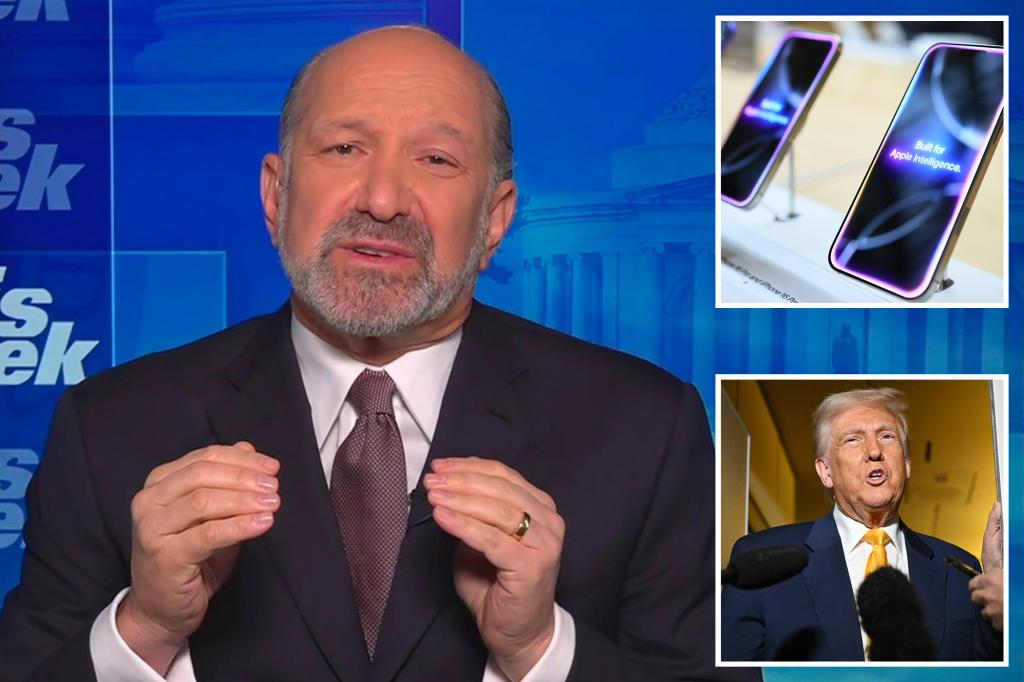
New Tariff Threats: Commerce Secretary Lutnick’s Warning Shakes Tech Industry
U.S. Commerce Secretary Alan Lutnick has warned of potential tariff hikes on Chinese electronics, including iPhones, amid escalating trade tensions. The announcement, made during a press briefing on Tuesday, signals a tougher stance on imports and could reshape pricing, supply chains, and consumer choices. Analysts predict ripple effects across the global tech sector if the measures take effect later this year.
Why Tariffs on Chinese Electronics Are Back in Focus
The Biden administration has maintained a hardline approach to trade with China, but Lutnick’s remarks mark the first explicit threat to consumer electronics—a sector previously spared the brunt of tariffs. With $1.8 trillion in annual U.S.-China trade at stake, the move could exacerbate inflation and disrupt tech giants like Apple, which manufactures 95% of iPhones in China.
“This isn’t just about trade imbalances; it’s about technological sovereignty,” said Dr. Elena Torres, a Georgetown University trade policy expert. “The U.S. wants to reduce dependency on Chinese manufacturing, but the transition won’t be painless.”
Potential Impact on Consumers and Businesses
If implemented, tariffs could raise iPhone prices by 10–15%, according to J.P. Morgan estimates. Smaller devices like AirPods and smartwatches may see even steeper hikes. Retailers fear a repeat of 2019, when tariffs on Chinese goods cost the average U.S. household $1,277 annually.
- Higher costs: Consumers may delay upgrades or switch to non-Chinese brands like Samsung.
- Supply chain shifts: Apple has begun diversifying production to India and Vietnam, but only 7% of iPhones are currently made outside China.
- Stock market jitters: Apple shares dipped 3% following Lutnick’s comments.
Industry Reactions and Counterarguments
Tech lobbyists argue tariffs could backfire. “This penalizes American companies more than China,” said Jason Reed, spokesperson for the Consumer Technology Association. “China will simply export to other markets, while U.S. consumers foot the bill.”
Proponents, however, cite national security concerns. A 2023 Pentagon report flagged vulnerabilities in Chinese-made hardware, and tariffs could accelerate domestic semiconductor production—a goal of the $52 billion CHIPS Act.
What’s Next for U.S.-China Trade Relations?
The Treasury Department is expected to finalize tariff plans by Q4 2024. Meanwhile, China’s Commerce Ministry has vowed “reciprocal measures,” potentially targeting U.S. agricultural exports. Economists warn of a lose-lose scenario: The Peterson Institute estimates a full-blown trade war could shrink global GDP by 1.3%.
For now, businesses are advised to prepare for volatility. “Diversify your suppliers and hedge inventory,” urged supply chain analyst Maria Chen. “This isn’t a storm that will blow over quickly.”
How Stakeholders Can Adapt
Companies and consumers alike should monitor developments closely. Here are actionable steps:
- Businesses: Audit supply chains for Chinese dependencies and explore alternative markets.
- Shoppers: Consider purchasing high-ticket electronics before potential price hikes.
- Investors: Watch for policy shifts in clean energy and EVs, which may face similar scrutiny.
The coming months will test the resilience of global trade frameworks. For real-time updates, subscribe to our Trade Policy Watch newsletter.
See more CCTV News Daily