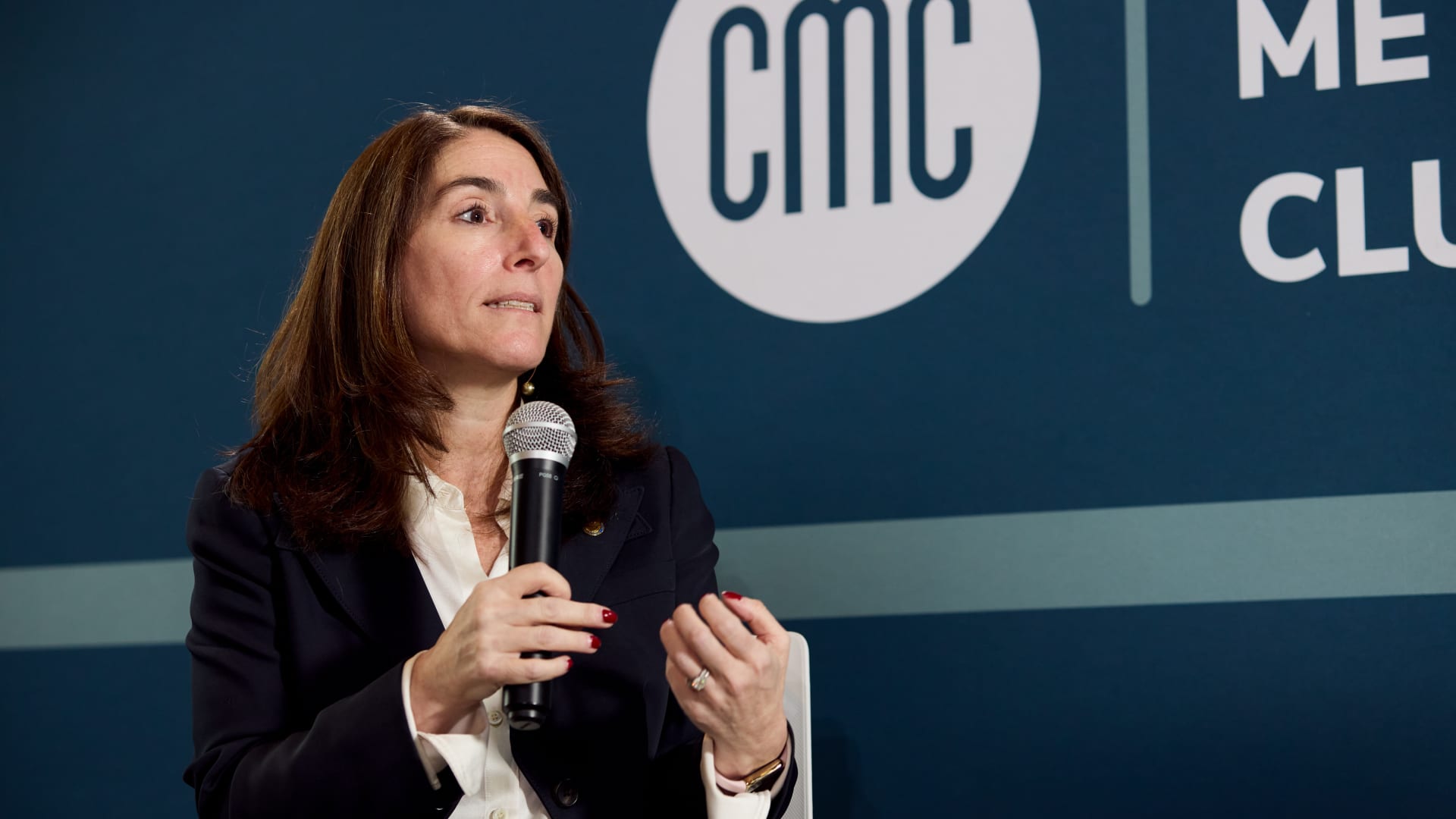
Federal Reserve Governor Lisa Hammack urged policymakers to exercise caution amid growing economic uncertainty fueled by potential tariff increases, during a speech at the Economic Policy Symposium in Washington on Thursday. Highlighting the delicate balance of current monetary policy, Hammack emphasized that premature actions on trade barriers could disrupt inflation progress and labor market stability. Her remarks come as the White House considers new tariffs on $300 billion of Chinese imports.
The Ripple Effects of Trade Restrictions
Hammack’s warning reflects mounting concerns among economists that renewed trade tensions could reverse recent economic gains. Data from the Peterson Institute for International Economics shows existing tariffs already cost U.S. households an average of $1,300 annually in higher prices. The Fed’s internal models suggest additional 10% tariffs could:
- Reduce GDP growth by 0.5-1.0 percentage points in 2025
- Add 0.3-0.5 percentage points to core inflation
- Eliminate approximately 500,000 manufacturing jobs
“We’re walking a tightrope between containing inflation and maintaining growth,” Hammack stated. “Trade policy shocks could cut the safety net beneath us.” Her analogy referenced the Fed’s dual mandate of price stability and maximum employment, both potentially threatened by aggressive trade measures.
Divergent Views on Trade Policy Strategy
While Hammack advocates patience, some administration officials argue tariffs serve as necessary leverage. Commerce Secretary Walter Simmons countered, “Strategic trade protections have rebuilt critical industries and brought manufacturing jobs back to America’s heartland.” Pro-tariff economists point to a 14% increase in domestic steel production since 2018 tariffs as evidence of their effectiveness.
However, Harvard economist Dr. Elaine Portman warns, “The calculus changed post-pandemic. Global supply chains remain fragile, and new tariffs could trigger cascading disruptions.” Her research indicates tariff impacts now multiply 2-3 times faster than in 2018 due to reduced inventory buffers across industries.
Assessing the Broader Economic Landscape
The tariff debate unfolds against a complex economic backdrop. Recent Labor Department figures show:
- Unemployment holding at 3.9% (near 50-year lows)
- Core inflation cooling to 3.4% annually
- Q2 GDP growth slowing to 1.6%
Hammack stressed these mixed indicators demand nuanced policymaking. “The economy isn’t overheating nor stalling—it’s rebalancing,” she noted, suggesting the Fed’s current wait-and-see approach to rate cuts remains appropriate unless trade shocks occur.
Sector-Specific Vulnerabilities Emerge
Analysis from the Brookings Institution reveals certain industries face disproportionate tariff risks:
- Automotive: 32% of components still imported from China
- Electronics: $150 billion in annual affected trade flows
- Agriculture: Retaliation risks for $40 billion in exports
Small businesses appear particularly exposed. National Federation of Independent Business surveys show 68% of members lack resources to absorb further supply chain disruptions or input cost increases.
Policy Pathways Forward
Hammack outlined three considerations for mitigating tariff impacts:
- Phased implementation: Gradual tariff rollouts allowing adjustment periods
- Targeted exemptions: Carve-outs for goods with no domestic alternatives
- Reciprocal coordination: Synchronizing changes with allied nations
These measures could cushion the economic blow while preserving negotiating leverage, according to Fed staff analyses. The approach mirrors strategies used during the EU-U.S. trade détente of 2021 that averted major disruptions.
The Global Dimension
International Monetary Fund projections suggest escalating U.S. tariffs could:
- Shave 0.8% off global GDP growth
- Trigger $1 trillion in trade diversion
- Accelerate regional supply chain restructuring
“No economy wins in a protracted trade conflict,” cautioned IMF Managing Director Kristalina Georgieva during last week’s G20 meetings. Emerging markets face particular vulnerability, with 60% of developing nations’ exports tied to tariff-exposed supply chains.
Looking Ahead: Economic Policy at a Crossroads
As policymakers weigh these complex factors, businesses are advised to:
- Stress-test supply chains for tariff scenarios
- Diversify sourcing where feasible
- Model multiple pricing strategies
The coming months will prove critical. With the Fed’s next policy meeting scheduled for June 12-13 and tariff decisions expected by late summer, Hammack’s call for patience may soon face real-world tests. As she concluded, “In this environment, the right pause often proves wiser than the wrong move.”
For ongoing analysis of how economic policy changes may affect your business, subscribe to our policy briefing series for weekly expert insights.
See more CCTV News Daily