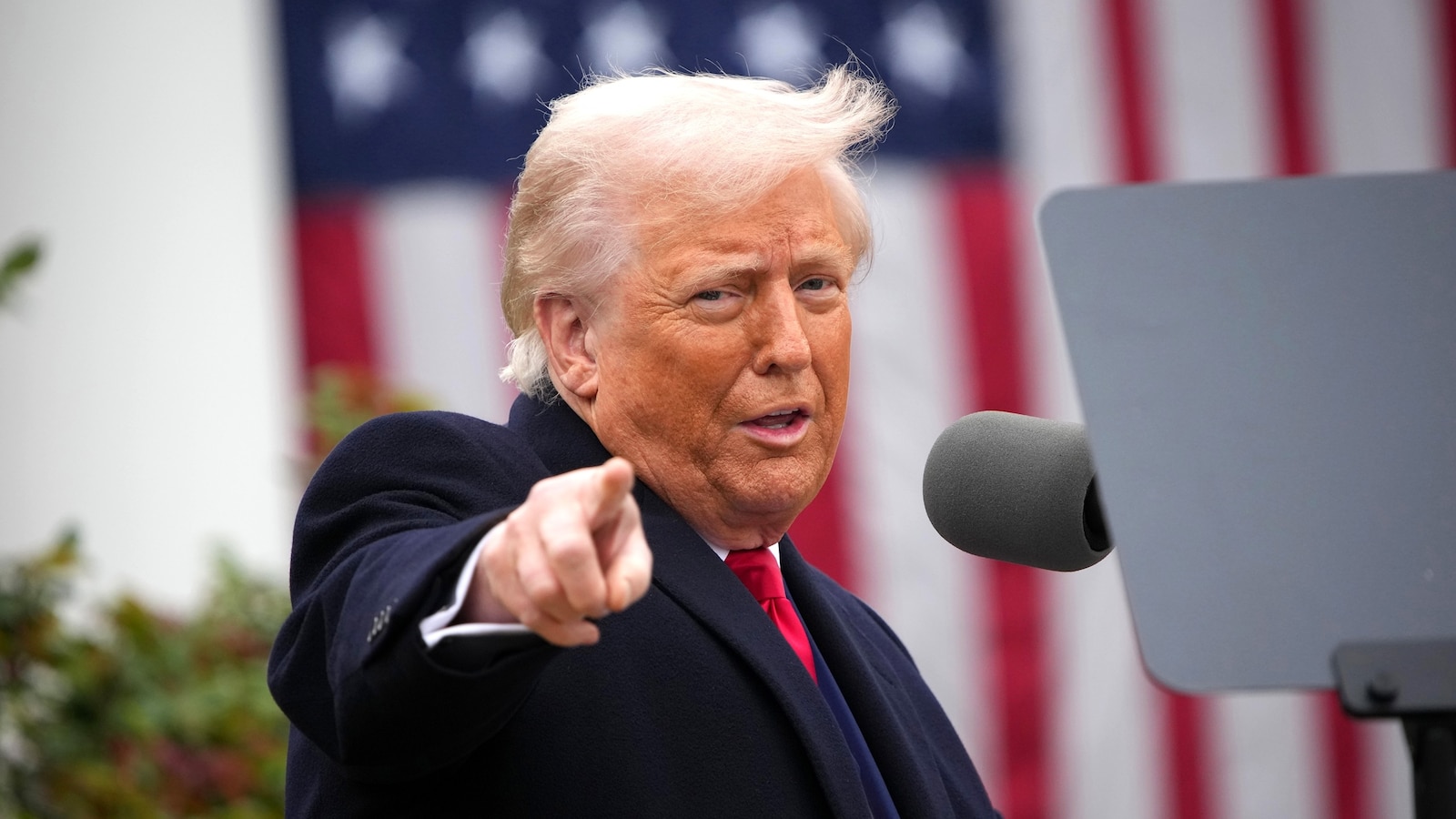
Market Shockwaves: How Trump’s Tariffs Are Reshaping Global Economies
Global stock markets plunged this week as former President Donald Trump’s proposed tariffs on imported goods sent shockwaves through international trade networks. The Dow Jones Industrial Average dropped 3.2%, while European and Asian markets followed suit, with analysts warning of prolonged economic instability. The measures, targeting Chinese imports and EU steel, aim to bolster U.S. industries but risk triggering retaliatory actions and supply chain disruptions.
The Immediate Fallout in Financial Markets
Within hours of Trump’s tariff announcement, markets reacted violently. The S&P 500 shed $500 billion in value, and the Nasdaq Composite fell 4.1%, its steepest single-day decline since October 2022. European markets mirrored the trend, with Germany’s DAX losing 2.8% and the FTSE 100 dipping 2.3%. Asian economies, heavily reliant on exports to the U.S., faced even sharper drops: Japan’s Nikkei 225 tumbled 3.6%, and Hong Kong’s Hang Seng slid 4.4%.
“This isn’t just a market correction—it’s a panic,” said Dr. Elena Rodriguez, Chief Economist at the Global Policy Institute. “Investors see these tariffs as a return to the trade wars of 2018–2019, which cost the global economy nearly $1 trillion.” Data from the International Monetary Fund (IMF) supports her claim: global GDP growth slowed by 0.8% during the last tariff escalation.
How Trump’s Tariffs Could Disrupt Supply Chains
The new tariffs, which include a 60% levy on Chinese goods and 10% on EU aluminum, threaten to upend fragile supply chains. U.S. manufacturers relying on imported materials face soaring costs, with the National Association of Manufacturers estimating a $300 billion annual hit. Meanwhile, China’s Commerce Ministry vowed “swift countermeasures,” hinting at restrictions on U.S. agricultural exports.
- Automotive sector: Ford and GM stocks fell 5% and 4.7%, respectively, as analysts predicted higher vehicle prices.
- Consumer electronics: Apple shares dropped 3.9% due to its reliance on Chinese production.
- Agriculture: Soybean futures plummeted 6%, echoing 2018’s trade war losses for U.S. farmers.
Divergent Perspectives: Protectionism vs. Free Trade
Proponents argue the tariffs will revive domestic manufacturing. “This is a necessary reset,” said Senator Mark Reynolds (R-Ohio). “For decades, unfair trade practices hollowed out American jobs. These measures level the playing field.” However, critics warn of inflationary pressures. The Peterson Institute for International Economics projects a 1.2% rise in U.S. consumer prices if the tariffs persist.
Emerging markets face disproportionate risks. Countries like Vietnam and Mexico, which benefited from redirected trade flows during the last U.S.-China rift, now brace for volatility. “The collateral damage could be severe,” noted Carlos Mendez, a Latin America trade analyst. “Smaller economies lack the leverage to negotiate exemptions.”
Historical Parallels and Lessons Unlearned
The 2018–2019 trade war offers a cautionary tale. U.S. tariffs then led to:
- A 19% drop in American agricultural exports to China
- 200,000 U.S. manufacturing job losses (Federal Reserve data)
- A 25% surge in steel prices, hurting construction firms
Despite this, Trump’s latest policy doubles down on protectionism. “History shows tariffs rarely achieve their goals,” said Dr. Rachel Nguyen of the Brookings Institution. “They’re blunt instruments that often hurt the imposing country as much as the target.”
What’s Next for Global Trade?
The World Trade Organization (WTO) may intervene, but its dispute resolution process could take years. Meanwhile, the EU is reportedly drafting retaliatory tariffs on U.S. whiskey and motorcycles, while China might restrict rare-earth mineral exports—a critical component for tech industries.
For businesses, adaptation is key. Some companies are accelerating “friend-shoring” (relocating supply chains to allied nations), while others stockpile inventory. “The only certainty is uncertainty,” said JPMorgan Chase CEO Jamie Dimon in a recent investor call. “Companies must prepare for multiple scenarios.”
The tariff fallout underscores the interconnectedness of modern economies. While the U.S. aims to reduce trade deficits, the collateral damage—higher prices, slower growth, and diplomatic friction—could outweigh the benefits. Investors and policymakers alike should monitor developments closely, as retaliatory measures may escalate rapidly.
For real-time updates on how tariffs are affecting specific sectors, subscribe to our trade policy newsletter.
See more CCTV News Daily