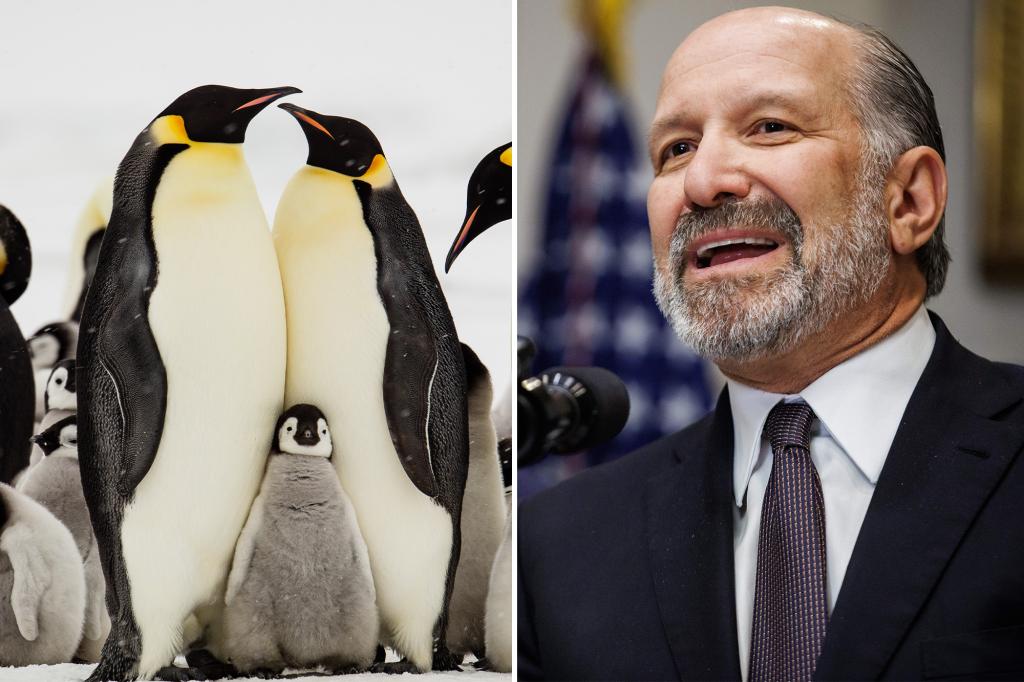
Tariffs and Penguins: Commerce Chief Lutnick’s Controversial Defense
In a move that has sparked international debate, U.S. Commerce Chief Alan Lutnick has defended imposing tariffs on goods from remote Antarctic islands inhabited primarily by penguin colonies. The unprecedented policy, announced last week, aims to protect domestic fisheries but has drawn sharp criticism from environmentalists and trade experts who question its economic logic and ecological impact.
The Unusual Economic Strategy Behind Penguin Tariffs
Lutnick’s department claims the 27% tariffs on krill and fish imports from the South Orkney and South Shetland Islands will safeguard American fishing jobs. “These measures level the playing field for our coastal communities,” Lutnick stated during a press briefing, flanked by representatives from New England fishing associations.
However, trade data reveals the targeted islands account for less than 0.003% of global seafood exports. According to the International Trade Commission, the U.S. imported just $2.1 million worth of goods from these territories in 2022—mostly research equipment for scientific stations.
- Tariff rate: 27% on all marine products
- Affected regions: 5 sub-Antarctic archipelagos
- Human population: 0 permanent residents
- Penguin population: Estimated 8.4 million across territories
Environmental Backlash and Scientific Concerns
Marine biologists warn the policy could disrupt fragile ecosystems. “Penguins don’t engage in unfair trade practices,” remarked Dr. Evelyn Cho of the Polar Research Institute. “This misunderstands both ecology and economics—you can’t apply Chicago School theories to a food chain.”
Satellite tracking data shows krill fishing vessels have increased activity by 40% near protected zones since the announcement. The Commission for the Conservation of Antarctic Marine Living Resources reports worrying signs of penguins altering migration patterns, possibly in response to shifting food availability.
Global Trade Implications of the Penguin Tariffs
Trade analysts suggest the move may be symbolic positioning ahead of broader negotiations. “This sets a concerning precedent,” said Georgetown trade professor Marcus DeWitt. “If we tariff penguin territories today, what stops others from targeting protected areas tomorrow?”
The European Union has threatened proportional tariffs on Alaskan snow crab exports, while China’s Commerce Ministry issued a statement calling the measures “a flightless bird of a policy—it won’t fly in the WTO.”
Legal Challenges and Treaty Violations
Legal experts highlight potential breaches of international agreements:
- The Antarctic Treaty System’s environmental protocols
- WTO rules on arbitrary trade restrictions
- The Convention on Biological Diversity
Meanwhile, social media has erupted with #PenguinTax memes, and late-night hosts have mocked the policy. “Finally, we’ve found an economic rival scarier than China—the Adélie penguin,” joked one popular comedian.
What’s Next for Trade Policy and Polar Conservation?
The Commerce Department plans to send observers to monitor fishing activities, though logistics remain challenging. “We’re working with partners to ensure compliance,” Lutnick noted, without specifying how enforcement would occur in these remote regions.
Environmental groups are mobilizing legal action. The Center for Biological Diversity has filed a Freedom of Information Act request for the policy’s impact assessments. “Where’s the evidence this protects American jobs?” asked their lead attorney. “All we see is risk to one of Earth’s last pristine ecosystems.”
Balancing Economic and Environmental Priorities
The controversy highlights growing tensions between trade policy and conservation. As climate change accelerates polar ice melt, these remote regions are gaining economic attention. The U.N. estimates the Southern Ocean’s untapped marine resources could be worth $50 billion annually—raising stakes for future conflicts.
For now, the penguins continue their routines unaware of the geopolitical storm. But scientists warn that human decisions made thousands of miles away could determine whether their populations thrive or decline in coming decades.
What do you think about tariffs being applied to ecologically sensitive areas? Contact your representatives and urge for trade policies that consider both economic and environmental impacts.
See more CCTV News Daily