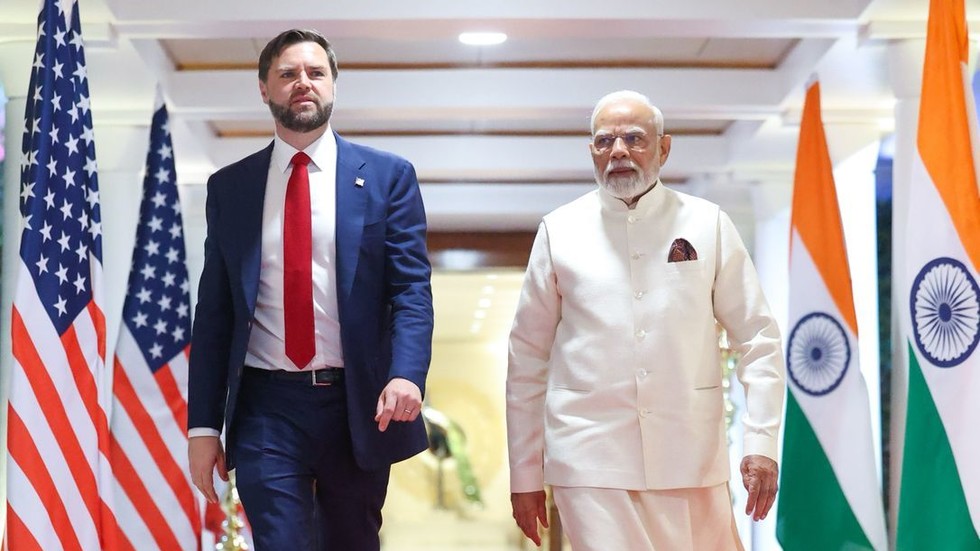
Indian Prime Minister Narendra Modi and U.S. Trade Representative Katherine Vance held high-stakes discussions this week to address escalating trade tensions as former President Donald Trump threatens sweeping tariffs if re-elected. The dialogue, occurring against a backdrop of global economic uncertainty, aims to safeguard bilateral trade relations that topped $191 billion in 2023. Experts suggest these negotiations could redefine supply chain strategies and market access for both nations.
The Geopolitical Context of Renewed Tariff Threats
With Trump proposing 10% across-the-board tariffs and up to 60% on Chinese goods, India faces collateral damage in what analysts call “the coming trade war 2.0.” The U.S. imported $54.4 billion worth of Indian goods last year, including critical pharmaceuticals, machinery, and agricultural products that could become costlier under new tariffs.
“India has walked this tightrope before,” noted Georgetown University trade economist Dr. Anika Rao. “But this time, the stakes are higher with both countries seeking to reduce dependence on Chinese manufacturing while protecting domestic industries.”
Key pressure points in the discussions include:
- Potential U.S. tariffs on Indian steel and aluminum exports
- India’s digital services taxes viewed as targeting American tech firms
- Ongoing disputes over agricultural market access
- Intellectual property protections for pharmaceuticals
Strategic Alignment and Diverging Interests
The Modi-Vance talks revealed both nations’ desire to strengthen economic ties, with bilateral trade growing 7.65% year-over-year. However, fundamental differences emerged regarding trade imbalances and market access barriers.
“We’re seeing a classic case of strategic alignment masking commercial tensions,” explained former USTR negotiator James Whitfield. “Both want to counter China’s influence, but America wants faster market opening while India prioritizes domestic manufacturing growth through programs like Make in India.”
Recent data illustrates the complexity:
- U.S. trade deficit with India reached $32.8 billion in 2023
- Indian tariffs average 18.1% versus the U.S. 3.3% average
- Over 60% of Indian exports to America qualify for GSP benefits
The Tech and Defense Dimension
Beyond traditional goods, discussions addressed critical technology transfers and defense cooperation. The U.S. recently became India’s second-largest arms supplier, with $6.6 billion in defense deals signed during 2020-2023. Technology collaboration forms another pillar, particularly in semiconductors where both nations seek to reduce reliance on East Asian suppliers.
“What’s different now is the convergence on tech sovereignty,” said Carnegie Endowment fellow Priya Nair. “The Modi-Vance dialogue included unprecedented talks on co-developing AI governance frameworks and 6G standards—areas where both nations want to counter Chinese dominance.”
Agricultural Trade: A Persistent Flashpoint
Agricultural market access remains contentious, with U.S. dairy and poultry producers demanding greater entry to India’s 1.4 billion-consumer market. India maintains high tariffs (up to 150%) on agricultural imports to protect its massive farming sector, which employs nearly 40% of the workforce.
Recent developments complicate matters:
- India’s 2023 wheat export ban affected global prices
- U.S. almond exports to India fell 25% after retaliatory tariffs
- Ongoing disputes over India’s rice subsidy notifications to WTO
Potential Pathways Forward
Both sides appear to be exploring creative solutions, including:
- Sector-specific mini trade deals rather than comprehensive agreements
- Joint ventures in renewable energy and critical minerals
- Mutual recognition agreements for professional services
- Expanded student/work visa programs as trade concessions
As the dialogue continues, businesses on both sides are bracing for impact. The U.S.-India Business Council has urged “tariff de-escalation and predictable rules” to protect $100 billion in mutual investments.
The Global Implications
These negotiations occur as the Global South increasingly questions Western-led trade frameworks. India’s simultaneous participation in BRICS and discussions with Western nations reflects its multi-alignment strategy. The outcomes could influence:
- Supply chain diversification away from China
- Developing nations’ approaches to trade with major powers
- The future of WTO reform efforts
“We’re witnessing the great rewire of global trade,” said Brookings Institution senior fellow Rajiv Kumar. “How India and America navigate these tensions will either create a new template for North-South cooperation or accelerate fragmentation into competing blocs.”
What Comes Next?
With the U.S. election looming, trade experts identify three likely scenarios:
- Status Quo Plus: Limited agreements on specific sectors with tariff threats postponed
- Targeted Escalation: Selective tariffs on sensitive products with negotiated exemptions
- Systemic Decoupling: Broader trade barriers leading to supply chain reshuffling
Business leaders are advised to:
- Diversify supplier networks across Southeast Asia and Latin America
- Accelerate localization efforts in both markets
- Increase advocacy through industry associations
- Prepare for potential currency fluctuations
For ongoing coverage of this developing story and expert analysis of global trade trends, subscribe to our daily policy briefing. The Modi-Vance dialogue represents just the opening chapter in what promises to be a transformative period for international commerce.
See more CCTV News Daily