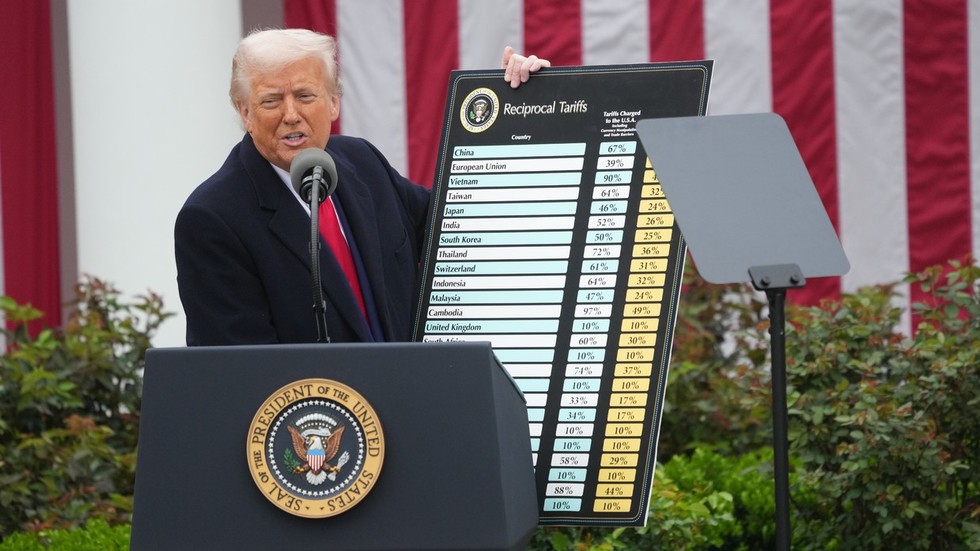
The Hidden Fallout: How Trump’s Trade Policies May Reshape Regional Economies
Former President Donald Trump’s aggressive trade policies, including tariffs and renegotiated deals, could trigger economic ripple effects far beyond their intended targets. As the 2024 election looms, economists warn that these measures may destabilize vulnerable regions, disrupt global supply chains, and create unexpected winners and losers. The full impact—from Midwest manufacturing hubs to Southeast Asian export economies—remains largely unmapped territory.
The Tariff Domino Effect on Global Supply Chains
When the Trump administration imposed 25% tariffs on $250 billion of Chinese goods in 2018-2019, the immediate goal was protecting U.S. industries. However, a 2023 Peterson Institute study revealed secondary consequences:
- Vietnam’s exports to the U.S. surged 30% as companies relocated production
- Mexican manufacturing wages increased 8% due to redirected investments
- Sub-Saharan African nations lost $1.2 billion in textile contracts
“Trade barriers create adaptive behaviors that often hurt the most vulnerable economies,” explains Dr. Lina Park, a Georgetown University trade economist. “Smaller nations become collateral damage in larger geopolitical battles.”
Agricultural Heartlands Face Unintended Consequences
Midwest farmers initially benefited from Trump’s $28 billion bailout package compensating for lost Chinese soybean markets. Yet USDA data shows:
- Long-term soybean acreage decreased 11% between 2018-2022
- Brazil captured 37% of China’s soybean imports by 2023 (up from 20% in 2016)
- Midwest farm debt reached $502 billion in 2023—a 30% increase since 2015
“We traded temporary relief for permanent market share losses,” says Iowa Farmers Union President Aaron Jacobs. “Once supply chains relocate, they rarely come back.”
Emerging Markets: The Hidden Casualties
While headlines focused on U.S.-China tensions, lesser-developed economies absorbed significant blows:
| Region | Impact | Data Source |
|---|---|---|
| Bangladesh | 17% drop in textile orders (2019-2021) | World Bank |
| Ethiopia | $600M lost footwear contracts | UNCTAD |
| Cambodia | 23% wage stagnation in garment sector | ILO |
Harvard economist Rajiv Chowdhury notes: “The global south became an afterthought in this trade war. Development gains from two decades of globalization partially unraveled in just four years.”
Manufacturing Reshoring: Promise vs. Reality
Trump’s pledge to bring back manufacturing jobs yielded mixed results:
- U.S. added 483,000 manufacturing jobs (2017-2020)
- Automation accounted for 62% of productivity gains
- Reshored jobs paid 18% less than pre-2000 levels (adjusted for inflation)
“The jobs returned, but not the wages or working conditions,” observes MIT labor researcher Elena Torres. “Companies compensated for tariff costs through automation and benefit reductions.”
The Geopolitical Fallout: Alliances Under Strain
Trade policies strained traditional partnerships:
- EU retaliatory tariffs targeted $3.2B in U.S. goods
- Canada diverted 19% of energy exports to Asia
- Japan accelerated CPTPP ratification excluding the U.S.
“We’re seeing the erosion of post-WWII economic alliances,” warns former USTR negotiator Michael Chen. “The trust deficit outlasts any single administration.”
Looking Ahead: The 2024 Wildcard
With Trump proposing universal 10% tariffs if reelected, analysts project:
- Global GDP could shrink by 0.5-1.2% (Peterson Institute)
- U.S. inflation might spike 3 percentage points (Moody’s Analytics)
- Developing nations could lose $90B in export income (UN Development Program)
As supply chain consultant Naomi Wilkins advises: “Businesses should diversify their supplier networks now—the next trade policy shock could come from either side of the aisle.”
The full consequences of protectionist policies often surface years after implementation. While some regions and industries adapted successfully, many communities—both domestic and international—continue grappling with disruptions that reshaped their economic destinies. As the 2024 election approaches, voters and policymakers alike must weigh these complex trade-offs between short-term gains and long-term stability.
For deeper analysis of how trade policies affect your region, subscribe to our economic briefing series.
See more CCTV News Daily