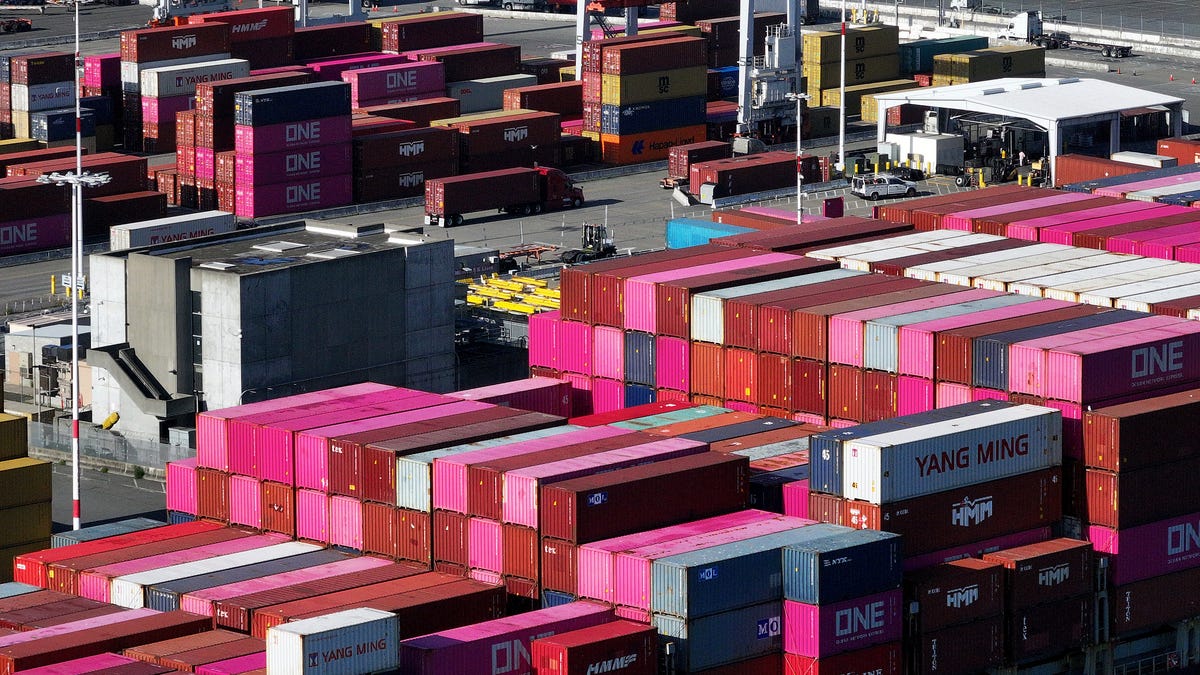
Unraveling the Paradox: How Trade Wars Increase America’s Dependence on Foreign Goods
In a striking economic contradiction, U.S. trade wars designed to strengthen domestic manufacturing have instead deepened reliance on foreign imports. Over the past five years, tariffs and trade barriers targeting China and other nations have disrupted supply chains, raised production costs, and forced American businesses to seek alternative overseas suppliers. Economists warn this unintended consequence threatens long-term competitiveness while inflating consumer prices. Here’s how protectionism backfired—and what it means for the future.
The Mechanics of a Backfiring Strategy
When the U.S. imposed sweeping tariffs on $370 billion worth of Chinese goods in 2018–2019, the goal was clear: reshore jobs and reduce dependency on foreign manufacturing. Yet data from the U.S. Census Bureau reveals a 12% surge in imports from Vietnam, Mexico, and Taiwan during the same period—countries now serving as intermediaries for Chinese components. Meanwhile, domestic production gaps in critical sectors like electronics and rare-earth minerals widened.
“Tariffs reshuffled supply chains rather than shortening them,” explains Dr. Elena Rodriguez, a trade economist at Georgetown University. “Many U.S. firms lack the infrastructure or skilled labor to ramp up production overnight, so they turned to third-party nations with lower tariffs but similar dependency on Chinese raw materials.”
Supply Chain Chaos and Rising Costs
The auto industry exemplifies this paradox. A 2023 study by the Peterson Institute for International Economics found that tariffs on steel and aluminum increased average vehicle production costs by $300 per unit. Rather than sourcing domestically, automakers pivoted to suppliers in South Korea and India—where prices remained competitive due to weaker labor and environmental regulations.
- Electronics: U.S. imports of semiconductors from China dropped 8%, but purchases from Malaysia and the Philippines spiked 22%.
- Renewable Energy: Solar panel tariffs led to a 15% decline in domestic installations due to supply shortages.
“We’re paying more for the same dependencies,” says Mark Thompson, CEO of a Michigan-based auto parts manufacturer. “The tariffs didn’t account for the decade it takes to rebuild industrial capacity.”
Global Realignments and Strategic Vulnerabilities
Trade wars have also accelerated shifts in global alliances. China’s Belt and Road Initiative has expanded its influence in Africa and Southeast Asia, securing new trade routes that bypass U.S. tariffs. Meanwhile, the European Union’s recent trade pact with Vietnam grants EU companies preferential access to markets now critical to American importers.
A 2022 report by the Brookings Institution warns that the U.S. risks exclusion from emerging supply networks: “By focusing solely on penalties, we’ve neglected incentives for domestic innovation. Other nations are filling the void.”
Policy Crossroads: Adaptation or Escalation?
Policymakers face a dilemma. Doubling down on tariffs could further isolate U.S. industries, while rolling them back may be politically untenable. Some propose middle-ground solutions:
- Targeted subsidies for critical sectors like semiconductor fabrication
- Alliance-based trade agreements to reduce reliance on adversarial nations
- Workforce retraining programs to address labor shortages
“Trade wars are blunt instruments,” notes Rodriguez. “We need precision tools—investment in R&D, streamlined permitting for factories, and partnerships with allies—to achieve real self-sufficiency.”
What Comes Next?
The unintended consequences of trade wars underscore a harsh truth: isolationism in a globalized economy often yields diminishing returns. With inflation lingering and competitors gaining ground, the U.S. must balance defensive measures with proactive strategies to revive domestic capacity. The path forward requires less rhetoric and more reinvestment in the foundations of American industry.
For further analysis on trade policy impacts, subscribe to our newsletter for weekly insights from leading economists.
See more CCTV News Daily