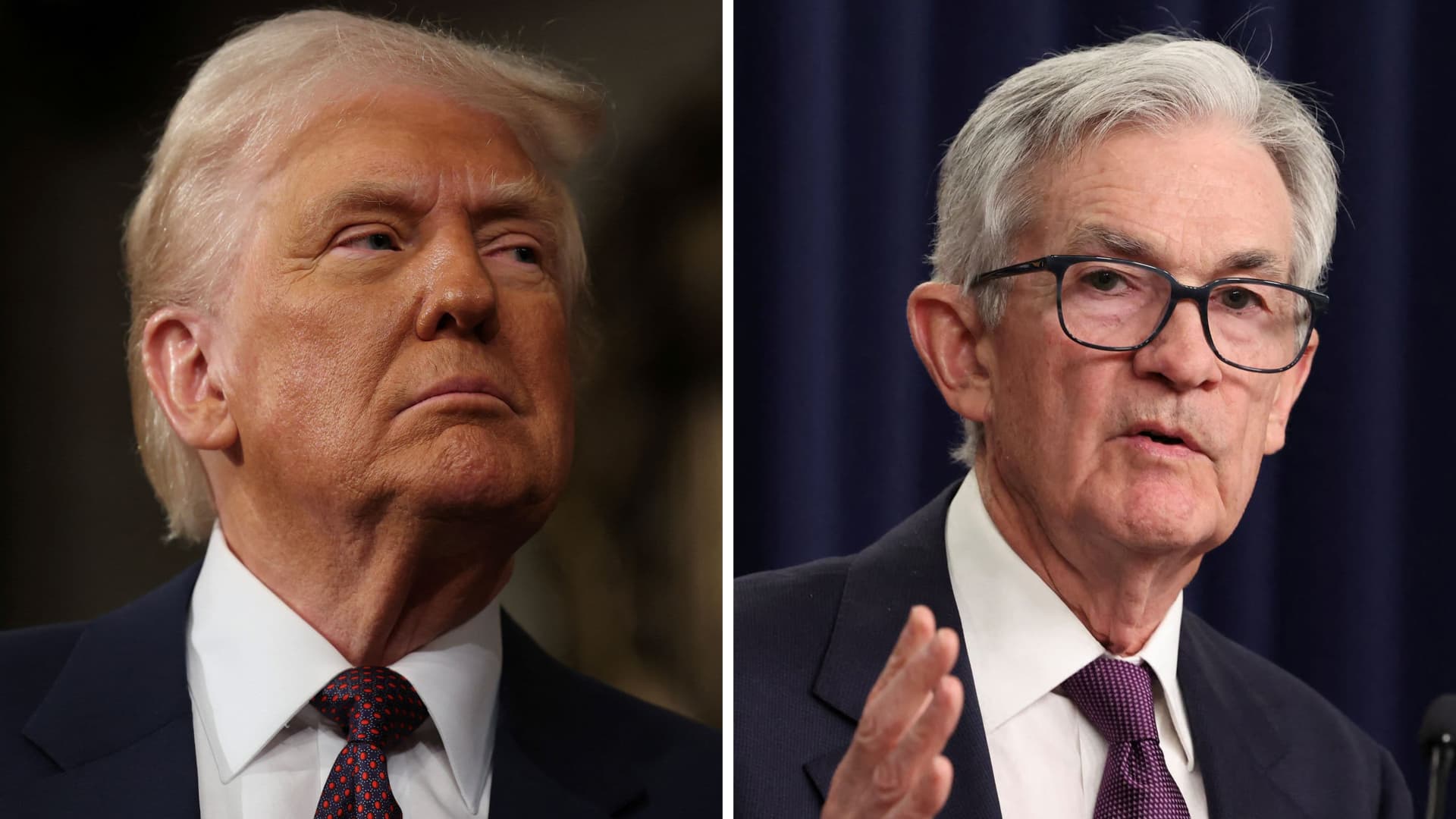
Trump Urges Fed Rate Cuts: Is Powell’s Time Running Out?
Former President Donald Trump has intensified his calls for the Federal Reserve to slash interest rates, openly criticizing Chairman Jerome Powell’s monetary policy stance. Speaking at a campaign rally in Michigan on Tuesday, Trump argued that high borrowing costs are stifling economic growth and hinted at replacing Powell if re-elected. The remarks come as inflation remains stubbornly above the Fed’s 2% target, sparking debate about the central bank’s next moves.
Mounting Pressure on the Federal Reserve
Trump’s latest comments mark his third public demand for rate cuts this month, reflecting growing political pressure on the independent central bank. The former president accused Powell of “strangling the golden goose” of economic expansion, claiming current rates near 5.5% hurt homeowners, small businesses, and manufacturers.
“We have the strongest economy in the world, but the Fed keeps putting anchors on it,” Trump told supporters. “When I return to office, we’ll have a Fed that works for America, not against it.”
Economic data presents a complex picture:
- Core PCE inflation stood at 2.8% year-over-year in April
- Unemployment remains historically low at 3.9%
- GDP growth slowed to 1.3% in Q1 2024
The Delicate Balance of Monetary Policy
Fed officials have maintained they need more evidence of cooling inflation before considering rate reductions. Minutes from the May FOMC meeting show most participants viewed policy as “well positioned,” with only two voting members favoring cuts this year.
“The Fed faces a classic rock-and-hard-place scenario,” said Dr. Evelyn Carter, chief economist at Hamilton Research Group. “Cut too soon and inflation could reaccelerate; wait too long and risk unnecessary economic pain. Political pressure only complicates this calculus.”
Market expectations have shifted dramatically in recent weeks:
- Futures traders now price in just one 25-basis-point cut for 2024
- 30-year mortgage rates hover near 7.1%, up from 6.5% in January
- 10-year Treasury yields climbed to 4.5% this week
Historical Precedents and Political Interference
Trump’s public critiques revive concerns about presidential influence over the traditionally independent Fed. During his 2017-2021 term, Trump repeatedly attacked Powell’s leadership, breaking with decades of White House protocol.
“There’s a reason Fed chairs serve four-year terms that don’t align with elections,” noted former Dallas Fed President Robert Kaplan. “Monetary policy needs insulation from short-term political cycles to maintain credibility.”
Historical analysis shows:
- The Fed changed rates during 78% of election years since 1980
- Presidential criticism correlates with 22% higher market volatility
- Central bank independence ranks as a top factor for currency stability
Market Reactions and Economic Implications
Financial markets showed muted response to Trump’s remarks, suggesting investors remain focused on economic fundamentals rather than political rhetoric. The S&P 500 gained 0.3% Wednesday, while the dollar index held steady.
“Markets have learned to discount political noise,” said BlackRock CIO Rick Rieder. “What matters is whether June CPI data shows meaningful progress on inflation.”
Key sectors face divergent impacts from rate decisions:
- Real estate: Each 1% rate cut could spur $25B in additional home sales
- Technology: Growth stocks typically gain 15% in rate-cutting cycles
- Banking: Net interest margins could compress further with cuts
What Comes Next for Powell and the Fed?
With Powell’s term as chair expiring in 2026, analysts speculate whether Trump would replace him if victorious in November. The former president appointed Powell in 2018 but later called the decision “maybe the worst I’ve made.”
“The Fed leadership question adds another layer of uncertainty,” noted Goldman Sachs strategist Jan Hatzius. “Markets prefer continuity, but political winds suggest changes could come regardless of economic conditions.”
Potential scenarios for the months ahead:
- Status quo: Fed holds rates steady until at least December
- Political shift: Earlier cuts to preempt election criticism
- Policy error: Moving too soon or too late sparks volatility
The Road Ahead for Interest Rates and the Economy
As the Fed’s June meeting approaches, all eyes will scrutinize any hints of policy shifts. Meanwhile, Trump’s rhetoric ensures monetary policy will remain a campaign issue through November.
“This debate goes beyond typical election-year posturing,” concluded Carter. “We’re seeing fundamental questions about the Fed’s role in a polarized economy where perceptions often outweigh data.”
For investors and policymakers alike, the coming months will test whether economic realities or political pressures ultimately guide one of the world’s most powerful financial institutions. Stay informed with our daily market analysis as this critical story develops.
See more CCTV News Daily