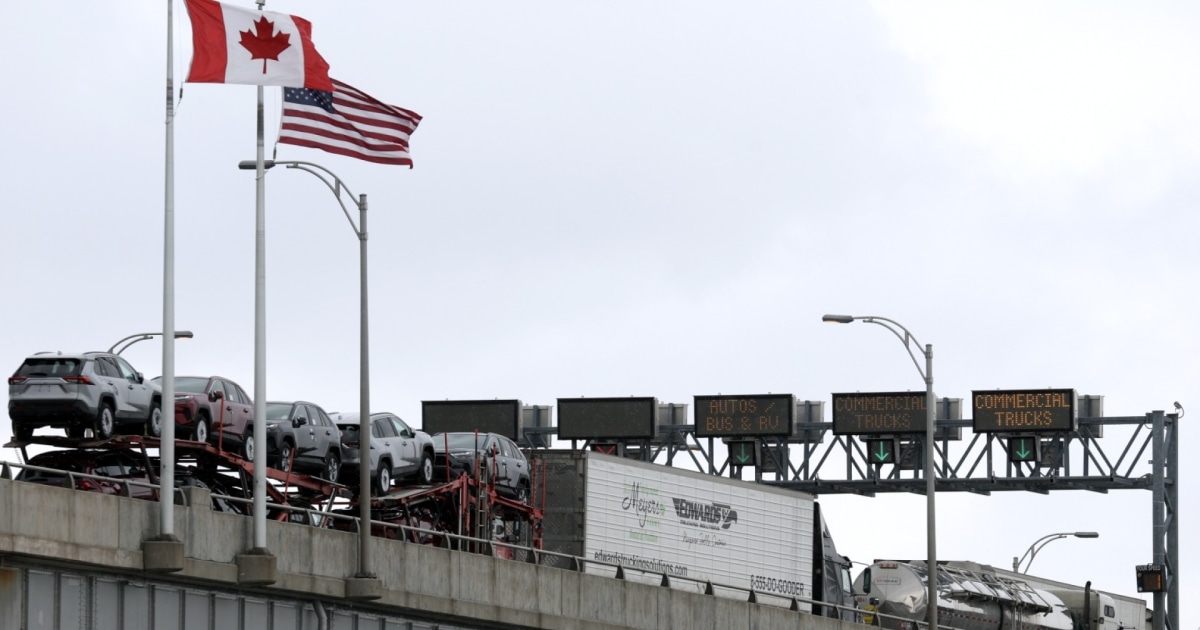
Trump Addresses Recession Concerns Amid Canada’s Tariff Tensions
In a landscape riddled with economic uncertainty, former President Donald Trump has stepped into the fray, aiming to alleviate burgeoning fears of a recession as Canada imposes retaliatory tariffs on a range of U.S. goods. This complex interplay of international trade relations not only raises questions about the resilience of the U.S. economy but also highlights the intricate diplomatic strategies necessary in navigating such turbulent waters. As we dissect the implications of these tariffs and Trump’s responses, it becomes clear that understanding the broader context is crucial for grasping the future economic outlook.
The Tariff Situation: A Closer Look
Canada’s recent decision to impose tariffs was largely seen as a direct response to earlier trade measures enacted by the United States. This back-and-forth is reminiscent of a tit-for-tat strategy often employed in international trade disputes. The Canadian government announced tariffs on a variety of American products, including agricultural goods and machinery, which are vital to both economies. The tariffs are expected to impact American farmers and manufacturers significantly, potentially exacerbating existing tensions.
In response to these developments, Trump has attempted to frame the discourse around tariffs, emphasizing that such economic measures are part of a broader strategy to negotiate better trade deals. He posits that while tensions may rise in the short term, the long-term benefits of a more balanced trade relationship will ultimately prevail. This perspective is not without merit; however, it also glosses over the immediate impacts on consumers and businesses caught in the crossfire.
Recession Fears: Context and Implications
As Canada’s tariffs take effect, fears of recession loom large over the U.S. economy. The prospect of reduced trade can lead to lower economic growth, affecting job creation and consumer spending. Trump’s reassurances come amid growing concerns that the U.S. could be on the brink of a recession, especially with inflation rates still high and interest rates rising.
- Inflation and Cost of Living: The inflationary pressures have made day-to-day living more expensive for Americans, squeezing household budgets.
- Interest Rates: The Federal Reserve’s strategy to combat inflation has involved raising interest rates, which can slow down economic activity.
- Consumer Confidence: Uncertainty regarding trade relations can dampen consumer confidence, leading to reduced spending.
Trump’s rhetoric aims to mitigate these fears, suggesting that the U.S. economy is robust enough to weather these challenges. He underscores the strength of American businesses and the resilience of the labor market, which have shown signs of recovery post-pandemic.
Trade Relations and Economic Resilience
International trade is a double-edged sword; while it opens up markets and fosters economic growth, it also exposes countries to vulnerabilities. The current tariff tensions with Canada are a reminder of how interconnected economies can be disrupted by political decisions. Trump’s stance is that America’s economic foundation is strong, and that the U.S. can leverage its position to negotiate more favorable terms.
The former president’s confidence in the country’s economic resilience is supported by several factors:
- Diverse Economy: The U.S. has a diverse economic base, which can help absorb shocks from trade disputes.
- Innovation and Technology: Continued investment in technology and innovation can spur growth even amid trade tensions.
- Strong Consumer Market: The U.S. boasts a large consumer market, which can drive economic activity independent of international trade dynamics.
Diplomatic Strategies in Trade Relations
As tariff tensions escalate, the importance of diplomatic strategies cannot be overstated. Trump’s approach has often been characterized by direct confrontation, but this scenario could benefit from a more nuanced strategy that emphasizes negotiation and compromise. Past trade agreements have shown that collaboration can yield better outcomes for both parties involved.
To navigate through these turbulent times, several strategies could be considered:
- Engagement and Dialogue: Establishing open channels of communication can lead to more effective resolutions.
- Long-term Agreements: Crafting long-term trade agreements that are mutually beneficial can help stabilize relations.
- Focus on Shared Interests: Identifying areas of shared economic interest can foster cooperation even amidst disputes.
The Path Forward: Economic Strategies and Outlook
As we look to the future, the interplay between tariffs, recession fears, and international relations will be critical in shaping economic policies. Trump’s efforts to downplay recession concerns offer a glimpse into the administration’s broader economic narrative, one that champions resilience and adaptability. However, it’s important for policymakers to remain vigilant and proactive in addressing the challenges posed by trade tensions.
The potential for a recession looms, but with strategic planning and a focus on enhancing trade relations, the U.S. can navigate these challenges effectively. The need for a balanced approach that considers both immediate economic impacts and long-term growth strategies will be pivotal in fostering a stable economic environment.
As the situation unfolds, Trump’s address to recession concerns amidst Canada’s tariff tensions serves as a crucial focal point for understanding the complexities of international trade relations. The need for effective communication, strategic negotiation, and a commitment to economic resilience becomes increasingly apparent. It’s a delicate dance—one that requires skillful navigation to ensure that both domestic interests and international relations are preserved.
Ultimately, how the U.S. manages these tariff tensions will impact not only its own economy but also its standing in the global market. The road ahead may be fraught with challenges, but with the right strategies and a commitment to cooperation, the potential for resilience remains strong.
See more CCTV News Daily