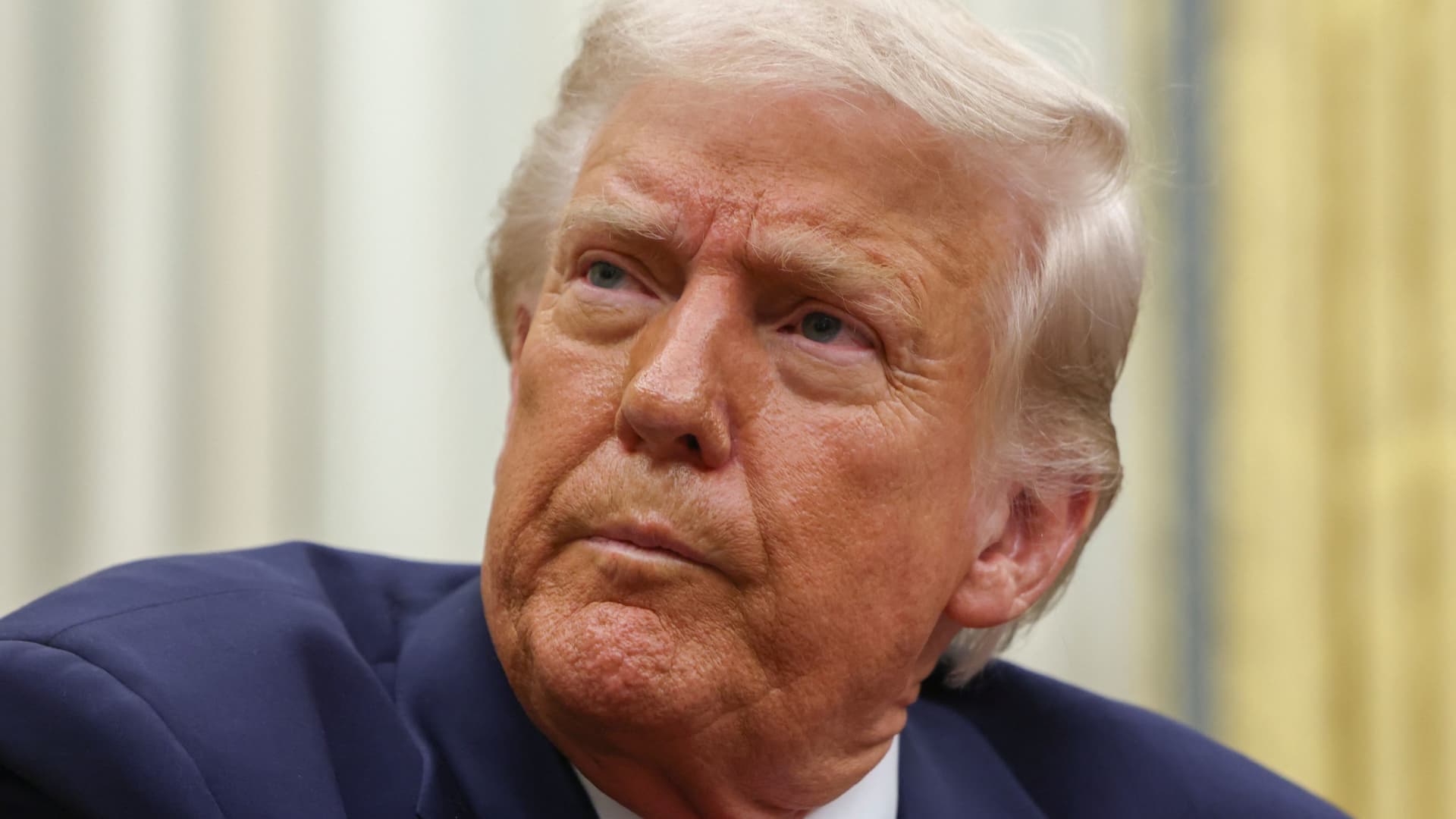
Trump Dismisses Stock Market Concerns, Promises Strength Through Tariffs
In a recent statement that has sparked considerable debate, former President Donald Trump expressed indifference towards the fluctuations in the stock market, asserting that tariffs will serve as a cornerstone for bolstering the U.S. economy. This bold proclamation raises significant questions about the future of trade policies and their potential impact on American businesses and consumers alike.
The Context of Trump’s Remarks
Trump’s comments come at a time when the stock market has experienced notable volatility, influenced by various factors including interest rate hikes, inflation concerns, and geopolitical tensions. While many analysts focus on the implications of these fluctuations for everyday investors and retirement accounts, Trump maintains that the broader economic strategy involving tariffs will create a more resilient economy.
During a recent rally, Trump stated, “I’m not worried about the stock market. What matters is that we’re bringing jobs back to America through our tariffs.” This statement underscores a fundamental principle of Trump’s economic philosophy: a focus on domestic production and job creation over the traditional metrics of market performance.
Understanding Tariffs and Their Economic Implications
Tariffs, essentially taxes on imported goods, are designed to make foreign products more expensive, thereby encouraging consumers to buy American-made products. Trump argues that this policy not only protects domestic industries but also leads to job creation. Here are several key points regarding tariffs and their potential effects on the economy:
- Encouragement of Domestic Production: By imposing tariffs, the cost of imported goods rises, making U.S. products more competitive. This can lead to increased investment in American manufacturing.
- Job Creation: As domestic production increases, so does the demand for labor, potentially leading to job growth in various sectors.
- Trade Balance Improvement: Tariffs may help reduce trade deficits by encouraging consumers to purchase local products instead of imported ones.
- Inflationary Pressures: While tariffs can protect jobs, they may also lead to higher prices for consumers, as companies may pass on the costs of tariffs to customers.
Historical Context of Tariffs in the U.S.
Tariffs have been a contentious issue in U.S. economic history, with significant implications during both the Great Depression and World War II. For instance, the Smoot-Hawley Tariff of 1930 raised duties on hundreds of imports, which many economists believe exacerbated the Great Depression by stifling international trade. Conversely, during WWII, tariffs were used strategically to protect vital industries and boost national production.
Trump’s administration reignited the debate on tariffs through the imposition of tariffs on steel and aluminum imports in 2018, arguing that these actions were necessary to protect American workers and bolster national security. His position has garnered both support and criticism, highlighting the complex nature of trade policy in a globalized economy.
The Impact on American Businesses
Trump’s dismissal of stock market concerns invites scrutiny regarding how tariffs impact American businesses. While proponents argue that tariffs protect domestic jobs, opponents contend that they can harm industries reliant on global supply chains. Here are some considerations:
- Manufacturers: Industries that compete directly with imports, such as steel and textiles, may benefit from tariffs. However, those reliant on imported materials might face increased costs, which could lead to higher prices for consumers.
- Exporters: Tariffs can provoke retaliatory measures from other countries, potentially harming American exporters. For instance, tariffs on U.S. goods could make them less competitive abroad.
- Small Businesses: Small businesses may feel the pinch more acutely than larger corporations, as they often lack the resources to absorb increased material costs or navigate complex tariff regulations.
Public Sentiment and Political Implications
Trump’s latest remarks reflect a broader strategy to galvanize his base, particularly among blue-collar workers who may feel threatened by globalization and foreign competition. His focus on tariffs resonates with many who believe that protecting American jobs should be a priority. However, public sentiment is mixed. While some share his views on tariffs as a necessary tool for economic strength, others are concerned about potential inflation and higher consumer prices.
Political analysts suggest that Trump’s unwavering stance on tariffs may serve as a rallying point leading into future elections. His ability to frame the narrative around American economic strength through protectionist policies could resonate with voters who prioritize domestic job growth over short-term market performance.
The Future of Trade Policies
As the U.S. grapples with the challenges of a post-pandemic economy, the future of trade policies remains uncertain. Trump’s dismissal of stock market fluctuations in favor of a tariff-centric approach may signal a shift towards a more protectionist stance in American economic policy.
Potential developments include:
- Increased Tariffs: If Trump or like-minded candidates gain political traction, we may see a resurgence in tariffs aimed at various sectors.
- Trade Agreements: Future trade agreements could be influenced by a desire to maintain American jobs, potentially leading to more favorable terms for U.S. workers.
- Global Trade Relationships: The U.S. may re-evaluate its relationships with trading partners, focusing on bilateral agreements that prioritize American interests.
Conclusion
Trump’s assertion that he is unconcerned with stock market fluctuations and promises economic strength through tariffs presents a bold vision for American trade policy. While his perspective may resonate with many who prioritize job creation and domestic production, the broader implications of such policies remain to be seen. As the global economy continues to evolve, the balance between protectionism and free trade will undoubtedly be a defining feature of future economic discussions.
Ultimately, whether Trump’s approach will lead to a revitalized American economy or exacerbate existing challenges is a question that will be answered in time, as businesses, consumers, and policymakers navigate the complex landscape of trade in the years to come.
See more CCTV News Daily