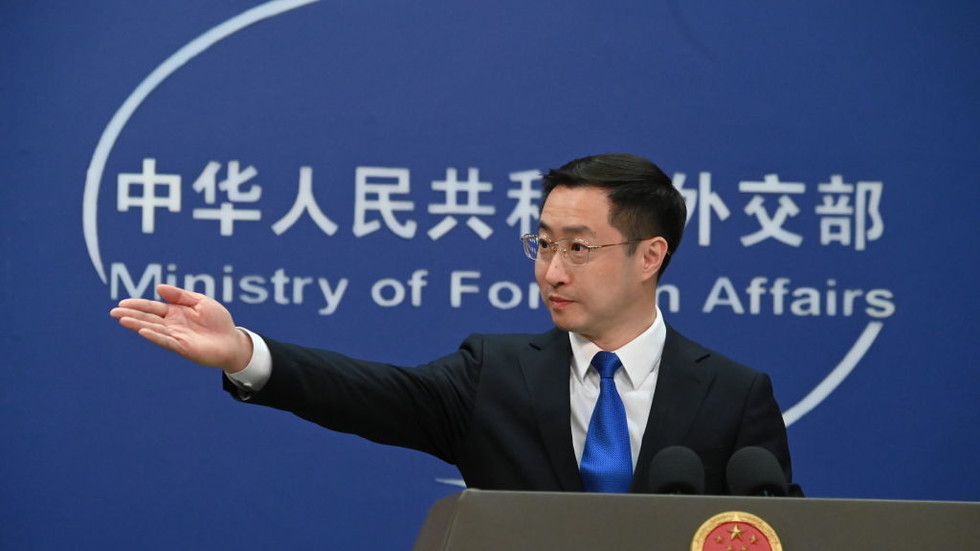
Beijing Accuses Trump of Economic Bullying Amid Escalating Tariff Tensions
Beijing has sharply criticized former U.S. President Donald Trump’s tariff policies, labeling them as “economic bullying” in a recent official statement. The accusation comes as trade tensions between the world’s two largest economies continue to simmer, with potential repercussions for global markets. Experts warn that renewed tariff wars could disrupt supply chains, inflate consumer prices, and strain diplomatic relations.
The Roots of the Trade Conflict
The current friction traces back to 2018 when the Trump administration imposed tariffs on $250 billion worth of Chinese goods, citing unfair trade practices and intellectual property theft. China responded with retaliatory measures, creating a tit-for-tat escalation that:
- Reduced bilateral trade by 12% in 2019 (U.S. Census Bureau data)
- Cost U.S. consumers $57 billion annually (National Bureau of Economic Research)
- Forced manufacturers to reconfigure global supply chains
“This isn’t just about trade balances—it’s about technological dominance,” explains Dr. Lin Wei, trade policy analyst at Peking University. “The tariffs specifically targeted China’s growing high-tech sector, which the U.S. sees as a strategic threat.”
China’s Strategic Response to Tariff Pressures
Beijing’s “economic bullying” rhetoric marks a shift in diplomatic tone as Chinese officials attempt to frame the U.S. as violating international trade norms. The Ministry of Commerce recently released a white paper highlighting:
- China’s compliance with 96% of its World Trade Organization commitments
- U.S. tariffs affecting over 8,700 Chinese product categories
- Projected 0.5% reduction in China’s GDP growth if tariffs remain
Meanwhile, China has diversified its economic partnerships through initiatives like the Regional Comprehensive Economic Partnership (RCEP), which now covers 30% of global GDP. “China is playing the long game,” notes former U.S. trade negotiator Robert Chambers. “While tariffs create short-term pain, they’re accelerating China’s decoupling from Western markets.”
Global Economic Fallout and Industry Impacts
The tariff war’s ripple effects extend far beyond bilateral relations. Key sectors experiencing disruption include:
- Automotive: 25% tariffs on auto parts increased U.S. vehicle production costs by $2,400 per car (Center for Automotive Research)
- Agriculture: U.S. soybean exports to China dropped 75% during the height of tensions
- Electronics: 15% tariffs on consumer electronics contributed to 3.7% price hikes for U.S. consumers
Small businesses have been particularly hard-hit. “We saw a 40% increase in component costs overnight,” reports Sarah Chen, CEO of a California-based IoT startup. “Many competitors simply couldn’t adapt their supply chains fast enough.”
Political Calculus Behind the Trade War Rhetoric
Analysts suggest Beijing’s latest statements aim to influence U.S. domestic politics ahead of elections. By framing Trump-era policies as bullying, China may be:
- Appealing to U.S. business groups harmed by tariffs
- Positioning itself as a rules-based trade advocate
- Testing the Biden administration’s resolve on maintaining tariffs
“This is classic wedge strategy,” says Georgetown University professor Elena Martinez. “China wants American corporations lobbying Washington for tariff relief—effectively doing Beijing’s diplomatic work for them.”
Future Scenarios: From Escalation to Detente
Three potential paths forward are emerging as trade experts assess the situation:
- Continued Stalemate: Maintaining existing tariffs while pursuing limited sector-specific deals
- Full-Scale Escalation: Expansion of tariffs to new sectors like green technology
- Gradual Thaw: Phased tariff reductions tied to intellectual property protections
The Peterson Institute for International Economics estimates that removing all Trump-era tariffs could boost U.S. real income by $32 billion annually. However, geopolitical tensions over Taiwan and technology transfers complicate any straightforward resolution.
What Businesses and Investors Should Watch
Key indicators that will shape the trade landscape include:
- Quarterly U.S. import/export data with China
- Shifts in multinational corporations’ manufacturing footprints
- Developments in alternative trade blocs like CPTPP
- Semiconductor export control negotiations
For now, businesses are advised to maintain flexible supply chains and monitor policy announcements from both capitals. “The only certainty is volatility,” cautions Chambers. “Smart companies are building contingency plans for multiple scenarios.”
As the economic heavyweight bout continues, the stakes extend far beyond trade balances to fundamental questions about global economic leadership in the 21st century. Subscribe to our trade policy newsletter for ongoing analysis of this developing story.
See more CCTV News Daily