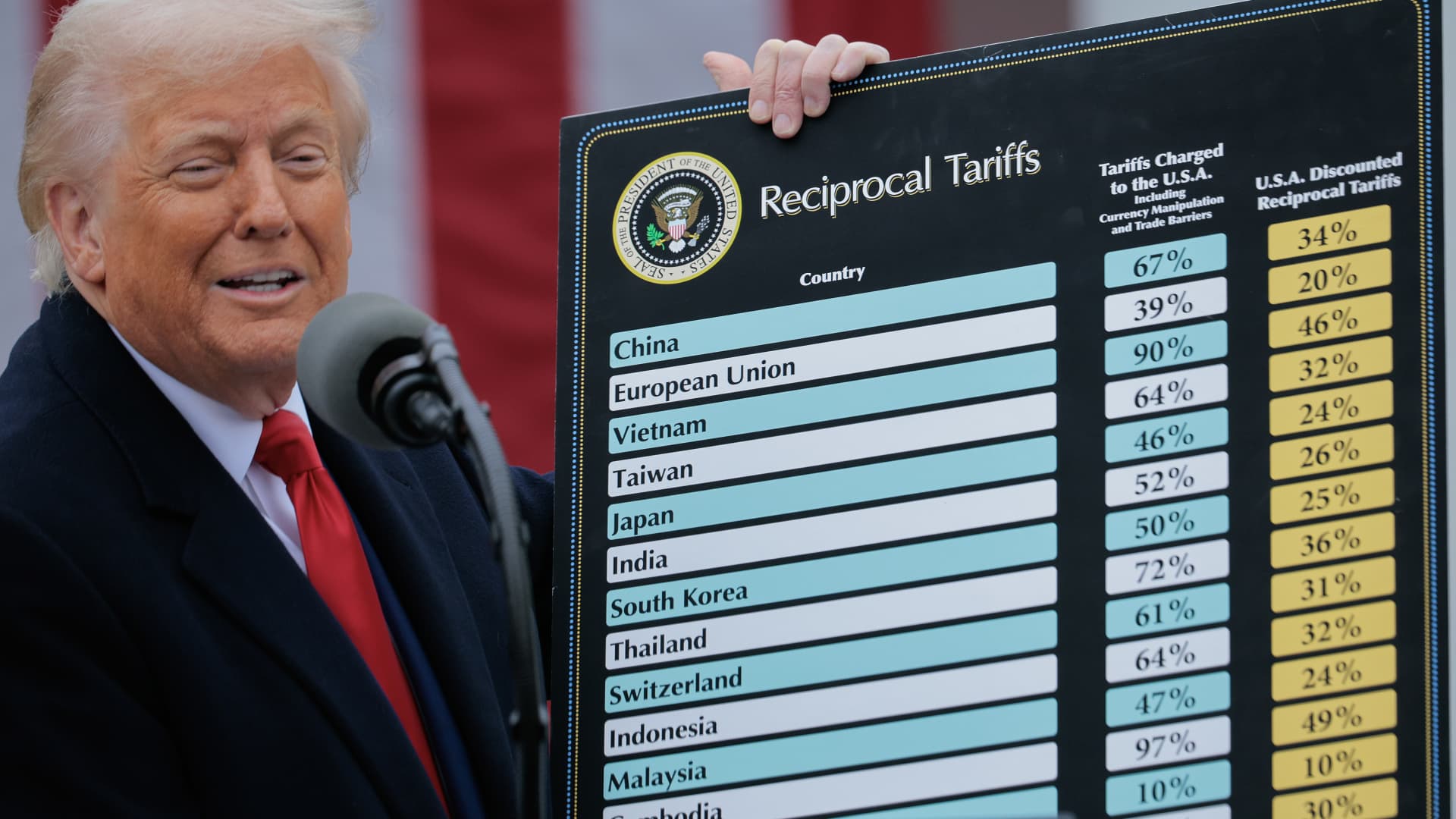
Unpacking Trump’s Tariff Rates: A Surprising Global Disparity
Former President Donald Trump’s aggressive tariff policies, implemented between 2017 and 2020, created a stark contrast with global trade norms, according to World Trade Organization (WTO) data. While the U.S. levied tariffs averaging 3.4% on imports, rates spiked to over 20% for targeted goods like steel and aluminum—disproportionately affecting allies and rivals alike. Economists warn these disparities could reshape trade dynamics, strain diplomatic relations, and trigger retaliatory measures in an already fragile global economy.
The Data Behind Trump’s Tariff Strategy
An analysis of WTO records reveals that Trump’s tariffs diverged sharply from international averages. For example:
- Steel and aluminum: 25% and 10% tariffs, respectively, imposed in 2018—far above the global average of 1.5% for such goods.
- Chinese imports: Tariffs reached up to 25% on $370 billion worth of goods, compared to the U.S. historical average of 1.6% for non-targeted products.
- EU retaliation: The bloc imposed $3.2 billion in counter-tariffs, targeting politically sensitive U.S. exports like motorcycles and bourbon.
“The numbers tell a story of selective protectionism,” says Dr. Elena Rodriguez, a trade economist at the Peterson Institute. “While the overall U.S. tariff rate seemed moderate, the targeted hikes created de facto trade barriers that disrupted supply chains.”
Why Tariff Disparities Matter for Global Economies
The uneven application of tariffs had cascading effects. Developing nations reliant on U.S. markets, like Vietnam and Bangladesh, faced unpredictable costs, while advanced economies like Germany saw exports drop by 12% in tariff-affected sectors. Meanwhile, U.S. manufacturers dependent on imported materials, such as automakers, reported increased production costs of up to $900 per vehicle.
“This wasn’t just about economics—it was geopolitical signaling,” notes geopolitical analyst Mark Thurston. “By exempting certain countries (e.g., South Korea) while hammering others (e.g., China), Trump weaponized trade policy to reward or punish allies.”
Contrasting Perspectives: Protectionism vs. Free Trade
Proponents argue the tariffs protected critical industries. “Steel employment grew by 3.2% in 2019,” claims the Coalition for a Prosperous America, a pro-tariff lobbying group. Critics, however, cite a 2020 Federal Reserve study showing tariff costs outweighed benefits, with U.S. consumers and businesses absorbing $68 billion in added expenses.
The Biden administration has rolled back some tariffs but retained others, reflecting ongoing tensions between domestic priorities and global cooperation. “The question isn’t just about rates,” says Rodriguez. “It’s whether unilateral tariffs undermine the WTO’s role in mediating disputes.”
Future Implications: A Fragmented Trade Landscape?
With Trump proposing even higher tariffs—up to 60% on Chinese goods—if re-elected, experts warn of a potential domino effect:
- Retaliatory spirals: The EU and China may escalate their own trade barriers.
- Supply chain shifts: Companies could accelerate moves to tariff-exempt countries, reshaping global manufacturing hubs.
- Inflation risks: Higher import costs may reignite price pressures in consumer markets.
The long-term impact hinges on whether nations can reconcile protectionist impulses with multilateral frameworks. For now, businesses and governments alike are bracing for volatility. Stay informed with our weekly trade policy newsletter to navigate these shifting dynamics.
See more CCTV News Daily