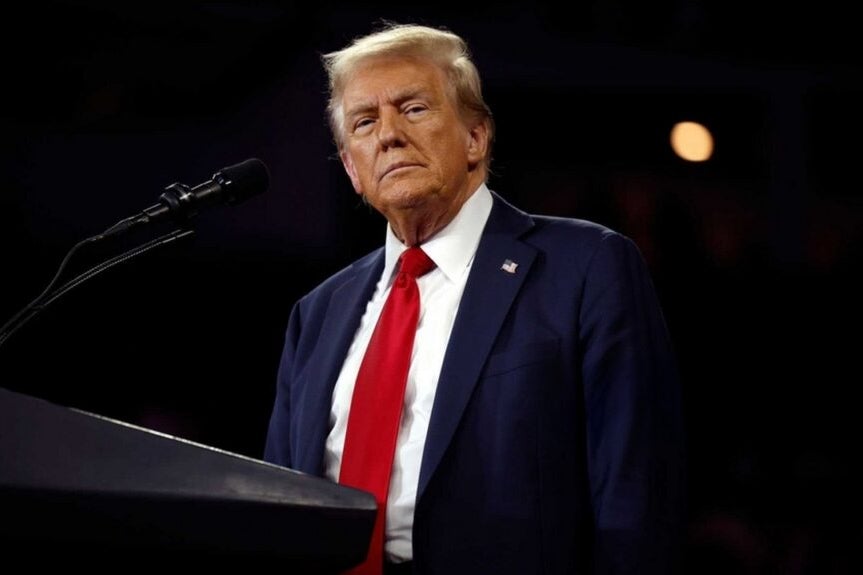
Trump’s Bold Proposal: Can Tariffs Really Replace Income Tax?
In a surprising turn of fiscal policy, President Donald Trump’s administration has ignited a heated debate with a bold proposal: the potential replacement of income tax with tariffs. This idea, championed by National Economic Council Director Kevin Hassett, raises significant questions about the future of tax policy in the United States. Can tariffs truly serve as a viable replacement for income tax? This article delves into the implications of such a shift, examining both the potential benefits and drawbacks.
Understanding the Proposal
The concept of replacing income tax with tariffs is not entirely new, but it has gained traction in recent discussions about tax reform. The core idea is to generate government revenue through tariffs—taxes imposed on imported goods—rather than through the traditional income tax system that taxes individuals based on their earnings. This approach seeks to simplify the tax structure and potentially stimulate domestic manufacturing by making imported goods more expensive.
Kevin Hassett has articulated that tariffs could provide an alternative source of revenue that might reduce the burden on American workers. The administration argues that this shift could incentivize production within the United States, leading to job creation and economic growth.
The Mechanics of Tariffs
To comprehend the feasibility of this proposal, it’s essential to understand how tariffs work. Tariffs are essentially taxes levied on goods imported from other countries. Here’s how they can be structured:
- Ad Valorem Tariffs: A percentage of the value of the imported goods.
- Specific Tariffs: A fixed fee based on the quantity of goods imported.
- Compound Tariffs: A combination of both ad valorem and specific tariffs.
When tariffs are imposed, they increase the cost of foreign goods, making them less competitive compared to domestically produced items. This can potentially lead to a boost in local manufacturing, as consumers may opt for American-made products due to lower prices.
Potential Economic Implications
Transitioning from income tax to tariffs could have profound implications for the economy. Here are some potential benefits and challenges:
Benefits
- Increased Domestic Production: By making imports more expensive, tariffs could encourage consumers to buy domestic products, thereby stimulating the local economy.
- Simplified Tax Structure: Eliminating income tax could simplify tax compliance for millions of Americans, reducing the administrative burden on both taxpayers and the government.
- Job Creation: A boost in domestic manufacturing might lead to job creation in industries that have suffered due to globalization.
Challenges
- Consumer Costs: Tariffs can lead to higher prices for imported goods, which could disproportionately affect lower-income families who rely on affordable options.
- Retaliation from Trade Partners: Countries affected by U.S. tariffs may retaliate with their own tariffs, potentially leading to trade wars that could harm global economic growth.
- Revenue Stability: Tariffs are subject to fluctuations based on international trade relationships and global supply chains, which could lead to inconsistent revenue for the government.
Historical Context and Comparisons
Historically, tariffs have played a significant role in U.S. economic policy. During the late 19th and early 20th centuries, tariffs were a primary source of federal revenue. However, the introduction of the income tax in 1913 shifted the balance, leading to a more complex tax system.
Comparably, some countries operate successfully with lower income taxes supplemented by tariffs. For instance, several Scandinavian countries utilize high tariffs while maintaining competitive income tax rates, allowing for robust social welfare systems. However, these models may not directly translate to the U.S. context due to differences in economic structure and consumer behavior.
Public Opinion and Political Feasibility
The idea of replacing income tax with tariffs has garnered mixed reactions from the public and political figures. Supporters argue that it aligns with Trump’s America First agenda, appealing to those who prioritize domestic manufacturing and job creation. Critics, however, warn that it could disproportionately impact low and middle-income families and may lead to increased prices for everyday goods.
Political feasibility remains a significant hurdle. Implementing such a fundamental change in tax policy would require extensive negotiation and consensus-building in Congress. Many lawmakers may be hesitant to support a proposal that appears to undermine the progressive tax system, which aims to distribute the tax burden more equitably.
Looking Ahead: The Future of Tax Policy
The debate surrounding Trump’s bold proposal reflects broader discussions about the future of tax policy in America. As the nation grapples with economic recovery post-pandemic, the quest for sustainable revenue sources will undoubtedly continue. Tariffs could serve as one piece of a complex puzzle, but their efficacy as a complete replacement for income tax remains uncertain.
Conclusion
Trump’s proposal to replace income tax with tariffs is a provocative idea that has sparked significant debate about its potential impact on the American economy. While it presents a pathway to stimulate domestic production and simplify the tax system, it also poses risks that could affect consumer prices and international trade relations. As policymakers weigh the pros and cons, it’s clear that the future of tax policy will require careful consideration of both economic principles and social equity.
In summary, whether tariffs can truly replace income tax is a question that demands thorough examination. The conversation surrounding this proposal will likely evolve as both economic conditions and political landscapes change. Ultimately, the goal should be to foster a tax system that promotes growth, fairness, and stability for all Americans.
See more CCTV News Daily