Trump’s Bold Proposal: Can Tariffs Really Replace Income Tax?
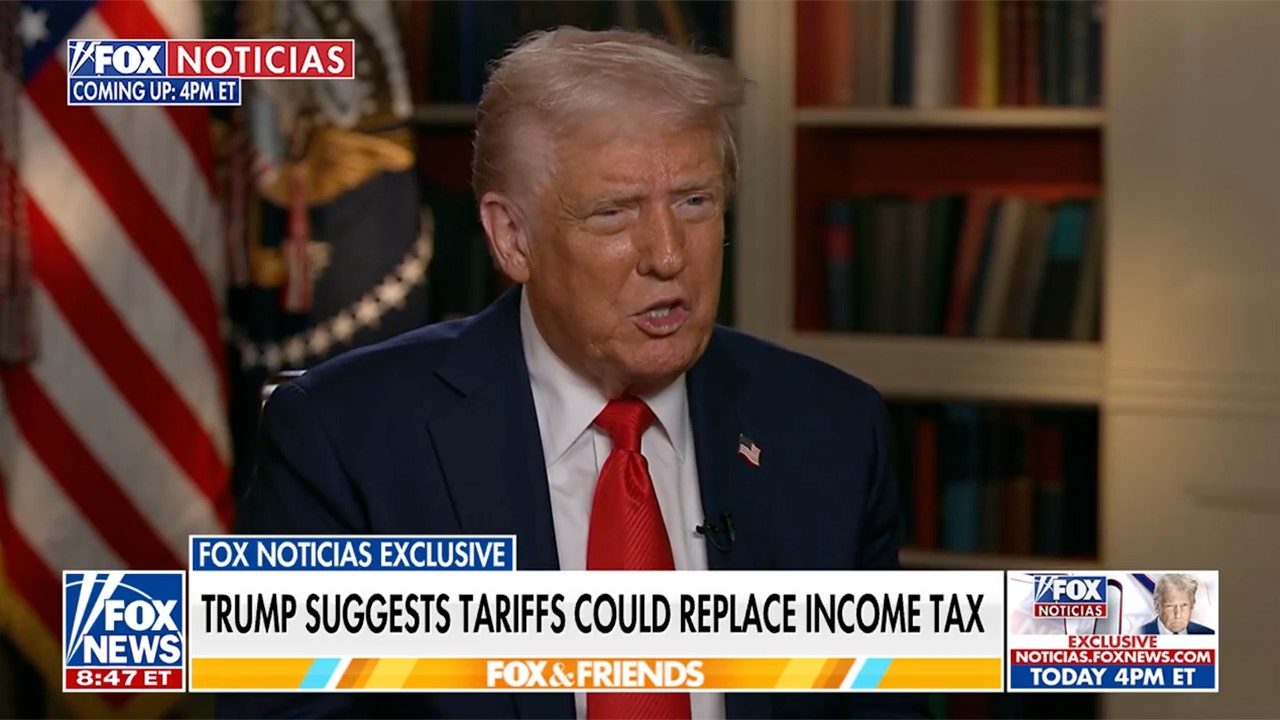
Former President Donald Trump has reignited debate over U.S. tax policy by suggesting tariffs could replace income taxes entirely. During a recent campaign rally, the Republican leader floated the idea of funding government operations through import duties rather than personal income levies. This radical proposal challenges conventional economic wisdom and raises critical questions about feasibility, fairness, and potential consequences for American households and businesses.
The Mechanics of a Tariff-Based Tax System
Trump’s vision would fundamentally restructure how the U.S. government collects revenue. Currently, individual income taxes contribute approximately 49% of federal revenue, while tariffs account for just 1.8%, according to Congressional Budget Office data. To replace the $2 trillion generated annually by income taxes, tariff rates would need to increase exponentially.
“The math simply doesn’t add up,” says Dr. Evelyn Carter, senior fellow at the Tax Policy Center. “Even if we imposed 50% tariffs on all imports—which would trigger massive retaliation—we’d only cover about half of current income tax revenue. Consumers would bear the brunt through higher prices.”
Proponents argue that such a system could:
- Eliminate the IRS bureaucracy
- Encourage domestic manufacturing
- Make taxation more “voluntary” through consumption choices
Historical Precedents and Economic Impacts
Before the 16th Amendment established income taxes in 1913, tariffs funded 90% of federal operations. However, the U.S. economy was far less complex, with international trade representing a fraction of today’s $28 trillion GDP. Modern economists warn that heavy reliance on tariffs could:
- Increase consumer prices by 15-25% on imported goods
- Trigger trade wars with key partners like China and the EU
- Disproportionately burden lower-income households
“This isn’t the 19th century,” notes trade analyst Mark Richardson. “Global supply chains mean tariffs function as hidden sales taxes. A family buying a $20,000 imported car might pay $5,000 in tariffs instead of $2,000 in income tax—except now they’re taxed whether they earn $30,000 or $300,000.”
Political Reactions and Viability
The proposal has drawn sharp partisan responses. Conservative groups praise its potential to simplify taxation, while progressive organizations warn about regressive impacts. Senate Finance Committee Chair Ron Wyden called the idea “a recipe for economic disaster that would explode the deficit.”
Key implementation challenges include:
- Constitutional requirements for uniform tariff rates
- WTO rules limiting discriminatory trade practices
- Potential 15-20% reduction in import volumes
Former Trump economic advisor Peter Navarro defends the concept: “When properly structured, strategic tariffs can rebuild industrial capacity while funding government. The key is pairing them with domestic production incentives.”
Comparative Analysis: Other Nations’ Experiences
No major economy relies primarily on tariffs for revenue. However, some insights emerge from international examples:
| Country | Tariff Revenue Share | Key Impacts |
|---|---|---|
| Bhutan | 40% | High consumer prices, limited trade |
| Lesotho | 35% | Border smuggling issues |
| United States (1890) | 57% | Triggered 1893 depression |
Modern trade-dependent nations like Singapore (tariffs: 0.2% of revenue) demonstrate alternative models with broad-based consumption taxes instead of income taxes.
Future Outlook and Policy Considerations
While full income tax replacement appears economically unfeasible, targeted tariff increases could play a role in broader tax reform. The Biden administration maintains that modern economies require diversified revenue streams, with Treasury Secretary Yellen noting, “Putting all your eggs in the trade basket risks scrambling the entire economy.”
As the 2024 election approaches, voters can expect:
- Detailed economic analyses from think tanks
- Congressional hearings on trade policy
- Revised proposals addressing implementation hurdles
Whether as serious policy or political framing, this debate highlights growing dissatisfaction with the current tax system. For those interested in deeper analysis, the nonpartisan Tax Foundation will host a webinar on alternative revenue models on June 15.
See more CCTV News Daily