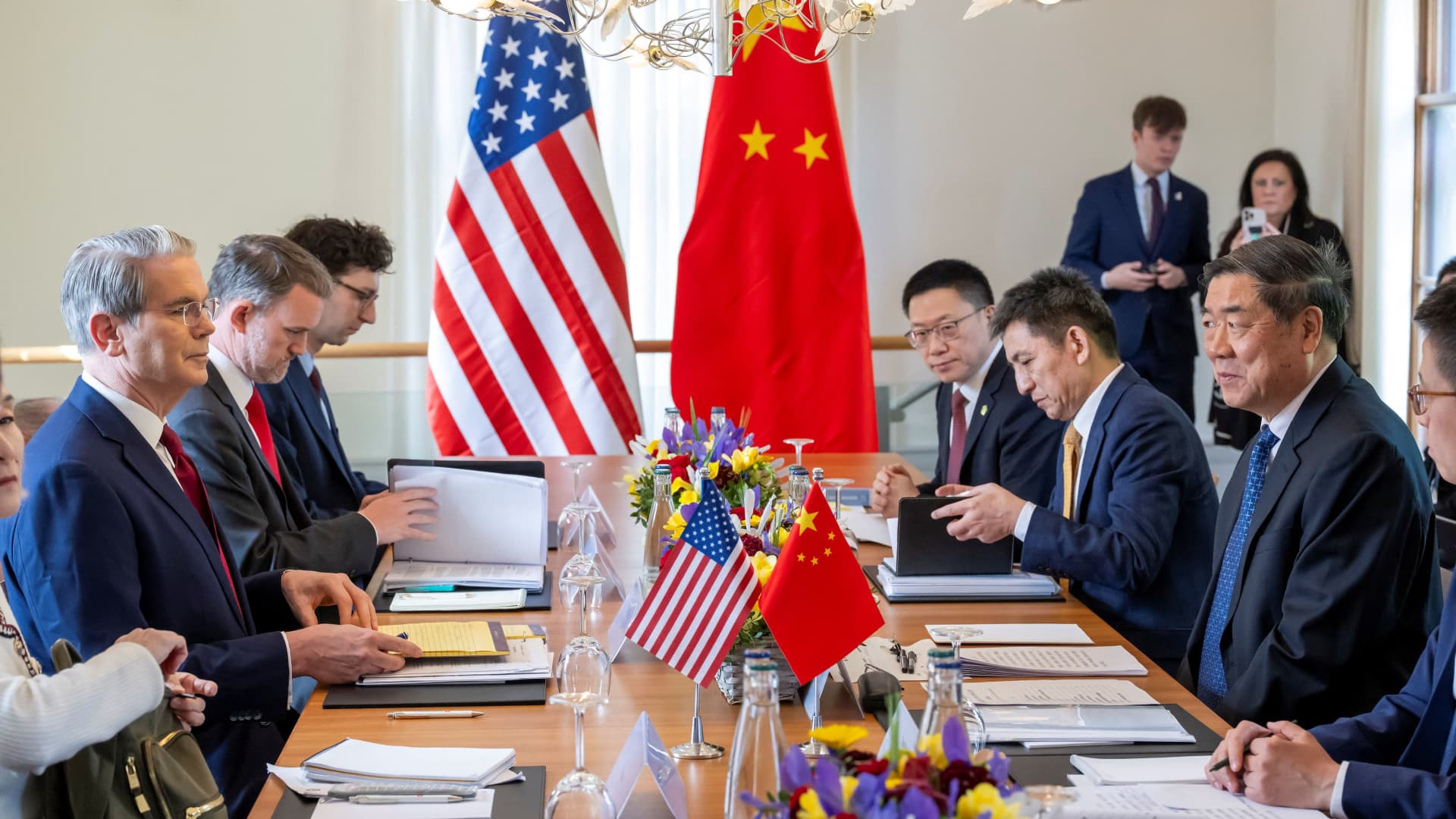
U.S. Tensions with China Escalate as Huawei Chip Controversy Disrupts Trade Talks
In a dramatic escalation of economic tensions, China has accused the United States of deliberately undermining critical trade negotiations by issuing warnings about Huawei’s advanced semiconductor developments. The confrontation, which erupted this week, threatens to derail months of diplomatic efforts and raises serious concerns about the future of global technology collaboration. U.S. officials confirmed they warned allies about potential security risks from Huawei’s new chips, while Chinese state media denounced the move as “economic sabotage.”
The Huawei Semiconductor Dispute: A Flashpoint in Tech Rivalry
The current crisis centers on Huawei’s breakthrough in producing 7-nanometer processors despite U.S. export controls. Industry analysts confirm the Chinese tech giant has made surprising progress with its Mate 60 Pro smartphone chipset, developed by Shanghai-based Semiconductor Manufacturing International Corp (SMIC). This technological leap occurred despite comprehensive U.S. restrictions implemented in October 2022 aimed at cutting China off from advanced semiconductor technology.
“What we’re witnessing is a classic security dilemma,” explains Dr. Evelyn Tan, senior fellow at the Center for Strategic Technology Analysis. “The U.S. views Huawei’s advancements as a circumvention of export controls, while China interprets American warnings as containment strategy. Both perspectives contain elements of truth.”
Key developments in the controversy include:
- The U.S. Commerce Department’s September 2023 warning about potential security vulnerabilities in Huawei’s new chips
- China’s Commerce Ministry accusing the U.S. of “unilateral bullying” in trade relations
- Reports that the White House is considering tightening chip-related export controls further
Trade Talks Hang in the Balance
The timing of this dispute couldn’t be worse for bilateral relations. High-level trade discussions scheduled for late September now face postponement, with Chinese officials demanding “confidence-building measures” before resuming negotiations. These talks were meant to address longstanding issues including:
- U.S. tariffs on $370 billion worth of Chinese goods
- Chinese market access for American agricultural products
- Intellectual property protections for technology firms
“We’re back to square one in many ways,” remarks former U.S. trade representative Michael Froman. “The Huawei situation demonstrates how technology competition continues to overshadow broader economic discussions between the world’s two largest economies.”
The Global Semiconductor Industry Reacts
Market responses to the escalating tensions have been immediate and severe. The Philadelphia Semiconductor Index fell 2.3% following news of the disrupted talks, while Chinese chip stocks experienced volatile trading. Industry leaders express growing concern about the bifurcation of global supply chains.
Recent data highlights the stakes:
- The global semiconductor market is projected to reach $1 trillion by 2030 (McKinsey & Company)
- China accounts for 31% of worldwide chip consumption but only 7% of production (SIA)
- U.S. semiconductor firms derive approximately 36% of revenue from Chinese markets
TSMC founder Morris Chang recently warned that “the era of globalization in chips is over,” a sentiment echoed by many industry veterans. Meanwhile, Chinese manufacturers are accelerating investments in domestic capabilities, with SMIC pledging $8.9 billion for new fabrication plants in Shanghai and Beijing.
Military and Security Dimensions Compound Tensions
Beyond commercial implications, the Huawei dispute carries significant national security undertones. U.S. defense officials have long expressed concerns about potential dual-use applications of advanced Chinese semiconductors. A 2023 Pentagon report highlighted several concerning trends:
- Chinese military-civil fusion spending increased 12% year-over-year
- Over 200 Chinese tech firms maintain direct ties to defense research
- PLA modernization programs increasingly incorporate commercial AI and chip technologies
“This isn’t just about smartphones,” notes cybersecurity expert Admiral James Stavridis (Ret.). “Advanced semiconductors power everything from hypersonic missiles to quantum computing. The technological lead in this sector translates directly to military advantage.”
Path Forward: Diplomacy or Decoupling?
As both nations dig in their positions, analysts suggest several potential scenarios:
- Limited De-escalation: Temporary agreements on non-sensitive trade issues while maintaining tech restrictions
- Full Decoupling: Complete separation of U.S. and Chinese tech ecosystems
- Third-Party Mediation: Involvement of international organizations or allied nations
The Biden administration faces pressure from both domestic manufacturers seeking Chinese market access and national security advocates pushing for tougher restrictions. Meanwhile, China’s leadership must balance technological self-sufficiency goals with the reality of ongoing reliance on foreign equipment and expertise.
“We’re entering uncharted territory in economic statecraft,” warns Harvard professor Graham Allison. “The rules-based international order wasn’t designed for this level of technological competition between superpowers. Both sides need to establish guardrails before miscalculations occur.”
For businesses navigating these turbulent waters, experts recommend diversifying supply chains and increasing scenario planning. The U.S.-China Business Council advises members to “prepare for multiple eventualities” as the situation evolves rapidly.
Stay informed on developing U.S.-China trade relations by subscribing to our daily policy briefs.
See more CCTV News Daily