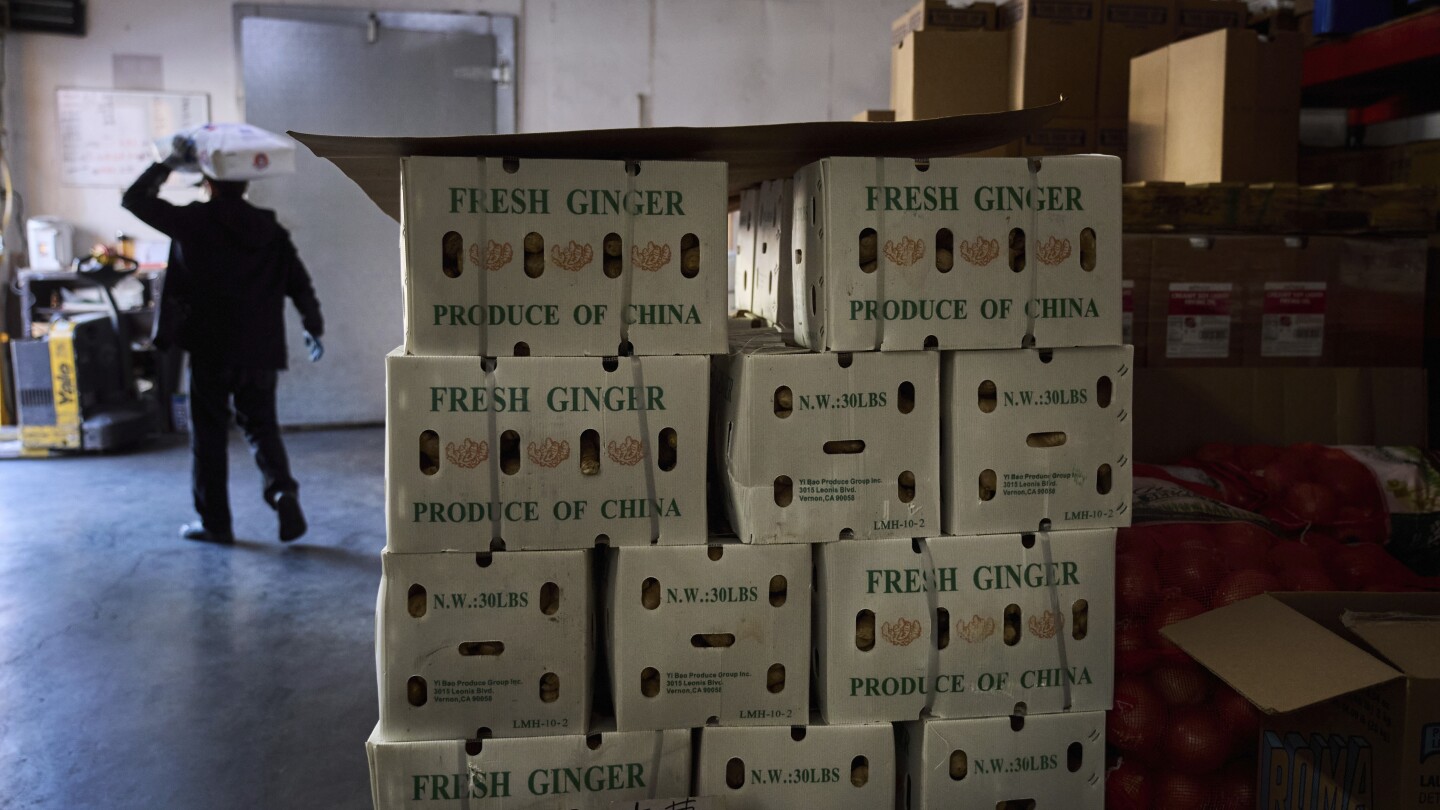
As trade tensions between the United States and China escalate with new tariffs, businesses on both sides of the Pacific face mounting uncertainty. Over the past year, the Biden administration has imposed steep tariffs on Chinese electric vehicles, semiconductors, and steel, while China retaliated with restrictions on agricultural imports and rare earth minerals. This tit-for-tat conflict threatens to disrupt a $575 billion trade relationship, leaving companies scrambling to adapt. Experts warn that without diplomatic breakthroughs, the economic fallout could ripple across global supply chains.
The Escalating Tariff War and Its Immediate Impact
The latest round of US tariffs, announced in May 2024, targets $18 billion worth of Chinese goods, including a 100% levy on electric vehicles and a 50% duty on solar panels. China responded by raising tariffs on US-made cars and pork by 25%. These measures compound existing trade barriers, which have already slowed bilateral trade growth to just 1.2% in Q1 2024—down from 4.5% in 2023, according to China Customs data.
“This isn’t just about trade imbalances; it’s a strategic decoupling,” says Dr. Lin Wei, an economist at Peking University. “Both nations are prioritizing domestic industries over globalization, and businesses are collateral damage.” A survey by the American Chamber of Commerce in China reveals that 43% of US firms in China are reconsidering investments due to policy risks.
How Chinese Businesses Are Adapting
Facing reduced access to the US market, Chinese exporters are pivoting to Southeast Asia, the EU, and Africa. For example, BYD, China’s largest EV maker, accelerated plans to build factories in Thailand and Hungary. Meanwhile, tech giants like Huawei are stockpiling chips and diversifying suppliers to mitigate US export controls.
- Supply Chain Relocation: Over 300 Chinese manufacturers moved production to Vietnam or Mexico in 2023 to bypass US tariffs.
- Domestic Consumption Push: Beijing’s “dual circulation” strategy encourages companies to focus on China’s 1.4 billion consumers.
- Innovation Investments: R&D spending by Chinese firms rose 12% last year to reduce reliance on Western technology.
US Companies Caught in the Crossfire
American businesses aren’t immune. Tesla’s Shanghai gigafactory faces higher export costs, while soybean farmers in Iowa lost $2 billion in sales after China shifted to Brazilian suppliers. “Tariffs are a double-edged sword,” notes trade analyst Mark Harrison. “They protect some industries but hurt others—especially agriculture and manufacturing.”
Some US firms are lobbying for exemptions. Apple successfully negotiated temporary waivers for its Chinese-made smartwatches, but smaller businesses lack such leverage. The National Retail Federation estimates tariffs cost US consumers $51 billion annually in higher prices.
Diplomatic Stalemate and Long-Term Scenarios
With negotiations stalled since 2023, analysts outline three potential outcomes:
- Continued Escalation: More tariffs could trigger a full-blown trade war, shrinking bilateral trade by 20% by 2025 (Peterson Institute forecast).
- Selective Deals: Sector-specific agreements, like climate tech cooperation, might emerge despite broader tensions.
- Regional Realignment: Both nations may deepen ties with alternative partners, fragmenting global trade blocs.
What’s Next for US-China Trade Relations?
The path forward hinges on the 2024 US election and China’s economic recovery. While neither side appears ready to back down, businesses must prepare for prolonged volatility. “Diversification is no longer optional—it’s survival,” warns Dr. Lin. Companies are advised to:
- Explore third-country manufacturing hubs
- Invest in tariff-resistant technologies like automation
- Monitor policy shifts through trade associations
For now, the world’s largest trading relationship remains at a crossroads. Stakeholders hoping for stability should stay informed through trusted sources like the US-China Business Council or China’s Ministry of Commerce.
See more CCTV News Daily