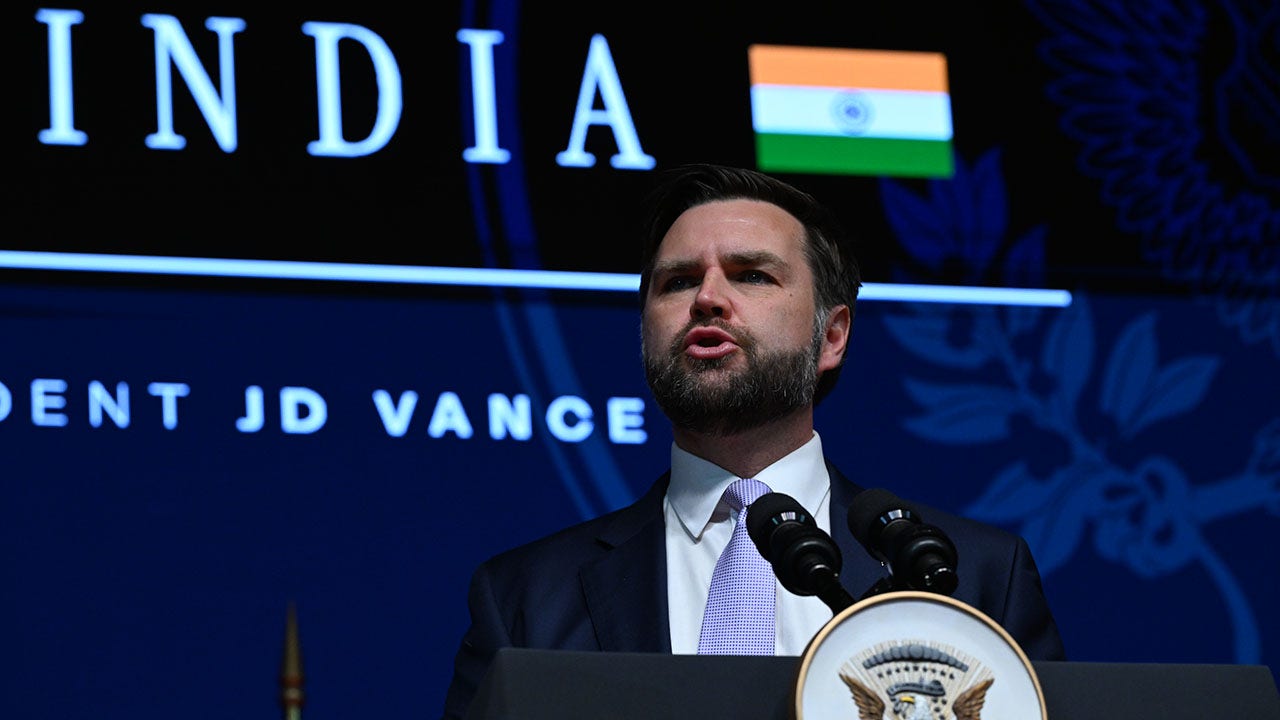
JD Vance Unveils Vision for US-India Trade Alliance Amid Global Challenges
In a landmark speech at the Hudson Institute on Tuesday, Ohio Senator JD Vance proposed a comprehensive strategy to strengthen the US-India trade partnership, framing it as a linchpin for economic resilience against rising geopolitical tensions. Vance emphasized collaborative innovation, supply chain diversification, and countering China’s influence as key pillars of his vision, which could redefine bilateral relations in an era of uncertainty.
The Strategic Imperative Behind Vance’s Proposal
Vance’s address underscored the urgency of deepening ties with India, the world’s fastest-growing major economy, as the US seeks to reduce reliance on adversarial nations like China. “The 21st century’s economic architecture will be built on trust and shared democratic values,” Vance asserted, citing India’s 6.3% GDP growth in 2023 and its burgeoning tech sector as critical assets. His plan outlines three priorities:
- Technology and Defense Collaboration: Expanding joint ventures in semiconductors, AI, and aerospace
- Supply Chain Resilience: Creating alternative manufacturing hubs to China
- Tariff Reforms: Streamlining trade barriers in agriculture and pharmaceuticals
Dr. Priya Agarwal, a geopolitical economist at the Brookings Institution, endorsed the approach: “Vance recognizes India’s unique position—it offers scale, skilled labor, and strategic alignment without the political risks of other partners.” Recent data supports this: US-India trade reached $191 billion in 2022, a 7.65% annual increase.
Economic and Geopolitical Dividends
The senator’s blueprint arrives as both nations navigate shifting alliances. With China accounting for 18.4% of global exports in 2022, Vance argued that US-India cooperation could rebalance supply chains. “Every semiconductor shipped from Mumbai instead of Shenzhen reduces our vulnerability,” he noted, referencing India’s $10 billion incentive package for chip manufacturers.
However, challenges persist. India’s protectionist policies, such as 22% tariffs on imported electronics, have historically strained negotiations. “The devil’s in the details,” cautioned trade analyst Mark Williams. “Vance’s vision requires New Delhi to reciprocate with market access—something it’s been reluctant to grant.”
Industry Reactions and Skepticism
Corporate leaders expressed cautious optimism. Raj Subramaniam, CEO of FedEx, stated, “A streamlined customs process between our countries could cut logistics costs by 15–20%.” Yet, some agricultural groups worry about competition from India’s heavily subsidized farmers.
Meanwhile, progressive critics argue Vance’s plan lacks labor safeguards. “Expanding trade without enforceable workplace standards risks a race to the bottom,” warned AFL-CIO President Liz Shuler. Vance countered by highlighting India’s labor reforms, including new wage protections for 500 million workers.
The Road Ahead: From Vision to Implementation
Observers note several milestones that could accelerate Vance’s agenda:
- 2024 US-India Trade Policy Forum: A potential platform to fast-track agreements
- Quad Alliance Synergy: Leveraging security ties to boost economic integration
- State-Level Partnerships: Pairing Ohio’s manufacturing with India’s IT hubs
As global fragmentation reshapes trade networks, Vance’s proposal positions the US-India alliance as a stabilizing force. “This isn’t just about commerce,” he concluded. “It’s about writing the rules of the new economy—before autocracies do.” With India set to overtake Germany as the third-largest economy by 2027, the stakes have never been higher.
For further analysis on evolving Indo-Pacific trade dynamics, subscribe to our policy newsletter.
See more CCTV News Daily