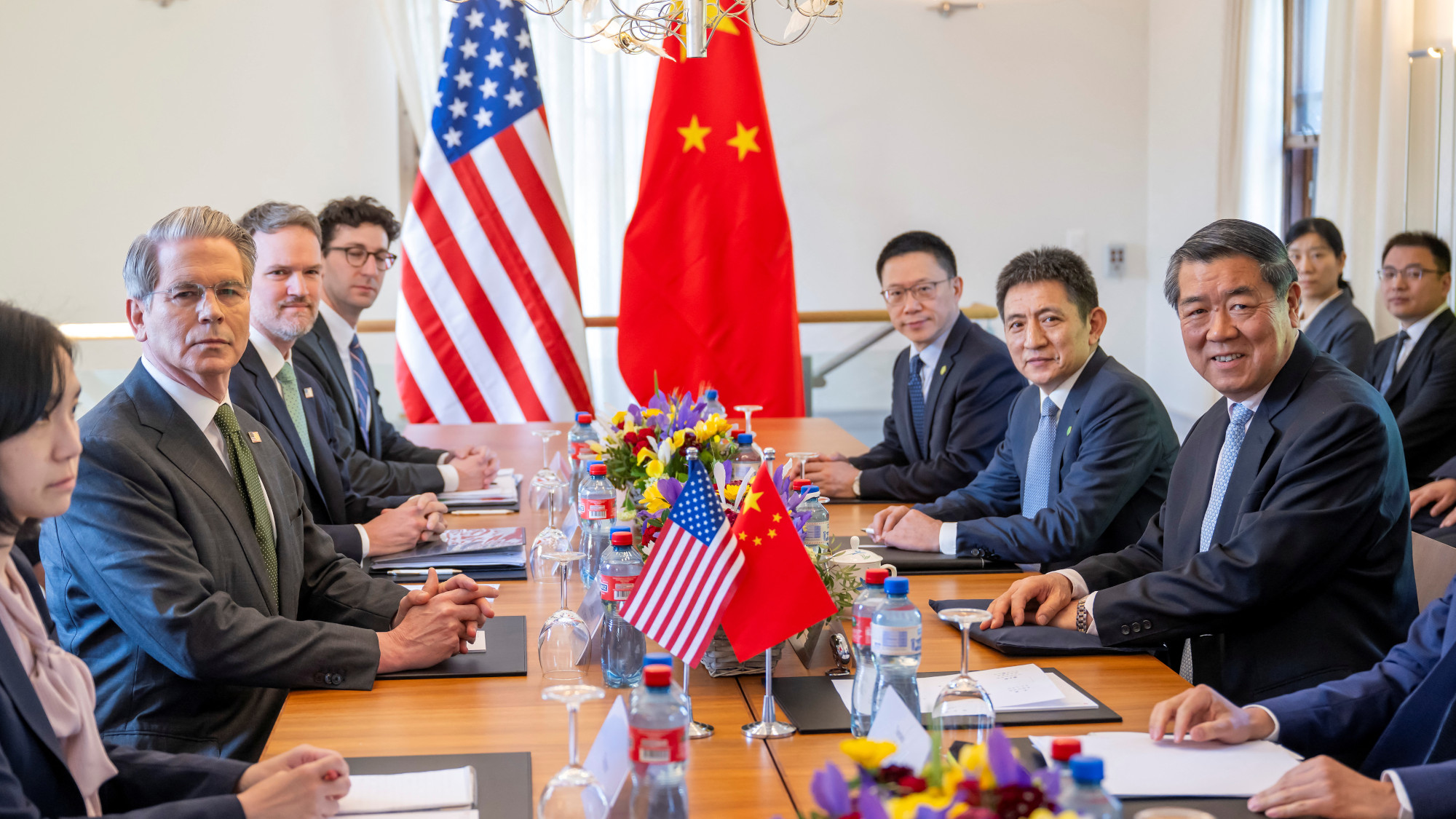
A Tactical Pause: The U.S. Reassesses Its Trade War Strategy with China
In a significant policy shift, the Biden administration has temporarily halted new trade restrictions against China, signaling a potential de-escalation in the five-year economic conflict. The strategic recalibration, announced on June 10, 2024, follows mounting pressure from U.S. businesses and allies amid global supply chain disruptions. This pause allows for bilateral negotiations while maintaining existing tariffs averaging 19.3% on $370 billion of Chinese imports.
The Calculus Behind the Strategic Shift
Senior administration officials cite three primary factors driving the policy adjustment:
- Economic pragmatism: With U.S. inflation hovering at 3.4% as of May 2024, economists estimate the trade war costs American households $1,300 annually.
- Supply chain realities: Critical sectors like semiconductor manufacturing require Chinese rare earth elements, which control 80% of global processing capacity.
- Diplomatic positioning: The move precedes the November APEC summit, where leaders hope to stabilize relations.
“This isn’t surrender—it’s smart warfare,” explains Georgetown University trade professor Elaine Zhao. “The administration recognizes that some tariffs became counterproductive, particularly on intermediate goods.”
Industry Reactions and Global Ramifications
Corporate America has responded cautiously. The U.S. Chamber of Commerce reported 68% of members support the pause, while manufacturing groups express concerns about renewed Chinese competition. Meanwhile, European markets reacted positively, with the Stoxx 600 gaining 1.2% on the news.
Not all analysts are convinced. “This breather helps China rebuild its export capacity,” warns Hudson Institute senior fellow Michael Sobolik. “Their industrial subsidies haven’t decreased—they’ve just become more opaque through third-country channels.”
Key statistics underscore the complex landscape:
- U.S.-China trade reached $575 billion in 2023, down 9% from pre-trade war levels
- Chinese FDI in Southeast Asia surged 140% since 2018 as companies rerouted supply chains
- American soybean exports to China remain 37% below 2017 volumes
The Technology Factor in Trade Relations
While the broader trade war cools, technology restrictions remain firmly in place. The CHIPS Act’s $52 billion in semiconductor subsidies and October 2023’s AI chip export bans continue reshaping global tech hierarchies. Analysts note this creates a “dual-track” approach—economic engagement paired with technological containment.
“We’re seeing decoupling where it matters most,” says former Commerce Department official Rajiv Bhatia. “Consumer goods may flow more freely, but the battle over quantum computing and biotech will intensify.”
What Comes Next in U.S.-China Economic Relations
The pause sets the stage for potential negotiations in three key areas:
- Tariff reductions on non-strategic consumer goods
- New frameworks for agricultural trade and climate technology
- Dispute resolution mechanisms for intellectual property
However, with the U.S. presidential election looming, the window for substantive agreements may close quickly. Both nations appear to be playing for time—China to stabilize its slowing economy (Q1 2024 growth: 4.5%), and America to reassess its long-term strategic posture.
For businesses navigating these uncertain waters, the advice is clear: “Diversify supply chains, but don’t abandon China entirely,” recommends Global Trade Analytics partner Sarah Hunt. “The rules haven’t changed—they’ve just entered a new phase.”
Stay informed on evolving trade policies by subscribing to our global business newsletter for weekly expert analysis.
See more CCTV News Daily