Turmoil in Asian Markets: The Ripple Effects of Trump’s Tariff Decisions
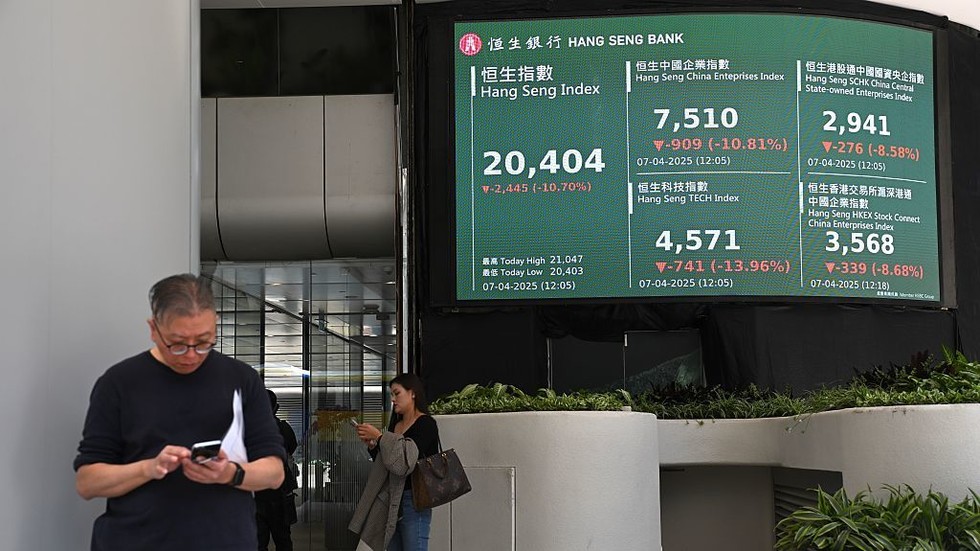
Asian stock markets plunged sharply this week as investors reacted to former U.S. President Donald Trump’s proposed tariff policies, sparking fears of renewed trade wars. Major indices in Japan, China, and South Korea dropped by 2-4% amid concerns over disrupted supply chains and slowing global demand. Analysts warn the volatility could persist as markets assess the long-term economic fallout.
Market Reactions Across Key Economies
The Nikkei 225 fell 3.1%—its steepest single-day decline since October—while Hong Kong’s Hang Seng lost 2.7%. South Korea’s KOSPI, heavily reliant on tech exports, slid 3.5%. “These tariffs could destabilize Asia’s export-driven growth model,” said Mei Lin Yee, senior economist at Singapore’s Global Markets Institute. “Countries like Vietnam and Thailand, which benefited from earlier trade diversions, now face renewed uncertainty.”
Data from Bloomberg reveals:
- Over $200 billion wiped from Asian equities in 48 hours
- Automotive and semiconductor stocks hit hardest, with losses exceeding 5%
- Currency markets saw the Korean won weaken 1.8% against the dollar
Why Trump’s Tariffs Are Rattling Investors
Trump’s campaign pledge to impose 10% across-the-board tariffs—and 60% levies on Chinese goods—revives memories of the 2018-2019 trade war that slowed global GDP growth by 0.4%, according to IMF estimates. “Markets despise unpredictability,” noted Rajiv Bhatia, head of trading at Mumbai’s Horizon Capital. “This isn’t just about tariffs; it’s about signaling a broader shift toward protectionism.”
Key concerns include:
- Supply chain disruptions: 45% of Asian manufacturers rely on intermediate goods traded tariff-free under current agreements
- Inflation risks: UBS projects a 0.7% rise in U.S. consumer prices if tariffs take effect
- Retaliatory measures: China may restrict rare earth mineral exports, critical for tech industries
Divergent Views on Long-Term Impact
While some analysts predict a short-term shock, others foresee structural changes. “This could accelerate regional trade pacts like RCEP,” argued political economist David Wu, referencing the 15-nation Regional Comprehensive Economic Partnership. Conversely, Morgan Stanley’s Emerging Markets Index suggests capital flight from Asia if tariffs escalate.
Not all sectors suffered equally. Indian pharmaceuticals gained 1.2% on expectations of reduced Chinese competition. Meanwhile, gold prices surged 2.3% as investors sought safe-haven assets.
Multinationals are revisiting contingency plans. Toyota announced a review of its U.S. production footprint, while Samsung accelerated Vietnam factory expansions. “Diversification is no longer optional,” said supply chain expert Elena Petrova. “Companies learned from COVID and the last trade war—they’re building resilience.”
Smaller enterprises face steeper challenges. A survey by the Asia-Pacific Trade Coalition found:
- 68% of SMEs lack resources to absorb higher input costs
- Only 12% have alternate suppliers outside tariff-affected regions
What’s Next for Asian Markets?
Much depends on November’s U.S. election outcome and subsequent policy implementations. Central banks may intervene to stabilize currencies, though rate cuts could fuel inflation. The Asian Development Bank trimmed its 2024 growth forecast by 0.3%, citing “elevated downside risks.”
Investors should monitor:
- U.S.-China negotiations ahead of the APEC summit
- Q3 earnings reports for tariff exposure disclosures
- Strategic reserves releases for critical commodities
For real-time updates on market movements, subscribe to our daily financial briefing. The coming weeks will test whether Asia’s economies can adapt to what may become a new era of fragmented trade.
See more CCTV News Daily