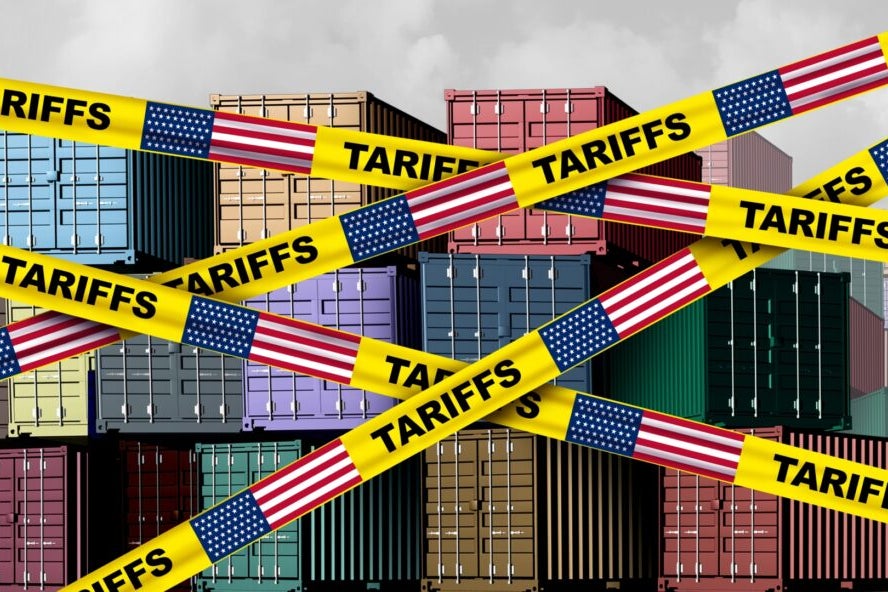
Economists Warn: Trump’s Auto Tariff Could Trigger Interest Rate Hikes and Economic Recession
As the political landscape continues to shift under the Biden administration, former President Donald Trump’s proposed auto tariff of 25% has reignited fears among economists regarding its potential impact on the American economy. With inflation already a concern, the prospect of such tariffs brings about serious implications, not just for the auto industry but for the broader economic landscape. Prominent economist Gary Black has voiced his apprehensions, suggesting that the tariff could exacerbate challenges and push the nation closer to a recession.
The Proposed Auto Tariff: An Overview
President Trump’s proposal to impose a hefty 25% tariff on imported automobiles has been met with mixed reactions. While the intention behind the tariff is to protect American manufacturing jobs and stimulate domestic production, economists warn that it could have unintended consequences. The auto industry is vital to the U.S. economy, contributing significantly to employment and GDP.
Tariffs generally lead to increased prices for consumers. Higher prices on imported vehicles could deter consumers from purchasing new cars, leading to a slowdown in sales. This slowdown could trigger layoffs in the auto manufacturing sector, contributing to a ripple effect across the economy.
Interest Rate Hikes: A Likely Consequence?
The connection between tariffs and interest rates is often overlooked. When tariffs are implemented, they can lead to higher inflation as the cost of goods rises. In response to this inflation, the Federal Reserve may feel compelled to increase interest rates to stabilize the economy. This is where the concern of rising interest rates becomes particularly relevant.
Economists warn that if the auto tariff leads to significant inflation, the Federal Reserve could initiate a series of interest rate hikes. Higher interest rates typically result in increased borrowing costs for consumers and businesses, which can stifle economic growth. This is a crucial point of concern expressed by Gary Black, who argues that the auto tariff could have a cascading effect on the economy, pushing it closer to recession.
Potential Economic Repercussions
The potential repercussions of the auto tariff are wide-ranging:
- Increased Consumer Prices: The immediate effect would likely be higher prices for vehicles, which could lead to decreased sales and a slowdown in the auto market.
- Job Losses: While the intention is to protect American jobs, the reality may result in job losses in the auto sector due to decreased demand.
- Global Trade Relations: The introduction of such tariffs could strain relationships with trade partners, leading to retaliatory measures that could further hurt U.S. exports.
- Investment Slowdown: With rising uncertainty, businesses may hesitate to invest in growth and expansion, stunting economic progress.
The Broader Economic Context
To understand the implications of Trump’s proposed auto tariff fully, it is essential to consider the broader economic context. The United States is still navigating challenges from the COVID-19 pandemic, which disrupted supply chains and led to inflationary pressures. The auto industry has not been immune to these disruptions, facing chip shortages and logistic hurdles that already challenge production.
In this context, the introduction of a 25% tariff could further complicate the economic landscape. If consumers are already facing higher prices for goods and services, adding tariffs could push inflation to an unsustainable level. This could lead to a self-reinforcing cycle where the Fed raises interest rates, which in turn dampens economic activity.
Alternative Perspectives
While many economists express concern over the proposed auto tariff, there are some who argue that protective measures are necessary for the long-term health of American manufacturing. Proponents of tariffs believe that they can help level the playing field against countries that subsidize their automotive industries, allowing U.S. manufacturers to compete more effectively.
However, this perspective often fails to account for the interconnected nature of the global economy. In today’s market, many auto manufacturers rely on complex supply chains that span multiple countries. Tariffs can disrupt these supply chains, leading to increased costs and inefficiencies.
As the economic landscape continues to evolve, the proposed auto tariff presents both risks and opportunities. While the goal of protecting American jobs and boosting domestic production is commendable, the potential fallout could push the economy into a precarious situation.
Given the current inflationary environment, the Federal Reserve will need to tread carefully. If the auto tariff is enacted, monitoring its impact on consumer prices and economic growth will be crucial. Policymakers will need to balance the desire to protect American industry with the need to maintain economic stability.
Conclusion: A Call for Caution
In conclusion, economists warn that Trump’s auto tariff could trigger interest rate hikes and push the economy closer to recession. The complexities of the global economy demand that any protective measures be carefully considered and evaluated. The interconnectedness of markets means that the repercussions of such tariffs could extend far beyond the auto industry, affecting consumers, businesses, and the economy as a whole.
As we navigate this uncertain landscape, it’s essential for policymakers to listen to economic experts and consider the broader implications of their decisions. The goal should be to foster a healthy economy that supports American jobs while ensuring that inflation and interest rates remain manageable. Only time will tell how these policies will unfold, but one thing is clear: the stakes are high, and the potential consequences are profound.
See more CCTV News Daily