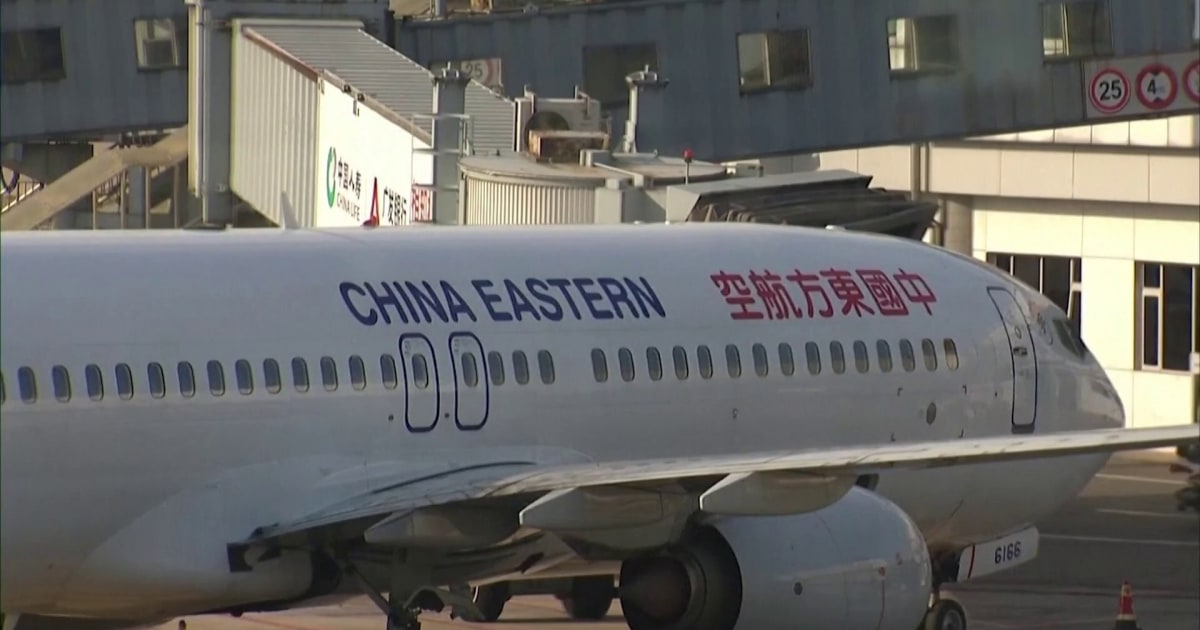
China’s Strategic Maneuver: Airlines Halt Boeing Purchases in Tariff Standoff
In a dramatic escalation of trade tensions, China has directed its airlines to suspend purchases of Boeing aircraft, dealing a significant blow to the American aerospace giant. The move, announced this week, comes as retaliation against U.S. tariff hikes and marks a pivotal moment in the economic rivalry between the world’s two largest economies. Analysts warn this decision could reshape global aviation markets and supply chains.
The Economic Chessboard: Why China Targeted Boeing
China’s aviation sector, the world’s fastest-growing market, had been projected to acquire 8,500 new planes worth $1.5 trillion over the next two decades. Boeing historically captured nearly 50% of these orders. By freezing purchases, Beijing strikes at a critical pressure point—Boeing’s commercial division contributes 60% of its revenue, with China accounting for 25% of all 737 MAX deliveries pre-pandemic.
“This isn’t just about airplanes—it’s geopolitical leverage,” explains Dr. Lian Zhao, trade policy analyst at the Beijing Institute of International Relations. “When you ground Boeing’s growth in China, you’re shaking Wall Street, impacting 140,000 U.S. jobs, and sending a clear message about retaliatory capacity.”
The decision follows recent U.S. measures including:
- 35% tariffs on Chinese steel and aluminum
- Expanded semiconductor export controls
- New restrictions on electric vehicle subsidies
Boeing’s Turbulent Flight Path
For Boeing, already reeling from 737 MAX safety crises and pandemic-induced travel slumps, China’s move could not come at a worse time. Shares dipped 4.2% following the announcement, erasing $5.8 billion in market value. The company now faces:
- Potential loss of 200+ pending Chinese orders worth $30 billion
- Disruption to maintenance contracts on 1,200 existing Chinese-operated Boeing aircraft
- Increased competition as China promotes its homegrown COMAC C919 jet
“We remain confident in the long-term partnership between Boeing and China’s aviation industry,” stated Boeing spokesperson Jessica Kowalski, though analysts note the company has quietly accelerated diversification efforts into Southeast Asian markets.
The Ripple Effects Across Industries
Beyond aerospace, the decision sends shockwaves through interconnected sectors:
Supply Chain Impact: Over 600 U.S. suppliers providing Boeing with components—from GE engines to Honeywell avionics—face order reductions. Washington state, where Boeing manufactures 60% of its commercial planes, could see employment declines.
Airline Economics: Chinese carriers may face capacity constraints. “Replacing Boeing orders with Airbus isn’t instantaneous—there’s a 7-year backlog for A320neos,” notes aviation consultant Mark Düster. Domestic travel growth projections of 8.4% annually now hinge on COMAC’s ability to scale production.
Historical Context and Future Projections
This isn’t China’s first aviation trade weaponization. In 2019, Beijing suspended $10 billion in Boeing orders during Huawei-related tensions. However, the current standoff differs in scale and strategic coordination:
| Factor | 2019 Suspension | 2024 Suspension |
|---|---|---|
| Duration | 11 months | Indefinite |
| Affected Models | 737 MAX only | All Boeing aircraft |
| Alternative Ready | No domestic option | COMAC C919 entering service |
Looking ahead, three scenarios emerge:
- Short-term: Negotiations could resume after U.S. elections, with possible exemptions for already-ordered aircraft
- Mid-term: China may demand Boeing establish more joint ventures or technology transfers as condition for market re-entry
- Long-term: COMAC could capture 30% of China’s domestic market by 2030, permanently altering competitive dynamics
Expert Perspectives on the Trade War Escalation
Economists remain divided on the broader implications:
“This is calibrated retaliation—China knows aerospace is America’s largest manufacturing export sector,” observes former U.S. Trade Representative Michael Froman. “But prolonged actions risk damaging China’s own aviation modernization goals.”
Conversely, Peking University’s Professor Wei Xiang argues: “China has built strategic depth. With COMAC’s progress and Airbus expanding Tianjin facilities, they’re preparing for complete decoupling if necessary.”
What Comes Next in the Aviation Trade Standoff?
The Biden administration faces mounting pressure to respond, with options including:
- Counter-tariffs on Chinese rare earth minerals used in electronics
- Accelerated FAA certification for COMAC competitors
- Diplomatic channels through upcoming APEC meetings
For businesses caught in the crossfire, the advice is clear: “Diversify supply chains immediately,” recommends trade attorney Rebecca Marshall. “This isn’t a temporary squall—it’s climate change for global aerospace trade.”
As the situation develops, industry watchers should monitor COMAC’s production rates, Boeing’s quarterly earnings calls, and any quiet negotiations behind closed doors at the next G20 summit. The high-stakes game of economic chess continues, with billions in trade and technological supremacy hanging in the balance.
For ongoing coverage of trade policy impacts, subscribe to our industry newsletter for weekly expert analysis.
See more CCTV News Daily