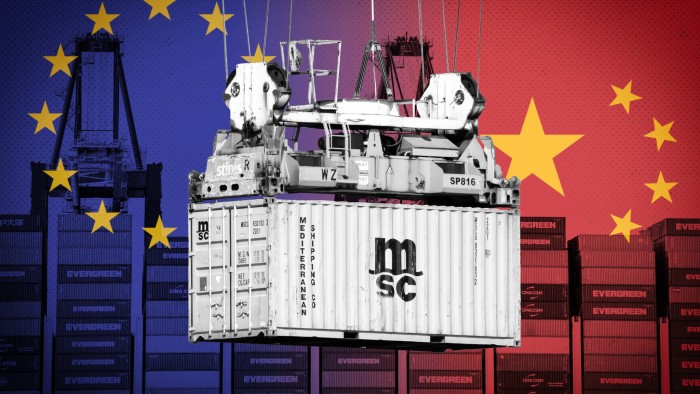
As global trade tensions escalate, China is actively courting the European Union (EU) to forge stronger economic and political ties. This strategic pivot, unfolding amid the Trump administration’s aggressive trade policies, could reshape international trade dynamics. Analysts suggest the move aims to counterbalance U.S. pressure while securing new markets for Chinese goods and technology. High-level diplomatic engagements and targeted investments signal Beijing’s intent to position the EU as a key ally.
The Geopolitical Backdrop: Why China is Turning to Europe
China’s outreach to the EU comes at a critical juncture. The U.S.-China trade war, initiated under former President Donald Trump and sustained by the Biden administration, has seen tariffs imposed on over $360 billion worth of Chinese goods. In response, Beijing is diversifying its alliances to mitigate economic risks. The EU, with its $18.4 trillion GDP and 450 million consumers, presents a lucrative alternative.
“China sees the EU as a stabilizing force in an increasingly fragmented global economy,” says Dr. Li Wei, a Beijing-based economist. “By strengthening ties, they’re not just hedging against U.S. policies but also gaining access to cutting-edge technology and sustainable development expertise.”
Key indicators of this shift include:
- A 35% increase in Chinese FDI (Foreign Direct Investment) in the EU since 2020, totaling €12.8 billion in 2023.
- High-profile visits by Chinese officials to Berlin, Paris, and Brussels to negotiate trade agreements.
- Joint initiatives on green energy and digital infrastructure, aligning with the EU’s climate goals.
Trade, Technology, and Trust: Pillars of the New Partnership
Central to China’s strategy is the Comprehensive Agreement on Investment (CAI), a landmark deal negotiated in late 2020. Though its ratification stalled due to human rights concerns, recent behind-the-scenes talks suggest a revival may be imminent. The CAI would grant Chinese companies greater access to EU markets while addressing European demands for reciprocity.
Technology collaboration is another cornerstone. Huawei’s partnerships with European telecom giants like Deutsche Telekom and Vodafone highlight China’s push to embed its 5G infrastructure abroad. Meanwhile, the EU seeks to reduce its reliance on U.S. tech firms. “This is a marriage of convenience,” notes Clara Müller, a Brussels-based trade analyst. “Europe wants alternatives to Silicon Valley, and China is eager to fill the gap.”
Challenges and Skepticism: Not All Smooth Sailing
Despite the warming relations, significant hurdles remain. The EU has grown wary of China’s Belt and Road Initiative (BRI), with critics labeling it “debt-trap diplomacy.” Eastern European nations, in particular, have voiced concerns over opaque financing and strategic dependencies.
Human rights issues also loom large. The EU Parliament’s 2021 sanctions against Chinese officials over Xinjiang abuses triggered Beijing’s retaliation, freezing talks on the CAI. “Trade can’t be divorced from values,” asserts German MEP Reinhard Bütikofer. “The EU must balance economic interests with its commitment to human rights.”
Public opinion further complicates matters. A 2023 Pew Research poll revealed that 62% of Europeans view China unfavorably, citing unfair trade practices and intellectual property theft. Such sentiment could pressure EU leaders to adopt a tougher stance.
The U.S. Factor: How Washington Views the China-EU Rapprochement
Washington is closely monitoring the China-EU courtship. While the Biden administration has urged allies to confront China’s “economic coercion,” European leaders have resisted a full alignment with U.S. policies. France and Germany, for instance, continue to advocate for “strategic autonomy” in trade.
“The U.S. wants a united front against China, but Europe isn’t ready to sacrifice its economic interests,” explains Dr. Susan Thornton, a former U.S. diplomat. “This three-way tug-of-war will define global trade for years to come.”
Future Outlook: A Realignment of Global Trade Power?
If China succeeds in deepening EU ties, the repercussions could be far-reaching:
- A potential weakening of U.S. influence in transatlantic trade governance.
- Accelerated decoupling between the U.S. and Chinese economies.
- New standards for tech and sustainability shaped by Sino-European cooperation.
For businesses, this shift underscores the need to adapt to a multipolar trade landscape. Companies reliant on U.S.-China supply chains may need to pivot toward Europe, while policymakers must navigate competing alliances.
What’s next? Watch for progress on the CAI and China’s role in the EU’s Green Deal. As Brussels and Beijing negotiate their red lines, the world will witness whether economic pragmatism can overcome geopolitical rivalries.
Call to Action: Stay informed on evolving trade policies by subscribing to our expert analysis newsletter. The next phase of global realignment is just beginning.
See more CCTV News Daily