China’s Resilient Export Surge Defies Trump’s Tariff Strategy
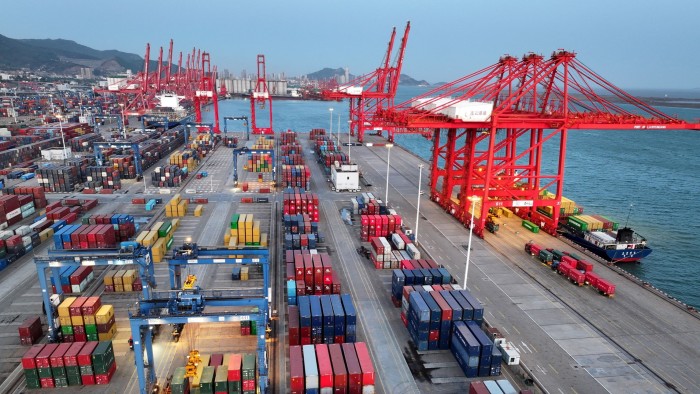
China’s exports surged by 7.1% year-on-year in May 2024, defying expectations and signaling resilience against looming U.S. tariffs proposed by former President Donald Trump. Government officials in Beijing dismissed concerns, declaring “the sky won’t fall,” while economists question the long-term efficacy of protectionist measures. The unexpected growth highlights China’s adaptability and shifting trade alliances amid escalating geopolitical tensions.
Strong Export Performance Amid Trade Pressures
China’s customs data revealed a $302 billion export haul in May, buoyed by robust demand from emerging markets and strategic sectors like electric vehicles (EVs) and renewable energy technology. The 7.1% increase outpaced analyst forecasts of 4.3%, underscoring the economy’s ability to pivot despite U.S. threats to impose tariffs as high as 60% on select Chinese goods. Notably, shipments to Southeast Asia and Latin America rose by 12% and 9%, respectively, offsetting slower growth in traditional Western markets.
“China’s export engine is far from sputtering,” remarked Dr. Li Wei, an economist at Peking University. “The diversification of trade partners and upgrading of export structures have cushioned the blow from U.S. trade policies.” Meanwhile, U.S. Treasury Secretary Janet Yellen recently warned that “excess industrial capacity” in China could distort global markets, a claim Beijing rejects.
The Tariff Debate: Economic Weapon or Blunt Tool?
Trump’s proposed tariffs—targeting EVs, steel, and semiconductors—aim to revive U.S. manufacturing, but experts are divided on their potential impact. A 2024 Peterson Institute study found that previous tariffs cost U.S. consumers $51 billion annually while failing to significantly curb Chinese exports. “Tariffs are a tax on Americans, not a silver bullet,” argued trade analyst Mark Harrison. “China’s supply chain dominance and domestic subsidies make it hard to dislodge.”
Conversely, proponents like former U.S. Trade Representative Robert Lighthizer insist tariffs level the playing field. “China’s surge is proof they’ve exploited unfair trade practices for decades,” he said. Yet, China’s retaliatory measures, including restrictions on rare earth exports, could disrupt global tech supply chains, escalating costs for both nations.
How China Is Adapting to Trade Headwinds
Beijing’s counterstrategies include:
- Market diversification: Accelerated trade pacts with BRICS nations and Africa, now accounting for 40% of China’s exports.
- Value-chain climbing: Shifting from low-cost goods to high-tech exports, with EV sales abroad jumping 28% this year.
- Domestic stimulus: Tax breaks for exporters and $140 billion in credit support for manufacturers.
For example, BYD, China’s top EV maker, recently overtook Tesla in global sales by leveraging cost advantages and state-backed R&D. “The tariffs might slow us down, but they won’t stop us,” a BYD executive told Reuters anonymously.
Global Implications and the Road Ahead
The standoff risks fragmenting global trade into competing blocs. The EU, while wary of Chinese subsidies, opposes sweeping tariffs, fearing retaliation. Meanwhile, emerging economies welcome cheaper Chinese tech, with India’s solar sector relying on 60% Chinese imports.
Looking ahead, analysts suggest three scenarios:
- Prolonged stalemate: Tariffs persist but fail to dent China’s export resilience, straining U.S.-China relations.
- Negotiated détente: Both sides compromise to avoid mutual economic harm, akin to the 2020 Phase One deal.
- Supply chain decoupling: Companies accelerate relocation to Southeast Asia, though costs and delays could inflate consumer prices globally.
Conclusion: A Test of Economic Resilience
China’s export surge underscores the complexity of modern trade wars, where interconnected economies limit unilateral policy impacts. While tariffs may rally political bases, their economic efficacy remains dubious. For businesses and policymakers, the key takeaway is adaptability—whether through diversified supply chains or innovation investments. As the U.S. election looms, stakeholders should monitor how China’s next moves could redefine global trade dynamics. For deeper insights, subscribe to our trade policy newsletter.
See more CCTV News Daily