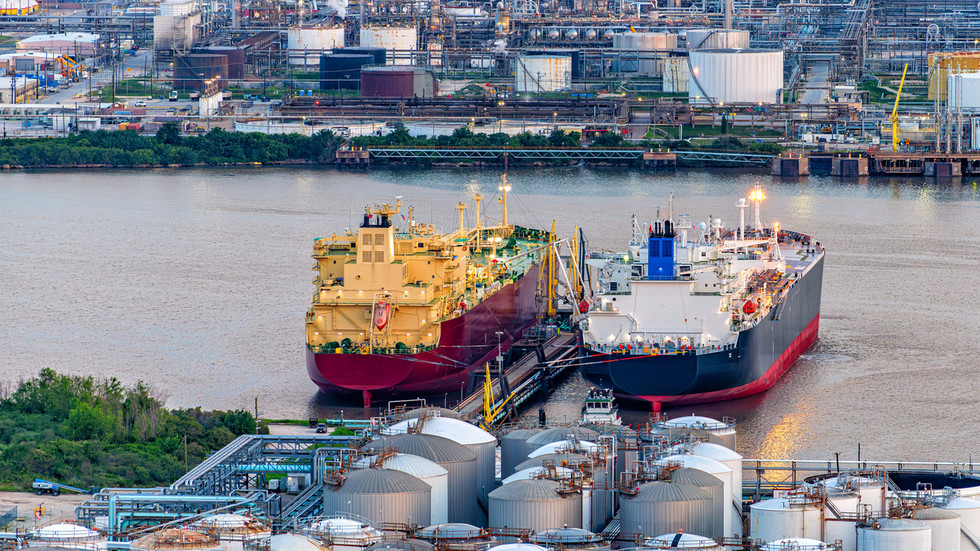
China’s Abrupt Halt on US LNG Purchases Shakes Global Energy Markets
In a move that has sent shockwaves through global energy markets, China suspended all liquefied natural gas (LNG) imports from the United States this month, disrupting trade flows and triggering price volatility. The unexpected decision, confirmed by Chinese customs data on June 15, stems from escalating geopolitical tensions and China’s strategic pivot toward alternative suppliers, potentially reshaping global energy alliances.
The Immediate Fallout for Energy Supply Chains
China, the world’s top LNG importer since 2021, purchased 13.2 million tons of US LNG in 2023—approximately 12% of America’s total exports. The sudden halt leaves a gaping hole in global supply chains, forcing traders to scramble for alternatives. Benchmark Asian LNG prices surged 8% within 48 hours of the announcement, while European gas futures rose 5% on fears of tightened supply.
“This isn’t just a bilateral trade issue—it’s a tectonic shift for global energy security,” remarked Dr. Lin Wei, energy analyst at the Beijing-based Global Commodities Institute. “China’s diversification strategy now prioritizes Russian pipeline gas and Qatari LNG over US shipments.”
Key immediate impacts include:
- US LNG exporters facing $4 billion in potential lost revenue annually
- European buyers competing harder for Middle Eastern and African LNG cargoes
- Shipping routes recalibrating as vessels bypass traditional Pacific trade lanes
Geopolitical Undercurrents Behind the Decision
Analysts identify three primary drivers for China’s move. First, ongoing US tariffs on Chinese clean energy exports have created reciprocal trade pressures. Second, China secured a 27% discount on Russian pipeline gas through a new 30-year contract signed in May. Third, Beijing appears to be weaponizing energy trade amid disputes over Taiwan and technology restrictions.
“The timing suggests political calculus,” noted Samantha Hart, senior fellow at the Atlantic Council’s Global Energy Center. “By reducing dependence on US LNG, China gains leverage in broader negotiations while testing alternative supply chain resilience.”
Customs data reveals China’s strategic preparations:
- Russian pipeline gas imports up 38% year-over-year
- Qatar LNG contract volumes increased by 15% since January
- Domestic gas storage at 94% capacity—unusually high for early summer
Market Reactions and Contingency Plans
The energy sector is responding with remarkable agility. US producers like Cheniere Energy have begun redirecting cargoes to Europe, where demand remains robust despite warmer weather. Meanwhile, Asian buyers are capitalizing on the situation—Japan and South Korea secured two spot cargoes originally destined for China at 6% below recent peak prices.
However, infrastructure limitations pose challenges. Europe’s LNG import terminals operate near 89% capacity, while China’s extensive pipeline network from Russia can’t immediately compensate for lost LNG volumes. This mismatch creates regional pricing disparities:
- Asian LNG spot prices: $12.80/MMBtu (up from $11.90 pre-announcement)
- European TTF benchmark: $10.45/MMBtu (3-month high)
- US Henry Hub: $2.75/MMBtu (15% drop due to oversupply concerns)
Long-Term Implications for Global Energy Dynamics
This development accelerates three critical energy trends. First, it reinforces regionalization of gas markets, with political alliances increasingly dictating trade flows. Second, it undermines the US position as the world’s swing LNG supplier. Third, it may hasten China’s transition to renewable energy—solar capacity additions jumped 72% year-over-year in Q1 2024.
“We’re witnessing the energy equivalent of decoupling,” observed Hart. “The era where commercial considerations alone governed LNG trades is fading fast.”
Potential structural shifts include:
- New long-term contracts favoring non-US suppliers
- Accelerated FID delays for US LNG export projects
- Greater spot market volatility during winter demand peaks
What Comes Next for Stakeholders?
Market participants should prepare for sustained disruption. European utilities are likely to lock in more long-term contracts, while Asian buyers may form buyer’s consortiums for better pricing power. US producers face pressure to diversify markets, with India and Brazil emerging as prime targets.
The situation remains fluid, with these critical markers ahead:
- July 10 OPEC+ meeting, where gas market stability may be discussed
- August 1 expiration of US-China science and technology agreement
- Q4 2024 completion of China’s new Turkmenistan pipeline expansion
For businesses navigating these changes, consulting energy market specialists and stress-testing supply chain assumptions has become imperative. The global energy chessboard is being reset—and adaptability will separate the winners from the stranded.
See more CCTV News Daily