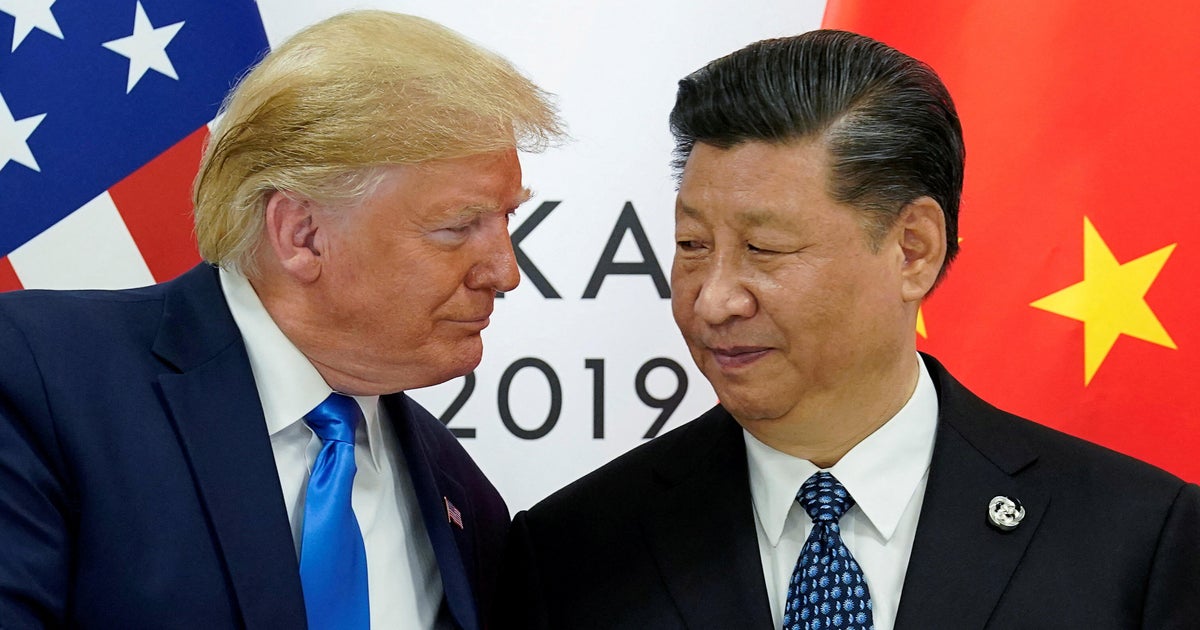
China Stands Firm Against Trump’s Tariff Tactics in Escalating Trade War
In a defiant response to renewed U.S. trade pressures, China has vowed to resist what it calls the Trump administration’s “unilateral bullying” through aggressive tariff policies. The Chinese Commerce Ministry issued a stern rebuke on Tuesday, signaling Beijing’s readiness to endure prolonged economic tensions while protecting its national interests. This latest development marks a significant escalation in the ongoing trade conflict that has rattled global markets since 2018.
The Roots of the Renewed Trade Tensions
The current standoff reignites a trade war that began when former President Donald Trump first imposed tariffs on $250 billion worth of Chinese goods. While the Biden administration maintained many of these measures, Trump’s recent campaign promises to implement even stiffer penalties—including 60% across-the-board tariffs—have forced China to prepare its defenses.
According to data from the Peterson Institute for International Economics:
- Average U.S. tariffs on Chinese imports remain at 19.3%
- China’s retaliatory tariffs average 21.2% on American goods
- Bilateral trade has declined by $100 billion since the tariffs began
China’s Strategic Countermeasures
Beijing has developed a multi-pronged approach to withstand the economic pressure:
“China’s economy has reached a stage where it can absorb external shocks more effectively,” explains Dr. Lin Wei, trade policy analyst at Peking University. “We’ve seen strategic stockpiling of key commodities, accelerated domestic innovation, and diversification of export markets over the past five years.”
The Chinese government has particularly focused on:
- Expanding trade partnerships through RCEP (Regional Comprehensive Economic Partnership)
- Boosting domestic consumption to reduce export dependency
- Developing alternative supply chains through the Belt and Road Initiative
Global Economic Implications
The renewed tensions arrive at a precarious moment for the world economy. The International Monetary Fund projects that a full-scale trade war could:
- Reduce global GDP by 1.5% annually
- Increase inflation in developed nations by 2 percentage points
- Disrupt supply chains for critical technologies like semiconductors
“This isn’t just a bilateral issue anymore,” warns Maria Chen, senior economist at Standard Chartered. “When the world’s two largest economies clash, every nation feels the aftershocks—from German automakers to Vietnamese textile producers.”
Diverging Perspectives on Trade Policy
While Chinese officials frame the tariffs as economic aggression, some U.S. policymakers maintain they’re necessary to address longstanding issues:
“The tariffs have brought manufacturing jobs back to America and forced China to confront its unfair trade practices,” argues former U.S. Trade Representative Robert Lighthizer in a recent Wall Street Journal op-ed.
However, many economists dispute this assessment. A 2023 study by the National Bureau of Economic Research found:
- U.S. consumers and businesses bore 92% of tariff costs
- Only 1.5% of manufacturing jobs returned due to trade policies
- American companies lost $1.7 trillion in market value from trade uncertainty
The Path Forward: Negotiation or Confrontation?
As both nations dig in their heels, analysts see three potential scenarios:
- Status quo maintenance: Continued tariffs with periodic negotiations
- Escalation: Expanded restrictions on technology and investment
- Breakthrough: A new framework addressing subsidies and intellectual property
Chinese Vice Premier Liu He recently hinted at Beijing’s conditions for resolution: “Mutual respect and equal dialogue must replace the zero-sum mentality that currently poisons our economic relations.”
What This Means for Businesses and Consumers
The prolonged trade war has already reshaped global commerce patterns:
- U.S. imports from Vietnam have grown 300% since 2018
- Chinese investment in Mexico reached $5 billion in 2022
- European Union-China trade hit record $847 billion last year
For consumers, the impacts manifest in:
- Higher prices for electronics and household goods
- Longer wait times for certain products
- Reduced product variety in some categories
The Geopolitical Dimensions of Economic Conflict
Beyond trade figures, the standoff reflects deeper strategic competition. China’s recent moves suggest it views the trade war as part of a broader containment strategy:
“The tariffs were never just about trade balances,” notes geopolitical analyst Mark Johnson. “They’re tools in a larger struggle over technological supremacy and global influence. China’s response shows it won’t back down from that contest.”
This perspective explains Beijing’s parallel efforts to:
- Accelerate semiconductor independence
- Expand yuan-based trade settlements
- Strengthen alliances with Global South nations
Conclusion: A Defining Moment for Global Trade
As China and the U.S. prepare for what could be years of economic friction, businesses and governments worldwide must adapt to a new reality. The coming months will reveal whether either side blinks—or if the world must adjust to permanent fractures in the global trading system.
For ongoing coverage of this developing story and expert analysis of its market impacts, subscribe to our trade policy newsletter and stay informed about the decisions shaping our economic future.
See more CCTV News Daily