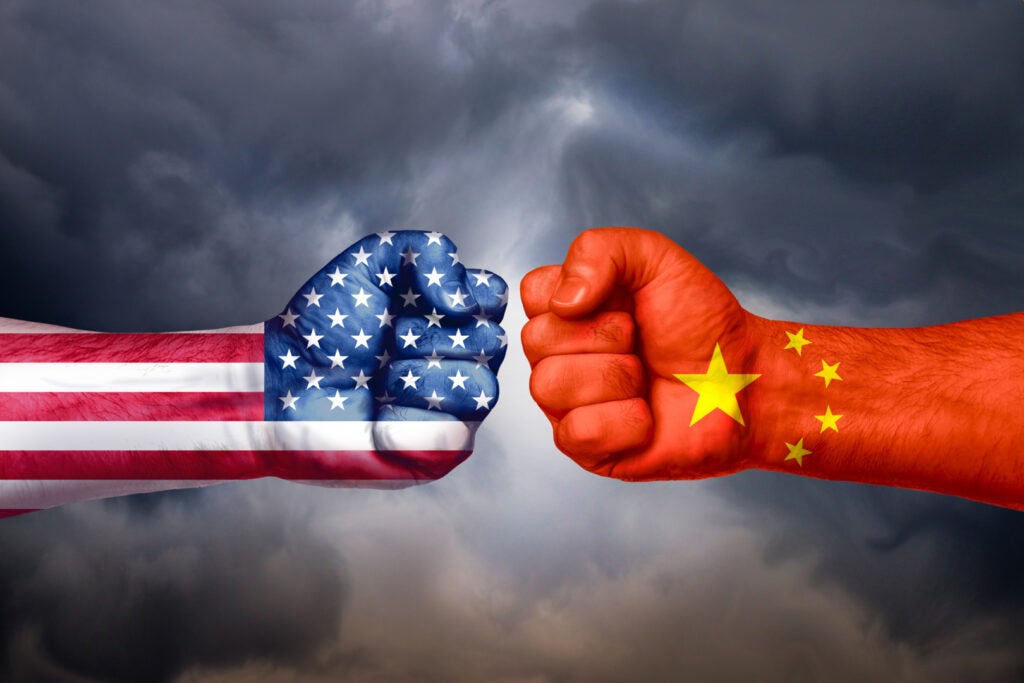
Will Trump Be the First to Yield in the China Trade War? Insights from Flexport’s Ryan Petersen
As the U.S.-China trade war enters its sixth year, Flexport CEO Ryan Petersen suggests former President Donald Trump may be the first to blink. With tariffs squeezing businesses and fraud surging, Petersen highlights adaptive corporate strategies while warning of economic fallout. This analysis explores shifting power dynamics, emerging trade loopholes, and whether political pressures could force concessions before the 2024 election.
The Escalating Stakes of Prolonged Tariffs
U.S. tariffs on Chinese imports now cover over $350 billion annually, with China retaliating on $110 billion of American goods. According to Peterson Economic Institute data, these measures cost the average U.S. household $1,277 in 2022 through higher prices. Petersen observes: “What began as strategic posturing has become an economic endurance test where both sides are bleeding, but businesses are hemorrhaging.”
The logistics CEO notes three critical developments:
- A 37% increase in transshipment fraud through Southeast Asian countries since 2020
- U.S. manufacturers reporting 22% longer lead times for critical components
- China’s export volume to the U.S. dropping just 6% despite 25% tariffs
Corporate Adaptation Strategies Reveal Systemic Weaknesses
Petersen’s team at Flexport has tracked over 1,200 companies relocating portions of their supply chains. “The smart players aren’t abandoning China—they’re creating optionality,” he explains. Many firms now employ a “China+1” strategy, maintaining some Chinese production while developing alternative facilities in Vietnam, Mexico, or India.
However, these transitions come at significant cost:
- Average supply chain restructuring expenses: $28 million per mid-sized firm
- 18-36 month implementation timelines for meaningful diversification
- 15-20% higher production costs in alternative markets
Harvard Business Review research confirms that only 12% of companies have successfully reduced Chinese dependence below 50% of total sourcing.
The Political Calculus Behind Potential Concessions
With Trump leading Republican primary polls, Petersen suggests the former president faces mounting pressure to demonstrate deal-making prowess. “There’s a perverse incentive structure here,” Petersen notes. “The candidate who started the trade war could gain most politically by ending it—provided he frames it as victory.”
Several factors may push Trump toward compromise:
- Farm belt discontent over lost Chinese agricultural purchases ($26 billion decline since 2017)
- Automaker warnings about EV mineral shortages (72% of graphite imports come from China)
- 2024 election dynamics in manufacturing swing states
Conversely, China’s leadership appears dug in. “Xi Jinping can withstand economic pain longer than Western politicians,” observes Georgetown professor Deborah Seligsohn. “Their system prioritizes strategic goals over quarterly GDP figures.”
Emerging Fraud Patterns Signal Market Distortions
The trade war has spawned sophisticated evasion tactics. Flexport’s customs data reveals:
- A 214% increase in “country of origin” documentation irregularities since 2018
- Vietnamese aluminum exports to the U.S. rising 1,872% despite no local bauxite mining
- New “component assembly” loopholes where 90% finished goods undergo final touches in third countries
“These aren’t mom-and-pop operations,” Petersen warns. “We’re seeing billion-dollar enterprises gaming the system through layered corporate structures.” U.S. Customs has responded with a 40% boost in trade enforcement staffing, but Petersen estimates they intercept less than 15% of fraudulent shipments.
Potential Pathways to De-escalation
Industry analysts see three possible scenarios for 2024:
- Limited Rollback: Trump reduces select consumer goods tariffs while maintaining tech sector restrictions
- Face-Saving Compromise: Both sides claim victory while quietly easing enforcement
- Escalation: New restrictions on Chinese EVs or rare earth minerals trigger further retaliation
Petersen believes agricultural concessions could provide early momentum. “Reopening China to American soybeans and pork would deliver immediate political benefits with relatively low strategic cost,” he suggests. USDA projections indicate such moves could restore $12-15 billion in annual exports.
The Long-Term Outlook for Global Trade
Regardless of near-term political developments, Petersen argues the trade war has permanently altered business psychology. “Supply chain resilience now outweighs pure cost optimization,” he says. Flexport’s surveys show 89% of procurement executives have formalized diversification mandates, up from 31% in 2018.
Key structural shifts likely to persist:
- Continued growth of near-shoring (Mexico’s exports to U.S. up 26% since 2020)
- Accelerated automation in remaining Chinese facilities
- Expansion of “friendshoring” among allied nations
As the 2024 election approaches, businesses should prepare contingency plans for both breakthrough deals and renewed tensions. Companies lagging in supply chain flexibility may find themselves outmaneuvered by nimbler competitors. For actionable intelligence on navigating these turbulent trade waters, subscribe to Flexport’s monthly Trade Strategy Bulletin.
See more CCTV News Daily