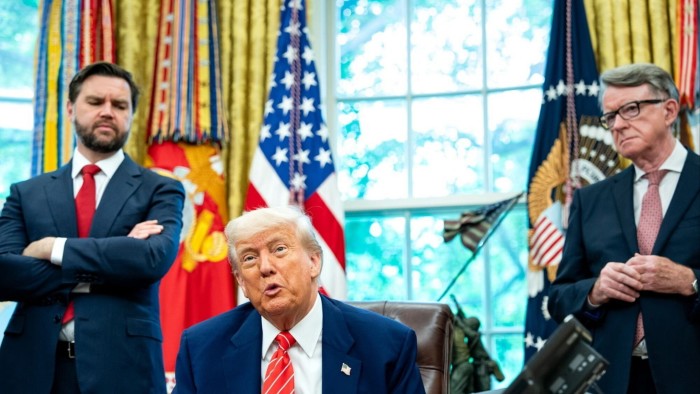
Tensions Rise: China’s Strong Response to the US-UK Trade Agreement
China has issued a sharp rebuke of the newly solidified US-UK trade partnership, warning of potential disruptions to global commerce. The agreement, finalized this week, aims to deepen economic ties between Washington and London but has drawn fierce criticism from Beijing, which sees it as a threat to multilateral trade stability. Analysts suggest the move could escalate geopolitical tensions amid an already fragile global economy.
Why China Views the US-UK Pact as Provocative
Chinese officials argue the bilateral deal undermines World Trade Organization (WTO) principles by favoring “exclusive alliances” over inclusive cooperation. Ministry of Commerce spokesperson Wang Wenbin stated, “Such arrangements create artificial barriers in global supply chains and violate the spirit of fair competition.” Data from China’s Customs Administration reveals the country conducts over $700 billion in annual trade with the US and UK combined, making the agreement particularly sensitive.
Key concerns from Beijing include:
- Potential tariff discrimination against Chinese goods
- Technology transfer restrictions impacting Huawei and other firms
- Alignment of US-UK regulatory standards that could marginalize Chinese products
Economic Implications for Global Markets
The Peterson Institute for International Economics estimates the US-UK deal could redirect $15-20 billion in trade flows annually. While both Western nations emphasize the agreement’s economic benefits, emerging markets fear collateral damage. “This accelerates the fragmentation of global trade into competing blocs,” warns Dr. Alicia Garcia-Herrero, Chief Asia-Pacific Economist at Natixis. “Developing economies relying on Chinese manufacturing may face difficult choices.”
Recent developments illustrate the growing divide:
- The US recently expanded semiconductor export controls affecting China
- UK scrutiny of Chinese investments increased by 42% in 2023
- China’s retaliatory measures against Western tech firms grew 28% year-over-year
Differing Perspectives on Trade Realignment
US Trade Representative Katherine Tai defended the agreement as “a necessary evolution in challenging economic times.” Meanwhile, British Prime Minister Rishi Sunak called it “a win for workers in both nations.” However, developing nations express unease. Indonesia’s Trade Minister recently cautioned against “new economic iron curtains” during a G20 side meeting.
Financial markets reflect the uncertainty:
- Shanghai Composite Index dropped 1.8% following the announcement
- US Treasury yields fell as investors sought safe havens
- British pound volatility increased 12% against the yuan
Potential Pathways Forward
Experts suggest several scenarios could unfold:
- Escalation: China may accelerate its regional trade pacts like RCEP
- Negotiation: WTO mediation could prevent a full-blown trade war
- Innovation: Companies may develop parallel supply chains to navigate divisions
Dr. Henry Gao, trade law professor at Singapore Management University, notes: “The coming months will test whether major economies can balance national interests with global cooperation. The risk of miscalculation is substantial.”
What This Means for Businesses and Consumers
Supply chain analysts advise companies to:
- Diversify supplier networks beyond geopolitical blocs
- Increase inventory buffers for critical components
- Monitor customs regulation changes weekly
Consumer prices may rise 2-4% for electronics and automotive goods if tensions persist, according to Bloomberg Economics projections. The situation remains fluid, with China’s State Council expected to announce countermeasures within weeks.
For ongoing coverage of global trade developments, subscribe to our newsletter for expert analysis delivered to your inbox. The evolving economic landscape demands vigilance from policymakers and business leaders alike as the world navigates this new chapter in international commerce.
See more CCTV News Daily