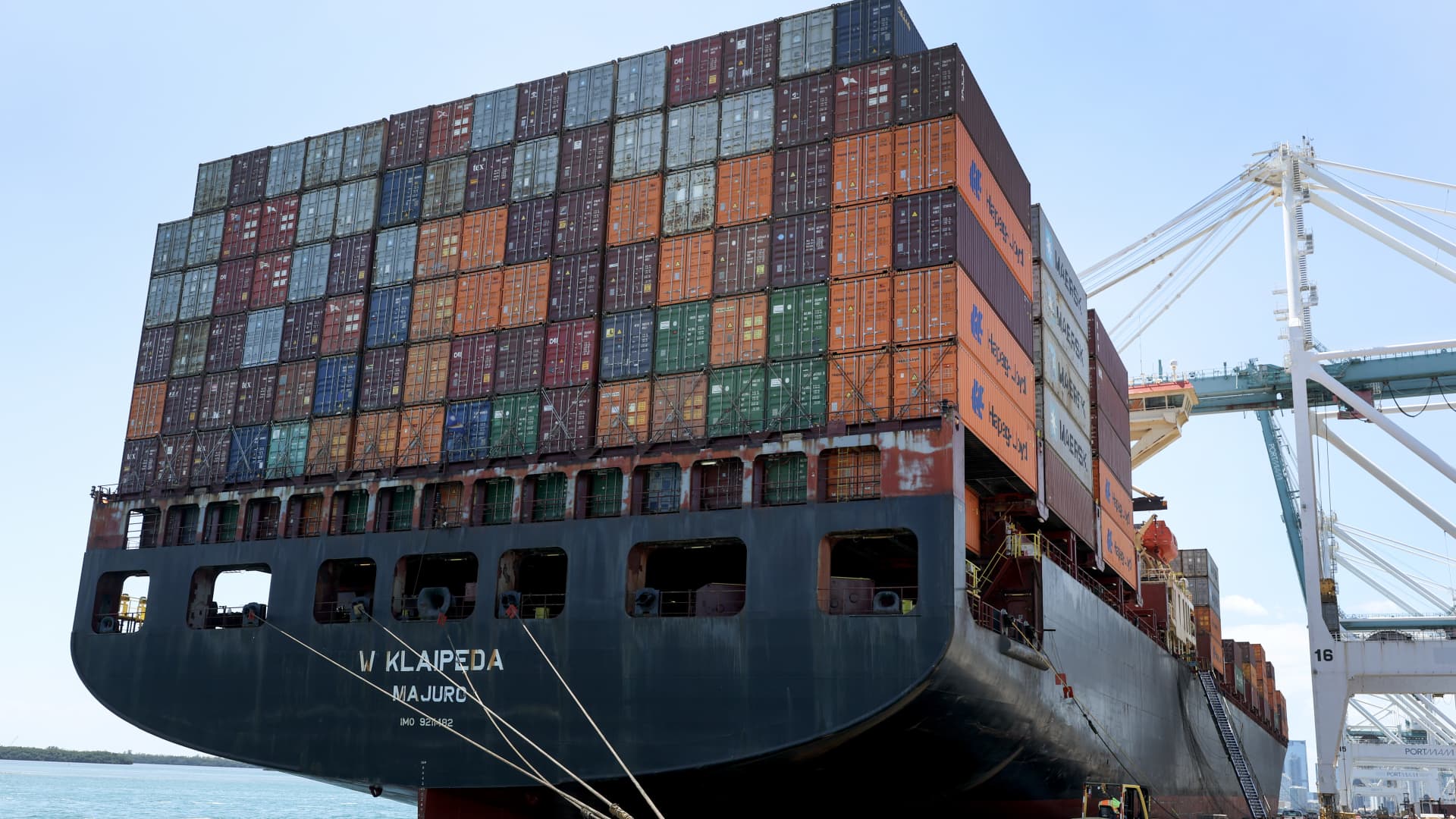
New Fees on Chinese Ships: Trump Administration Escalates Trade Pressure
The Trump administration announced sweeping new tariffs targeting Chinese cargo vessels docking at U.S. ports this week, marking the latest escalation in ongoing trade tensions between the world’s two largest economies. Effective immediately, the policy imposes fees ranging from $1,000 to $5,000 per container on ships majority-owned by Chinese companies—a move experts warn could disrupt global supply chains and trigger retaliatory measures.
Breaking Down the New Maritime Tariff Structure
The Department of Commerce released a three-tiered fee schedule based on vessel size and cargo type:
- Standard containers: $1,000 per TEU (twenty-foot equivalent unit)
- Oversized/heavy cargo: $2,500 per unit
- Energy shipments (LNG, crude oil): $5,000 per vessel
This comes as Chinese vessels accounted for approximately 28% of all foreign-flagged port calls in 2023, according to U.S. Maritime Administration data. The administration estimates the fees could generate $2.8 billion annually, though economists caution the actual figure may be lower due to trade diversion.
Economic Repercussions Across Industries
Supply chain analysts immediately raised concerns about cascading effects on consumer prices. “This isn’t just about shipping companies absorbing costs,” said Dr. Evelyn Cho, senior fellow at the Peterson Institute for International Economics. “Within six months, we’ll see price hikes on everything from electronics to auto parts—likely in the 3-5% range for affected goods.”
The policy particularly impacts key sectors:
- Retail: 42% of U.S. consumer electronics imports arrive via Chinese vessels
- Manufacturing: 30% of industrial machinery components ship through affected carriers
- Agriculture: West Coast perishable exports face potential rejection of return voyages
Geopolitical Fallout and Potential Responses
Beijing condemned the move as “economic coercion” within hours of the announcement. Foreign Ministry spokesperson Wang Wenbin warned China would “take all necessary measures to protect its legitimate rights,” though stopped short of specifying countermeasures.
Meanwhile, shipping giants are scrambling to adjust routes. COSCO Shipping Holdings reportedly convened emergency meetings to evaluate transferring cargo to non-Chinese flagged vessels—a complex logistical maneuver that could take months to implement effectively.
Mixed Reactions From Domestic Stakeholders
U.S. port authorities expressed cautious optimism about potential revenue gains but concern over reduced traffic. “Long-term, we need to balance fee income against maintaining our competitive position globally,” said Port of Los Angeles Executive Director Gene Seroka, whose facility handled 900,000 Chinese-owned TEUs last year.
Conversely, some domestic carriers see opportunity. “This levels the playing field for American maritime jobs,” asserted James Herbert, CEO of Liberty Logistics, though analysts note U.S.-flagged vessels currently lack capacity to fill potential gaps.
Historical Context and Trade War Parallels
The maritime fees represent the first new trade restriction since 2022’s semiconductor export controls, continuing a pattern of escalating measures:
- 2018: Initial $50 billion in tariffs on Chinese goods
- 2019: Huawei added to Entity List
- 2020: Phase One trade deal signed then largely unfulfilled
Unlike previous actions targeting specific products, this policy directly impacts transportation infrastructure—a strategic shift noted by geopolitical risk analysts. “It’s moving from trade in goods to trade enablers,” observed former USTR negotiator Claudia Emerson. “That changes the chessboard entirely.”
Legal Challenges on the Horizon?
Maritime law experts debate whether the fees violate international shipping treaties. While the U.S. maintains sovereign rights over port access, the 1984 Shipping Act prohibits “unreasonable discrimination” against foreign vessels. Several legal groups are reportedly preparing challenges.
What Comes Next for Global Trade?
With the 2024 election looming, analysts suggest this move may be more about political positioning than economic strategy. “It rallies the base but risks accelerating supply chain decoupling,” noted Georgetown University trade professor Daniel Morris.
Potential scenarios include:
- Short-term (0-6 months): Temporary shipping disruptions and minor price inflation
- Medium-term (6-18 months): Possible Chinese retaliation targeting U.S. agricultural exports
- Long-term (18+ months): Permanent shift toward regionalized supply chains
For businesses reliant on transpacific shipping, the advice is clear: “Diversify your logistics partners immediately,” recommends supply chain consultant Maria Gutierrez. “The era of predictable U.S.-China trade is over.”
As container ships already en route to U.S. ports face unexpected fees upon arrival, the maritime industry holds its breath—waiting to see whether this represents another negotiating tactic or a permanent redrawing of global trade routes.
See more CCTV News Daily