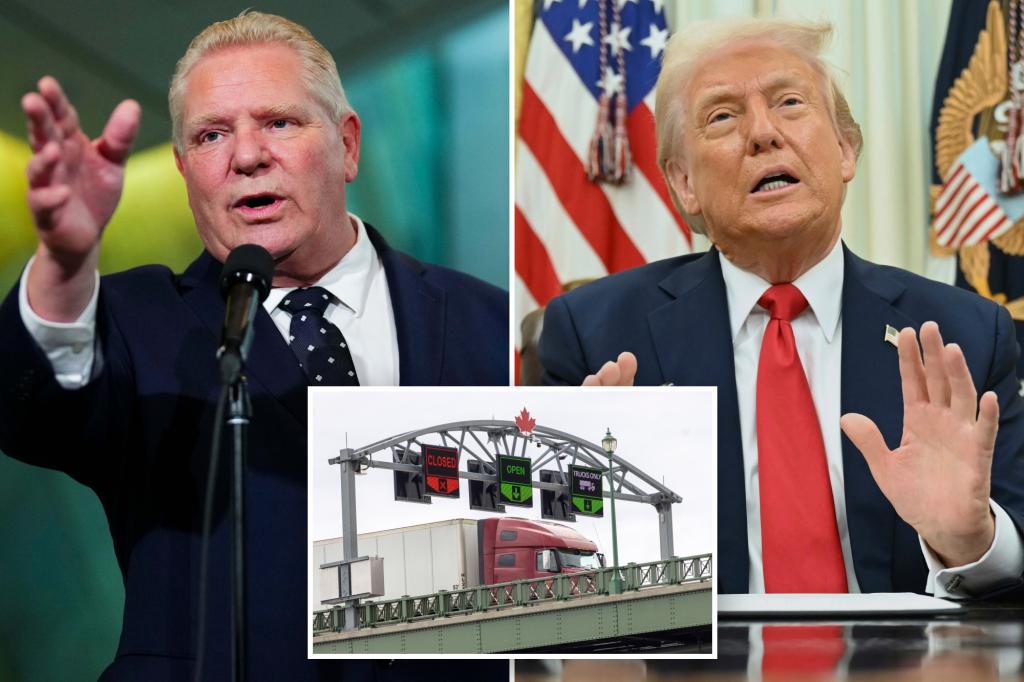
A Bold Bargain: Doug Ford’s Tariff Challenge to President Trump
In a strategic gambit that could redefine North American trade dynamics, Ontario Premier Doug Ford has publicly proposed a mutual elimination of tariffs between Canada and the United States—if President Donald Trump reciprocates. The unexpected overture, made during a press conference in Toronto on Tuesday, comes as both nations grapple with economic uncertainty. Ford framed the proposal as a “win-win” to boost competitiveness, though experts warn the move carries significant political and economic risks.
The Anatomy of Ford’s Proposal
Ford’s three-point plan calls for:
- Immediate suspension of all provincial tariffs on U.S. manufactured goods
- A 24-month trial period for bilateral tariff-free trade
- Creation of a dispute resolution mechanism for sensitive sectors
“When the U.S. sneezes, Canada catches a cold,” Ford stated, citing 2023 trade data showing $721 billion in bilateral exchanges. “This isn’t about surrender—it’s about removing roadblocks so our auto workers, farmers, and tech firms can thrive.”
Economic Implications of Tariff Elimination
Analysis by the C.D. Howe Institute suggests the proposal could:
- Increase Canadian GDP by 1.2-1.8% annually
- Reduce consumer prices on 37% of durable goods
- Potentially cost 14,000 protected-sector jobs without transition plans
Dr. Meredith Caldwell, trade economist at McGill University, cautions: “The devil’s in the details. While manufacturers would benefit, agricultural sectors like dairy could face existential threats without careful safeguards.”
Political Calculus Behind the Move
Observers note Ford’s timing coincides with:
- Upcoming renegotiation of the USMCA’s auto rules of origin
- Mounting pressure from Ontario’s manufacturing lobby
- Trump’s campaign trail promises to revisit trade deals
“This is chess, not checkers,” says political strategist Aaron Loewen. “Ford’s putting Trump in a position where refusal makes America look protectionist ahead of elections.” The White House has yet to respond formally, though Commerce Department insiders suggest skepticism prevails.
Stakeholder Reactions and Industry Impacts
Early responses reveal stark divisions:
- Supporters: Automotive Parts Manufacturers’ Association cites potential 8% production cost reductions
- Opponents: Canadian Steel Producers warn of “flooded markets” without anti-dumping measures
Notably, the proposal excludes aluminum—a concession to Quebec’s influential mining sector. “Selective liberalization creates its own distortions,” notes trade lawyer Priya Singh. “You can’t have frictionless trade while cherry-picking exemptions.”
Historical Context and Precedents
This isn’t Canada’s first tariff gambit:
- 1987: Mulroney negotiated auto tariff phaseouts under FTA
- 2018: Trudeau imposed retaliatory tariffs during steel disputes
However, Ford’s approach breaks tradition by bypassing federal channels. “Provinces don’t normally conduct foreign trade policy,” remarks former diplomat Claude Bennett. “This could set problematic precedents for federal-provincial relations.”
What Comes Next in the Tariff Standoff?
Key developments to watch:
- USTR’s 30-day review period for unsolicited proposals
- Potential alignment with ongoing USMCA “sunset clause” discussions
- Reaction from other provinces fearing domino effects
As the global economy faces mounting protectionism, Ford’s high-stakes proposal tests whether North American partners can rewrite the rules of engagement. “The ball’s in Trump’s court now,” concludes Caldwell. “But with midterms looming, economic nationalism may trump free trade logic.”
For ongoing coverage of this developing story, subscribe to our trade policy newsletter or attend our webinar on October 15 featuring former NAFTA negotiators.
See more CCTV News Daily