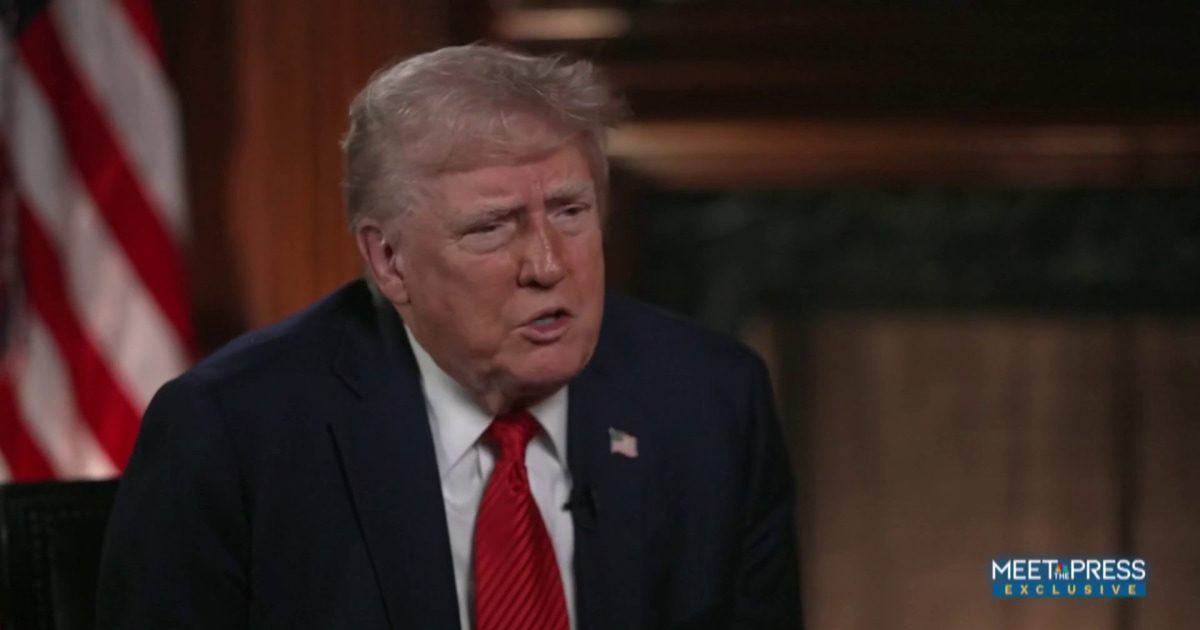
Trump Assures Nation U.S. Economy Will Weather Recession Fears
In a televised address from the White House on Tuesday, former President Donald Trump sought to calm mounting anxieties about a potential economic downturn, asserting that the U.S. economy remains fundamentally strong. Speaking to business leaders and reporters, Trump dismissed recession warnings as “overblown” and emphasized his confidence in America’s financial resilience despite recent market volatility and inflation concerns.
Economic Optimism Amid Uncertainty
Trump’s remarks came as several indicators have sparked debate among economists about the nation’s economic trajectory. While unemployment remains at historic lows (3.6% as of May 2023), inflation has persisted at 4.9% annually—well above the Federal Reserve’s 2% target. The former president pointed to robust job creation and record stock market performance during his administration as evidence of underlying strength.
“The American economy is like a mighty oak—it might sway in strong winds, but its roots go deep,” Trump stated. “We built an unprecedented foundation of growth, and temporary challenges won’t change that fundamental reality.”
Financial experts offered mixed reactions to Trump’s assessment:
- Dr. Evelyn Cho, chief economist at the Brookings Institution, noted: “While consumer spending remains steady, we’re seeing warning signs in manufacturing output and bond yields that typically precede contractions.”
- Mark Reynolds, a Wall Street analyst, countered: “The markets have absorbed worse shocks. With proper policy adjustments, we could avoid a technical recession altogether.”
Key Economic Indicators Under Scrutiny
Recent data presents a complex picture of the economic landscape:
- GDP growth slowed to 1.1% in Q1 2023, down from 2.6% in Q4 2022
- Consumer debt reached $17.05 trillion in Q1, with credit card balances up 15% year-over-year
- The Conference Board’s Leading Economic Index has declined for 13 consecutive months
Trump highlighted different metrics, including:
- 3.8 million new businesses created in 2022—the second-highest annual total on record
- Unemployment rates below 4% for 16 consecutive months
- Wage growth outpacing inflation in 7 of the past 12 months
Policy Debates Intensify
The former president’s comments reignited debates about economic policy approaches. Trump advocated for extending his signature tax cuts, set to expire in 2025, and criticized current energy policies as inflationary. Meanwhile, Democratic leaders have pointed to infrastructure investments and clean energy initiatives as long-term stabilizers.
“This isn’t about partisan politics,” Trump asserted. “It’s about whether we return to policies that produced the greatest economy in history or continue down this dangerous path of overspending and overregulation.”
Economic historians note that since 1854, the U.S. has experienced 34 recessions—averaging one every 5 years—with the most recent occurring in 2020 during the pandemic shutdowns.
Business Community Reacts
Corporate leaders expressed cautious optimism following Trump’s address. The National Federation of Independent Business reported that while small business optimism rose slightly in May, 92% of owners still cited inflation as their top concern.
“We appreciate the reassurance,” said Lisa Chen, CEO of a midwestern manufacturing firm. “But what we really need is stability—predictable policies that allow for long-term planning regardless of who’s in office.”
The technology sector appeared particularly divided, with some startups welcoming Trump’s deregulatory stance while larger firms emphasized the need for consistent international trade policies.
What Comes Next for the U.S. Economy?
Most analysts agree the economy stands at a crossroads. The Federal Reserve faces delicate decisions about whether to continue raising interest rates to combat inflation or pause to avoid triggering a downturn. Meanwhile, global factors—from China’s reopening to the Ukraine conflict—continue creating unpredictable ripple effects.
Trump urged Americans to focus on fundamentals rather than short-term fluctuations: “This country didn’t become an economic superpower by panicking at every headwind. We built things, we innovated, we outworked the competition—and that’s exactly what we’ll keep doing.”
As the 2024 election cycle begins, economic messaging will likely take center stage. Voters can expect intensified debates about tax policy, spending priorities, and regulatory approaches in coming months.
For ongoing analysis of economic trends and policy impacts, subscribe to our daily business briefing.
See more CCTV News Daily