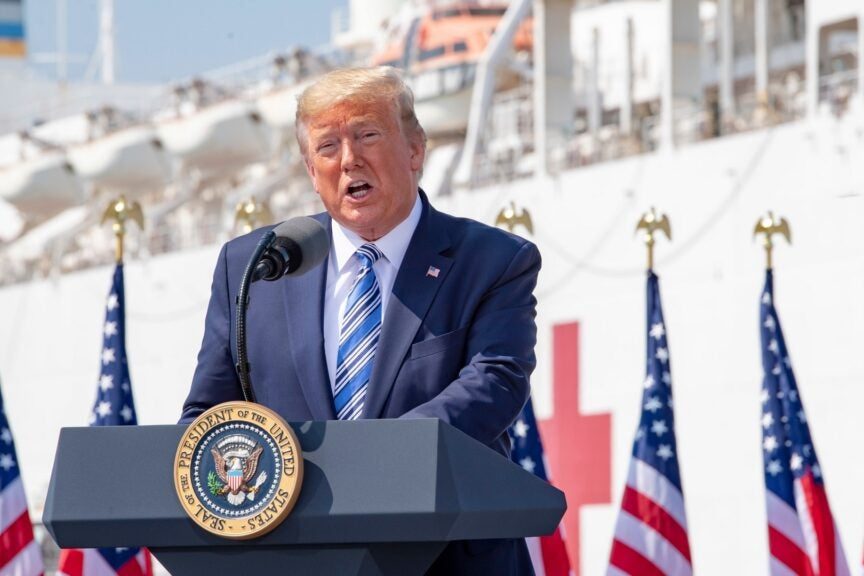
Trump Attributes GDP Decline to Biden Policies While Dismissing Tariff Impact
Former President Donald Trump has squarely blamed President Joe Biden’s economic policies for the recent GDP contraction, asserting that his own trade tariffs had no measurable effect. Speaking at a rally in Michigan on Thursday, Trump framed the 0.9% annualized Q2 decline as direct evidence of Democratic mismanagement, sparking immediate pushback from economists and political opponents. The remarks intensify an ongoing debate about responsibility for economic headwinds as midterm elections approach.
The Political Battle Over Economic Narratives
Trump’s comments represent a strategic effort to reframe the economic conversation amid mixed signals:
- The U.S. economy shrank for two consecutive quarters (Q1 and Q2 2022), meeting a common recession definition
- Unemployment remains at 3.5%, near 50-year lows
- Consumer prices rose 8.5% year-over-year in July
“This isn’t some mysterious downturn—it’s the direct result of Biden killing energy independence, overspending, and choking businesses with regulations,” Trump stated, drawing cheers from supporters. His remarks notably omitted any mention of the 25% tariffs on $250 billion of Chinese imports implemented during his administration, which multiple studies link to reduced GDP growth.
Economic Experts Weigh In on Complex Causes
While political figures trade blame, economists emphasize multifaceted drivers behind the GDP contraction:
“Attributing quarterly GDP movements to any single policy is fundamentally misleading,” said Dr. Alicia Reynolds, senior fellow at the Brookings Institution. “We’re seeing the combined effects of Federal Reserve rate hikes, global supply chain disruptions, the war in Ukraine, and pandemic aftershocks—not to mention lingering trade distortions from previous administrations.”
Data from the Peterson Institute for International Economics suggests Trump’s tariffs reduced U.S. GDP by 0.3% annually between 2018-2021. Meanwhile, a July 2022 Congressional Research Service report found the tariffs contributed to a 0.5% increase in consumer prices—a factor in current inflation.
How Biden Administration Officials Are Responding
White House Press Secretary Karine Jean-Pierre countered Trump’s claims by highlighting recent economic wins:
- 531,000 manufacturing jobs added since 2021
- $52 billion CHIPS Act to boost semiconductor production
- Gas prices falling 20% from June peaks
“The previous administration left behind an inflationary mess that we’re cleaning up while building sustainable growth,” Jean-Pierre stated. Treasury Secretary Janet Yellen has repeatedly argued current economic conditions reflect global rather than domestic factors, pointing to similar slowdowns in Europe and China.
The Tariff Debate: Lasting Impacts on Trade and Growth
Trump’s dismissal of tariff effects contradicts several nonpartisan analyses:
A 2021 International Monetary Fund study estimated U.S. and Chinese tariffs reduced global trade by $455 billion in 2019 alone. Domestic industries reliant on imported materials—particularly manufacturers and farmers—faced estimated losses of $1.4 billion per month due to retaliatory tariffs, according to U.S. Chamber of Commerce data.
“The tariffs absolutely constrained growth,” argued trade analyst Mark Henderson. “They functioned as a regressive tax, raising costs for businesses and consumers while failing to achieve their stated goal of reducing the trade deficit.” The U.S. trade gap with China actually widened by 14% during Trump’s term.
What This Means for Future Economic Policy
The GDP blame game has tangible implications for upcoming policy decisions:
- The Biden administration faces pressure to lift remaining Trump-era tariffs to ease inflation
- Republicans are crafting midterm messaging around economic stewardship
- Federal Reserve must balance inflation control against recession risks
As economist Dr. Reynolds notes, “This debate isn’t just about assigning blame—it’s about choosing between fundamentally different approaches to trade, industrial policy, and fiscal management that will shape the next decade.”
With economists predicting continued volatility, voters will likely hear competing narratives about economic responsibility through November. For those seeking deeper analysis, the nonpartisan Congressional Budget Office provides quarterly economic outlook reports that cut through political rhetoric with data-driven projections.
See more CCTV News Daily