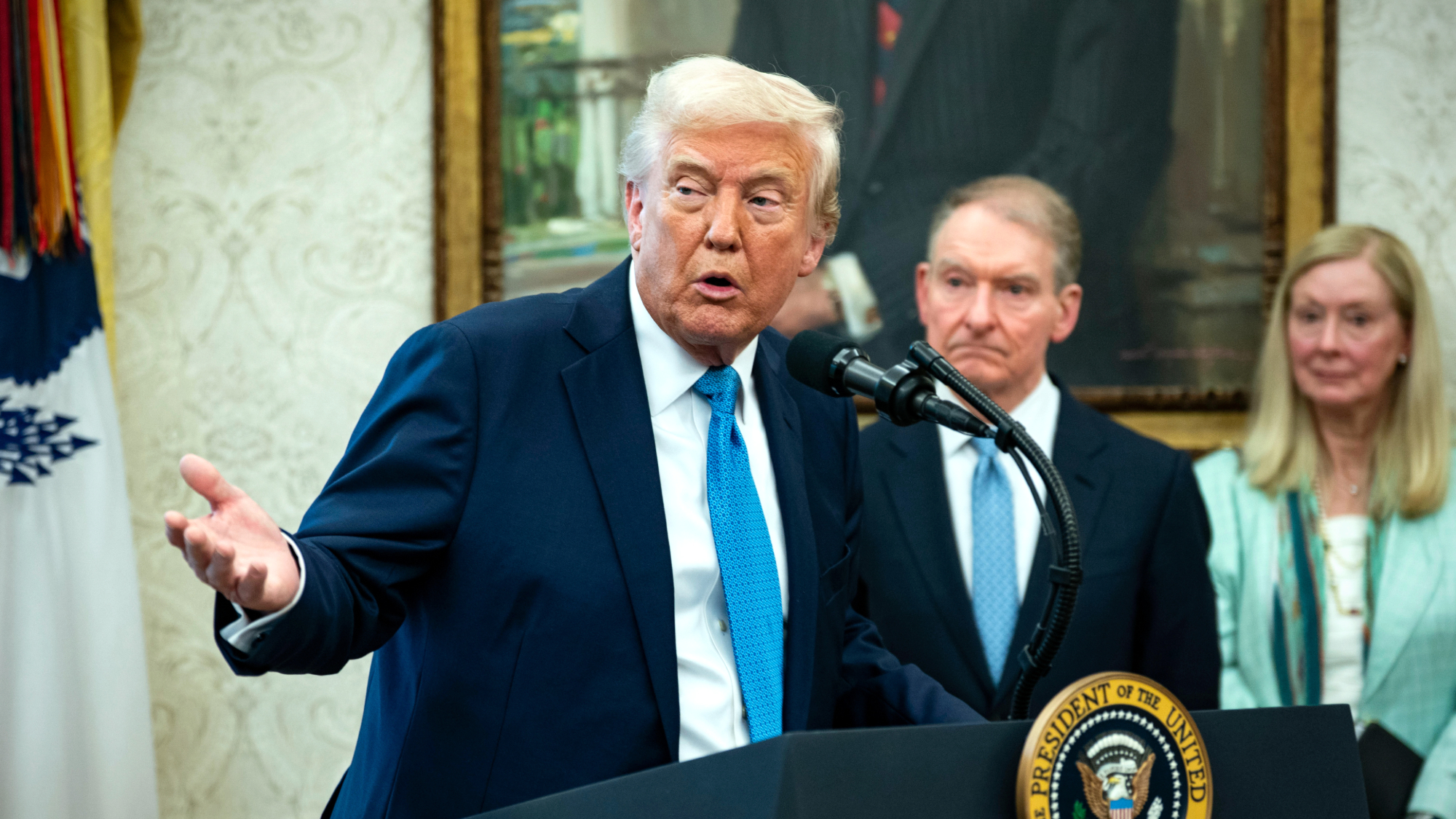
The International Monetary Fund (IMF) has warned of a potential global economic downturn fueled by escalating tariffs, while former U.S. President Donald Trump moved to calm jittery markets. As trade tensions intensify between major economies, analysts predict ripple effects across supply chains, inflation rates, and growth projections for 2024-2025. This development comes amid fragile post-pandemic recovery efforts and geopolitical instability.
IMF Sounds Alarm on Trade War Consequences
The IMF’s latest World Economic Outlook revision shows global growth projections slashed by 0.4 percentage points to 2.7% for 2025, directly attributing this to recent tariff increases. Their research indicates:
- Average global tariffs have risen 18% since 2020
- Trade between the U.S. and China declined 14% year-over-year
- Developing economies face 2.3% higher import costs
“We’re seeing the early warning signs of a protectionist domino effect,” stated IMF Chief Economist Pierre-Olivier Gourinchas. “When major economies erect trade barriers, it triggers retaliatory measures that ultimately shrink the pie for everyone.”
Political Reassurances Clash With Economic Realities
Former President Trump, who proposed across-the-board 10% tariffs during recent campaign speeches, sought to downplay market concerns. “Strong economies aren’t built on free trade fantasies,” he asserted at a Wall Street roundtable. “Strategic tariffs protect jobs and force fair deals.”
However, Federal Reserve data contradicts this optimism. Their June 2024 Financial Stability Report highlights:
- Manufacturing sector confidence at 9-year lows
- 30% of S&P 500 companies citing tariffs as top earnings risk
- Supply chain reorganization costs exceeding $1.2 trillion globally
Sector-Specific Impacts Emerging
The automotive and technology sectors face particularly acute challenges. Tesla’s Q2 earnings call revealed a $400 million tariff-related cost increase, while semiconductor firms report 12-18 month delays in factory relocations. Meanwhile, agricultural exporters grapple with shrinking market access:
- U.S. soybean exports to China down 28% from 2023
- European wine producers facing 35% tariffs in key Asian markets
- Brazilian steel exports to EU declined by 19%
“We’re witnessing the unintended consequences of economic nationalism,” noted Harvard trade economist Dr. Lina Park. “The cure might prove worse than the disease if this continues.”
Market Reactions and Investor Strategies
Financial markets have responded with heightened volatility. The VIX “fear index” spiked 22% in May, while treasury yields fluctuated wildly. Asset managers are adjusting portfolios through:
- Increased allocations to domestic-focused equities
- Commodity futures as inflation hedges
- Short positions on trade-sensitive multinationals
Goldman Sachs analysts project that every 1% increase in global tariff rates could reduce corporate earnings by 2-3%. “The market hates uncertainty more than bad news,” explained Chief Investment Strategist David Kostin. “Right now, we have both in abundance.”
Pathways Through the Trade Policy Maze
Some economists advocate for targeted approaches rather than blanket tariffs. The Peterson Institute proposes:
- Sector-specific trade agreements
- Multilateral dispute resolution mechanisms
- Gradual phase-ins of protectionist measures
Others suggest focusing on domestic competitiveness. “Instead of building walls, we should be building better products,” argued MIT productivity expert Dr. Rajiv Chowdhury. “History shows that innovation, not isolation, drives long-term growth.”
What Comes Next for the Global Economy?
With G20 meetings scheduled for September, all eyes turn to potential diplomatic solutions. Possible scenarios include:
- Limited bilateral agreements to ease specific tensions
- Expanded currency swap lines to stabilize markets
- Coordinated infrastructure investments to boost demand
For businesses and investors, the key will be building resilience through diversification and scenario planning. As the situation evolves, staying informed through credible sources like the IMF’s trade policy tracker becomes essential for navigating these turbulent economic waters.
The coming months will test whether global leaders can balance legitimate economic security concerns with the proven benefits of international cooperation. One thing remains certain: in an interconnected world, no economy sails alone.
See more CCTV News Daily