Global Markets on Edge: Are Recession Fears Driving the Downturn?
As concerns over a potential recession grip investors, global markets are experiencing significant losses. The ongoing turbulence has left many questioning the resilience of economies around the world. This article delves into the factors contributing to this uncertainty and what it could mean for the future of the economy.
Understanding the Current Economic Landscape
The global economy is currently navigating a complex web of challenges. Inflation rates have surged in many regions, driven by supply chain disruptions, increased consumer demand post-pandemic, and geopolitical tensions. These factors have led central banks, notably the Federal Reserve in the United States, to adopt aggressive monetary policies aimed at curbing inflation. While these measures may stabilize prices, they also raise fears that higher interest rates could stifle economic growth, pushing economies closer to recession.
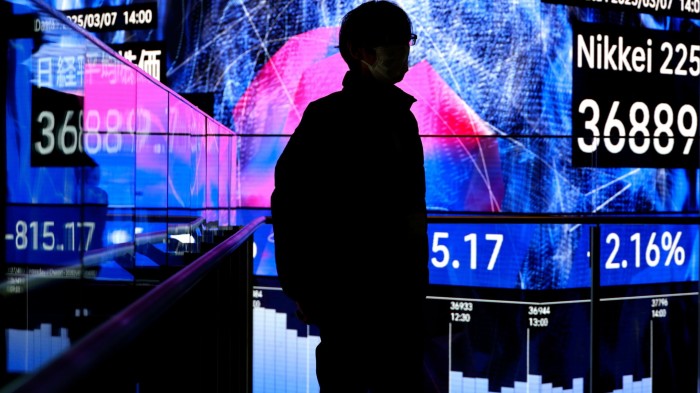
Investors are particularly sensitive to these developments. The stock markets globally have felt the brunt of this anxiety, with indices in major markets like the S&P 500, FTSE 100, and Nikkei 225 showing considerable volatility. As investors weigh the potential for declining corporate earnings against the backdrop of rising costs and uncertainty, many are opting for caution, leading to a sell-off in equities.
The Role of Inflation in Driving Recession Fears
Inflation can be a double-edged sword. While moderate inflation is a sign of a growing economy, excessive inflation can erode purchasing power and lead to a decrease in consumer confidence. In the wake of the COVID-19 pandemic, many economies faced rapid inflation due to pent-up demand and constrained supply chains. This scenario has led to soaring prices in essential goods, including food and energy, which disproportionately affects lower and middle-income households.
As consumers tighten their belts, spending is likely to decrease, which in turn can lead to a slow down in economic activity—a classic precursor to a recession. Economic indicators such as consumer sentiment and retail sales figures are closely monitored by analysts to gauge the health of the economy. A decline in these indicators often sparks fears of a downturn, reinforcing the cycle of pessimism in financial markets.
Geopolitical Tensions and Their Economic Impact
Another layer of complexity is added by geopolitical tensions, most notably the conflict in Ukraine and the rising tensions in Asia-Pacific regions. These geopolitical events have not only led to humanitarian crises but have also disrupted global trade and energy supplies. The sanctions imposed on Russia have caused significant fluctuations in energy prices, leading to inflationary pressures in many countries.
Investors are increasingly aware that geopolitical instability can lead to further economic uncertainty. The potential for escalated conflicts or trade disruptions adds to the volatility of markets, as businesses struggle to predict costs and supply chain logistics. Consequently, this unpredictability can deter investment and consumer spending, further exacerbating recession fears.
Central Bank Policies and Their Effects on Markets
In response to the current economic challenges, central banks worldwide are navigating a fine line. On one hand, they must combat rising inflation through interest rate hikes; on the other, they need to ensure that these measures do not choke off economic growth. The Federal Reserve has been at the forefront of this balancing act, with its recent rate hikes sending ripples through global markets.
Higher interest rates generally lead to increased borrowing costs, which can dampen both consumer spending and business investment. This creates a feedback loop where reduced spending leads to slower economic growth, feeding into recession fears. As central banks signal their intentions to continue tightening monetary policy, markets react with increased volatility, reflecting concerns over future economic prospects.
The Psychological Impact of Recession Fears
The psychology of investors plays a crucial role in market dynamics. When recession fears become pervasive, even the slightest piece of negative news can trigger significant sell-offs. This behavior is often driven by herd mentality, where investors react not solely to fundamentals but also to sentiment and fear. The result is a market that can appear disconnected from economic realities, leading to exaggerated downturns.
Understanding this psychological aspect can be beneficial for investors looking to navigate turbulent waters. Historically, markets have recovered from downturns, often emerging stronger than before. Recognizing that downturns can present buying opportunities rather than just threats is a mindset that can lead to more resilient investment strategies.
What Lies Ahead: A Look at Recovery Prospects
While the current landscape is fraught with challenges, it’s essential to consider the potential for recovery. Economies have demonstrated remarkable resilience in the face of adversity, and there are several indicators that suggest a path forward.
- Adaptation and Innovation: Businesses are adapting to new market realities, embracing technology and innovation to enhance efficiency and reduce costs.
- Supply Chain Recovery: As global supply chains stabilize, the pressure on prices may ease, potentially leading to a reduction in inflation.
- Consumer Resilience: Despite current challenges, consumer spending remains robust in many regions, suggesting a willingness to engage with the economy.
Moreover, central banks are well aware of the risks associated with aggressive tightening and are likely to adjust their policies based on economic data. This flexibility could mitigate the risk of a prolonged downturn.
As global markets remain on edge, the interplay of recession fears, inflation, geopolitical tensions, and central bank policies creates a challenging environment for investors and consumers alike. However, it is essential to approach the situation with a balanced perspective. While the fears driving the downturn are valid, history has shown that economies can and do recover.
By staying informed, adapting strategies, and maintaining a long-term view, investors can navigate these tumultuous times. In an ever-changing landscape, resilience and optimism may well be the keys to weathering the storm and emerging stronger on the other side.
See more CCTV News Daily