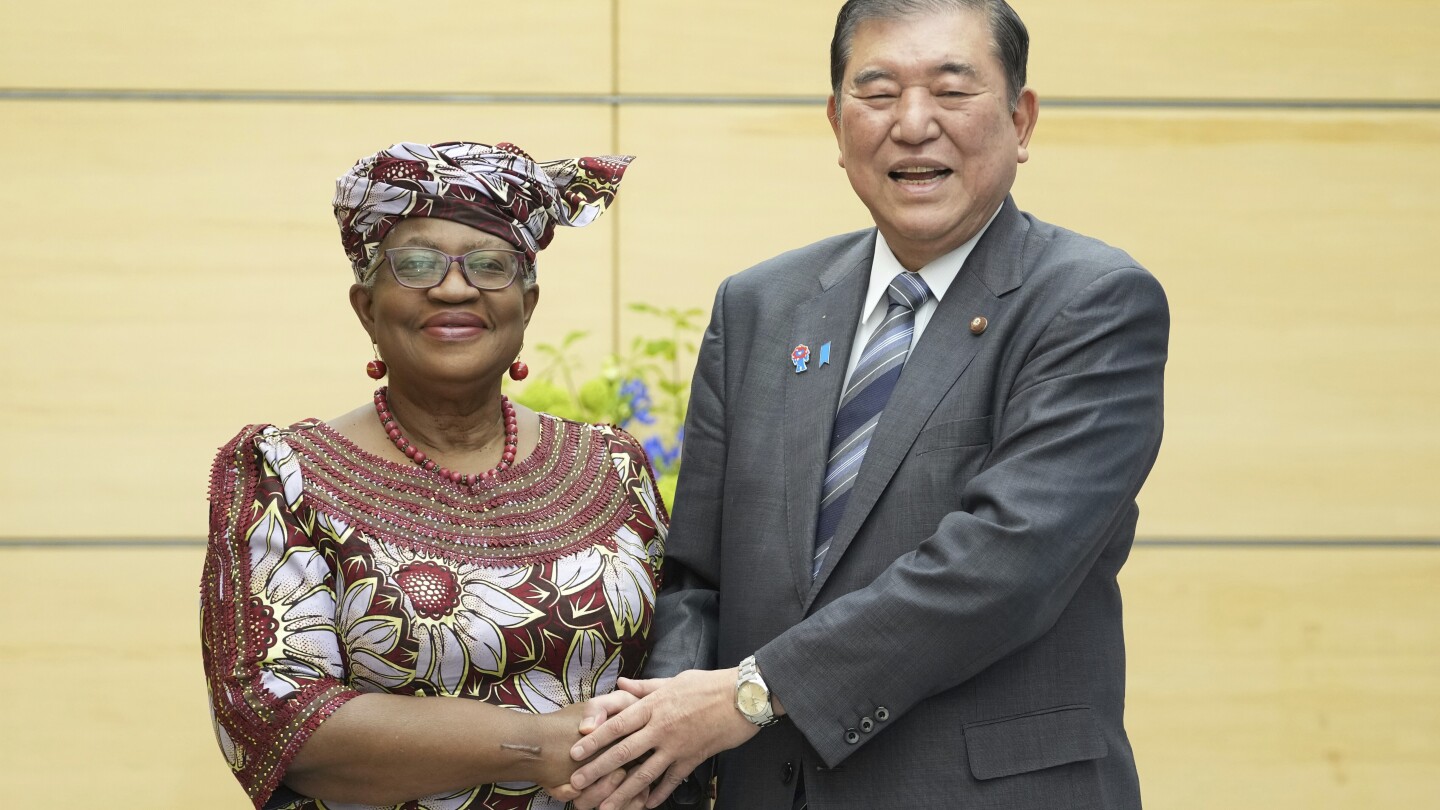
Global Free Trade Faces Unprecedented Crisis, Warns WTO Chief in Japan
The head of the World Trade Organization (WTO) sounded the alarm on the deteriorating state of global free trade during a high-stakes visit to Tokyo this week. Director-General Ngozi Okonjo-Iweala described the current environment as an “unprecedented crisis” fueled by escalating protectionism, geopolitical tensions, and economic fragmentation. Her warning comes as global trade growth is projected to slow to just 1.7% in 2023—the weakest performance outside recession periods in decades.
Protectionist Policies Reach Record Levels
Recent WTO data reveals a disturbing trend: over 3,000 trade-restrictive measures were implemented by G20 nations between 2009-2022, with 40% introduced since 2020 alone. “We’re witnessing the most severe erosion of multilateral trade principles since the WTO’s founding,” Okonjo-Iweala stated during her keynote at the Japan External Trade Organization symposium. “The cumulative effect of subsidies, export bans, and localization requirements could reduce global GDP by 5% long-term.”
The numbers paint a stark picture:
- Global goods trade volume declined 0.4% Q1 2023 (WTO Trade Barometer)
- Foreign direct investment flows dropped 12% in 2022 (UNCTAD)
- Over 75% of corporations report supply chain disruptions due to trade barriers (McKinsey survey)
Geopolitical Fault Lines Deepen Trade Rifts
The WTO chief’s Japan visit highlighted Asia’s pivotal role in the crisis. While Tokyo maintains relatively open markets, the region faces mounting pressures from U.S.-China decoupling and the Indo-Pacific Economic Framework’s evolving rules. “Great power competition is rewriting trade relationships,” noted Dr. Kenichi Kawasaki, senior fellow at the Tokyo Foundation for Policy Research. “Middle powers like Japan face impossible choices between economic efficiency and national security.”
Critical sectors demonstrate this fragmentation:
- Semiconductor trade restrictions increased 300% since 2021
- Rare earth elements now face 47 separate export control regimes
- Renewable energy components subject to 28% average tariff hikes
Economic Consequences of Deglobalization
Okonjo-Iweala emphasized that developing nations bear disproportionate costs. Food import bills hit $1.94 trillion in 2022—a 10% increase despite lower volumes—as 36 countries maintained grain export restrictions. “When major economies retreat from rules-based trade, vulnerable populations starve,” she told reporters after meeting with Japanese PM Fumio Kishida.
Corporate Sector Sounds the Alarm
Multinational executives echo these concerns. “Our just-in-time supply chains can’t adapt to this new era of trade walls,” said Hiroaki Nakanishi, chairman of Keidanren’s Trade Committee. A recent Nikkei survey found 68% of Japanese manufacturers have delayed investments due to uncertainty over trade rules.
The automotive industry exemplifies these challenges:
- EV battery production costs rose 22% under new localization rules
- Cross-border auto parts shipments down 15% year-over-year
- Average compliance costs per vehicle up $1,200 since 2020
Pathways to Trade System Reform
Despite the bleak outlook, the WTO chief outlined potential solutions during her Japan visit. She praised Tokyo’s leadership in advancing the Joint Statement Initiative on e-commerce, which now covers 90% of global digital trade. “Plurilateral agreements may offer temporary bridges while we rebuild multilateral consensus,” Okonjo-Iweala suggested.
Three Critical Areas for Action
Experts identify key priorities to stabilize global trade:
- Dispute Settlement Reform: Restoring the WTO Appellate Body by 2024 remains crucial
- Supply Chain Transparency: Japan’s “friend-shoring” model shows promise
- Green Trade Incentives: Aligning climate goals with trade rules could unlock $1.9 trillion in clean tech investment
As the G7 prepares to meet in Hiroshima next month, trade ministers face mounting pressure to act. “The alternative to cooperation isn’t sovereignty—it’s collective impoverishment,” warned former WTO deputy director-general Yonov Frederick Agah during a parallel Tokyo symposium.
What Comes Next for Global Commerce?
The WTO forecasts two possible scenarios by 2025: a return to 3.2% annual trade growth if cooperation improves, or stagnation below 1% if fragmentation accelerates. With Japan hosting both G7 and APEC summits this year, analysts suggest Tokyo could broker crucial compromises.
Business leaders urge immediate confidence-building measures:
- Moratorium on new digital trade barriers
- Emergency food trade corridor agreements
- Standardized green export credit mechanisms
As Okonjo-Iweala departed Tokyo, she left policymakers with a sobering reminder: “Trade isn’t the wind in our sails—it’s the ocean beneath our ships. When those waters divide, every vessel suffers.” The coming months will test whether major economies can bridge their differences before the currents pull them further apart.
For ongoing coverage of global trade developments, subscribe to our policy briefing series or attend our upcoming webinar on supply chain resilience strategies.
See more CCTV News Daily