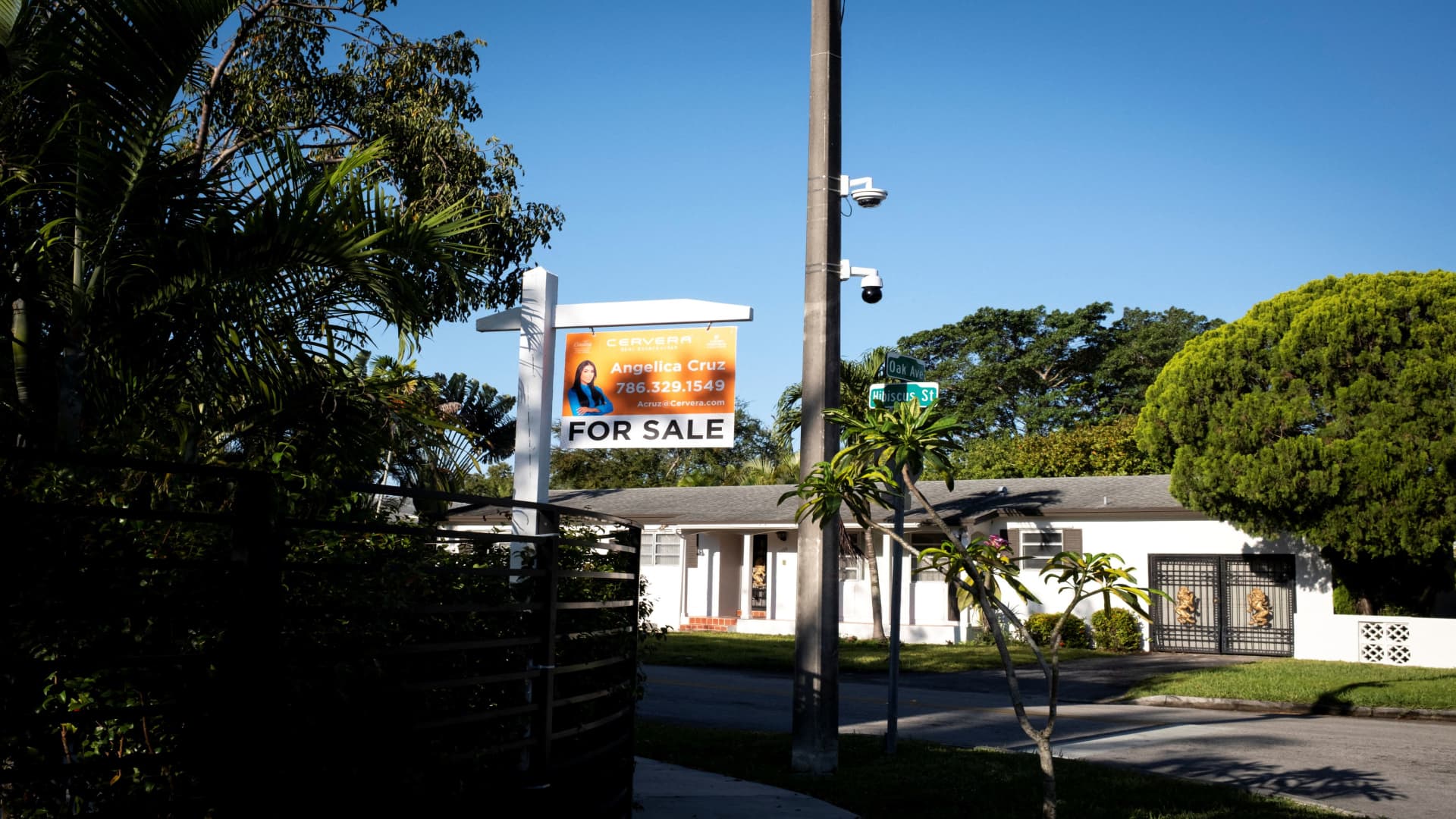
March Home Sales Plummet to Lowest Levels Since 2009
U.S. home sales plunged in March to their slowest pace in over a decade, according to new data from the National Association of Realtors (NAR). The 4.3% monthly decline marks the sharpest year-over-year drop since the housing market crash of 2009, with only 4.19 million units sold. Economists point to soaring mortgage rates, inflated home prices, and economic uncertainty as key factors chilling buyer demand.
Historic Decline Signals Market Shift
The March sales figures represent a 22% decrease from the same period last year, shattering expectations of a gradual market cooldown. This marks the ninth consecutive month of declining sales—the longest streak since 1999. The median existing-home price dipped slightly to $375,700 but remains 30% higher than pre-pandemic levels, creating what analysts call an “affordability crisis.”
“We’re witnessing a perfect storm of unfavorable conditions,” said Dr. Lila Chen, chief economist at the Urban Policy Institute. “With 30-year fixed mortgage rates hovering near 6.5%—more than double 2021 lows—many first-time buyers are being priced out entirely. Even move-up buyers are hesitating due to fears of economic instability.”
Key Factors Driving the Downturn
Three primary forces are reshaping the housing landscape:
- Mortgage Rate Surge: Freddie Mac data shows average rates jumped from 3.76% in January 2022 to 6.54% in March 2023
- Inventory Shortages: Active listings remain 43% below 2019 levels, per Realtor.com
- Economic Uncertainty: Banking sector turmoil and recession fears have made lenders more cautious
Regional disparities reveal deeper complexities. The Northeast saw the steepest decline at 8.7%, while the Midwest proved most resilient with only a 2.9% drop. Luxury markets like San Francisco and Austin experienced 35-40% fewer sales compared to 2022 peaks.
Industry Experts Divided on Recovery Timeline
While most analysts agree the downturn will continue through Q2, opinions diverge on long-term projections. NAR Chief Economist Lawrence Yun maintains optimism: “We’re seeing early signs of price adjustments, particularly in overheated markets. If inflation continues easing, we could see moderate recovery by fall.”
Contrasting this view, Goldman Sachs researchers predict a 20% chance of “full-blown housing correction,” noting that price-to-income ratios remain 28% above historical averages. Their April report warns: “The era of pandemic-driven buying frenzy is unequivocally over.”
First-Time Buyers Face Greatest Challenges
New NAR data reveals first-time buyers accounted for just 28% of March sales—the lowest share since 2014. Rising rents (up 15% nationally since 2021) make saving for down payments increasingly difficult. Construction bottlenecks exacerbate the problem, with housing starts down 17% year-over-year.
“My clients are making impossible choices,” said Marisol Gutierrez, a Chicago-based realtor. “Many are delaying purchases indefinitely or considering relocating to more affordable states. The dream of homeownership is slipping away for an entire generation.”
What This Means for the Broader Economy
The housing slump is creating ripple effects across sectors:
- Home improvement retailers report declining sales as fewer owners invest in properties
- Mortgage lenders have laid off over 60,000 workers since mid-2022
- Local governments face budget shortfalls from lower property transfer taxes
Federal Reserve Chair Jerome Powell acknowledged the housing market’s role in inflation control during April testimony, stating: “Cooling demand helps rebalance prices, but we remain vigilant about avoiding overshooting.”
For prospective buyers, experts recommend:
- Exploring FHA or VA loan programs with lower down payment requirements
- Considering emerging markets like Buffalo or Birmingham with better affordability
- Negotiating seller concessions like rate buydowns or closing cost assistance
As the spring buying season progresses, all eyes will be on April data for signs of stabilization. While some economists predict a “new normal” of slower sales at moderated prices, others warn of potential cascading effects if the downturn deepens. For now, the American housing market remains at a crossroads between correction and crisis.
Want to understand how these trends affect your local market? Consult our interactive regional housing tracker for customized insights.
See more CCTV News Daily