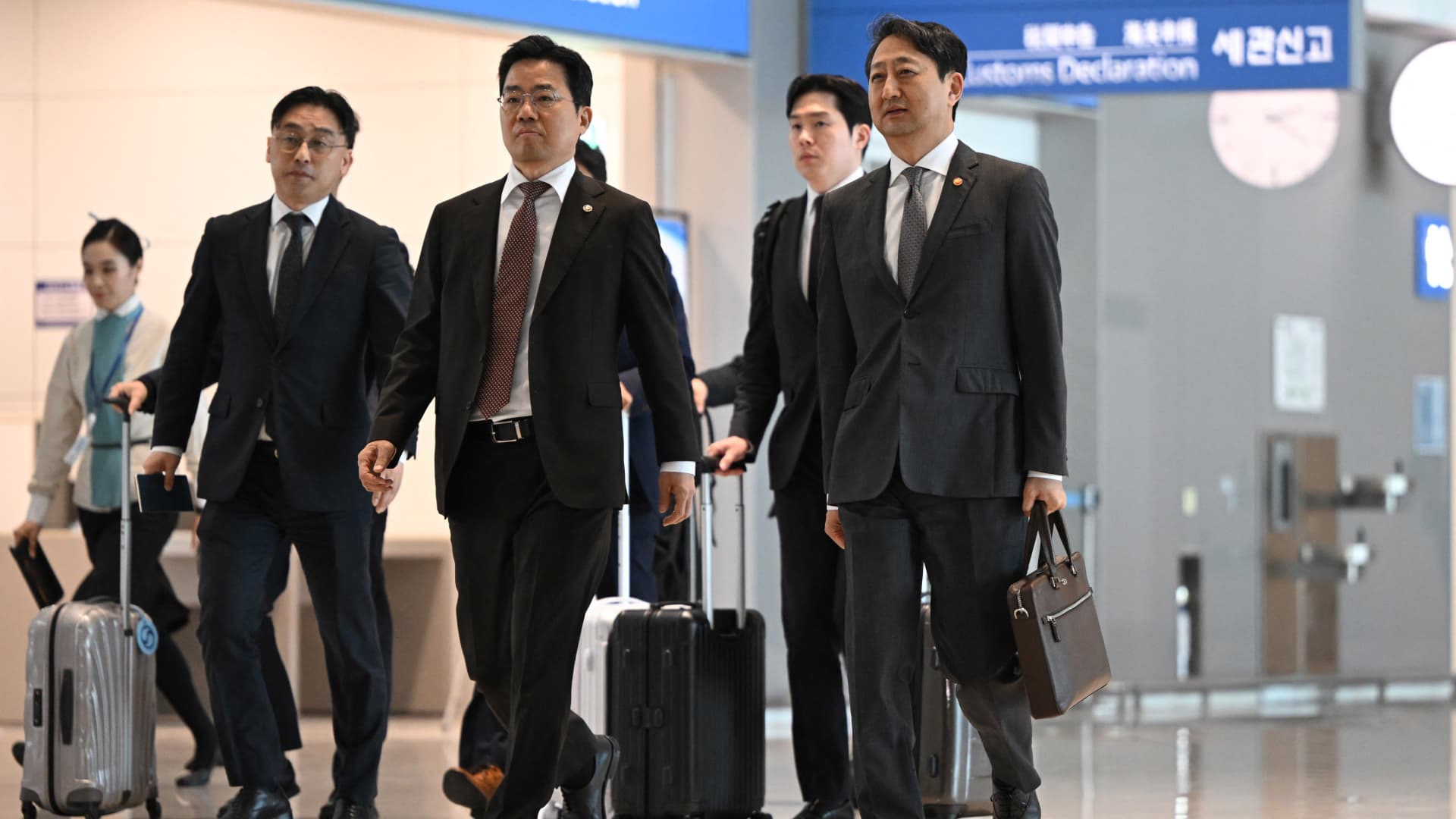
South Korean trade officials are urging restraint as negotiations with the United States over contentious tariffs enter a critical phase. With a potential deal on the horizon by early July, both nations face mounting pressure to resolve disputes affecting billions in bilateral trade. The outcome could reshape economic ties between the two allies amid global supply chain uncertainties.
The Stakes of the Bilateral Trade Talks
At the heart of the discussions lies Section 232 tariffs—25% on steel and 10% on aluminum—imposed by the U.S. in 2018. South Korea, the third-largest steel exporter to America, shipped $4.2 billion worth of steel products in 2022 despite these measures. However, industry analysts estimate the tariffs have cost Korean manufacturers nearly $1.8 billion annually in lost revenue.
“This isn’t just about metals—it’s about preserving a 70-year economic partnership,” said Dr. Min-ji Park, trade policy fellow at the Seoul-based Korea Economic Research Institute. “Both sides recognize the strategic importance of finding common ground, especially with China’s industrial overcapacity looming over global markets.”
Recent data underscores the delicate balance:
- U.S.-South Korea trade totaled $184 billion in 2022
- Automobiles and semiconductors account for 58% of Korean exports to America
- The U.S. maintains a $40 billion trade deficit with South Korea
Behind the Scenes: Diplomatic Maneuvering
Insiders reveal that negotiators have been working through three primary channels:
- Technical discussions through the U.S. Trade Representative’s office
- High-level dialogues between commerce ministries
- Backchannel communications facilitated by Korean conglomerates with U.S. operations
“We’re cautiously optimistic,” stated a senior Korean trade official speaking anonymously due to negotiation sensitivities. “The Biden administration understands our concerns about export competitiveness, but they’re equally focused on protecting domestic industries ahead of the election cycle.”
Economic and Political Crosscurrents
The negotiations occur against a complex backdrop. While South Korea seeks tariff relief to maintain its export-driven economy, U.S. officials face pressure from labor unions and manufacturers in key swing states. The United Steelworkers union recently petitioned the White House to maintain the tariffs, citing “ongoing threats to American industrial base.”
Professor Aaron Goldstein of Georgetown University’s School of Foreign Service observes: “This is classic trade diplomacy—balancing economic realities with political necessities. The July timeline suggests both sides want resolution before campaign seasons intensify.”
Industry Reactions and Contingency Plans
Major Korean firms have begun preparing for multiple scenarios:
- POSCO has diversified production to Vietnam and Mexico
- Hyundai accelerated its $5.5 billion EV plant in Georgia
- Samsung plans increased semiconductor investment in Texas
These moves reflect what analysts call “the Trump effect”—business strategies accounting for potential policy shifts regardless of negotiation outcomes. “Companies learned from the 2018 tariffs that relying solely on diplomatic solutions carries risks,” noted supply chain expert Rachel Kim.
The Path Forward and Global Implications
As the July deadline approaches, several potential outcomes have emerged:
- Comprehensive agreement: Phased tariff reduction tied to Korean investment in U.S. manufacturing
- Partial deal: Sector-specific exemptions for critical industries like electric vehicles
- Status quo extension: Temporary rollover of current arrangements
The negotiations carry significance beyond bilateral trade. A successful resolution could establish a template for U.S. dealings with other Asian allies, while failure might encourage more countries to bypass Washington through alternative trade pacts.
What Comes Next in the Trade Negotiations?
With three weeks remaining before the target deadline, observers should watch for:
- Statements from USTR Katherine Tai following the next negotiation round
- Movement on the Korea-U.S. Critical Minerals Agreement
- Reactions from U.S. automakers dependent on Korean battery components
As the global economy faces potential recessionary winds, these talks represent more than routine trade adjustments—they’re a test of economic alliance management in an era of geopolitical uncertainty. Businesses and policymakers alike would do well to monitor developments closely.
For ongoing coverage of international trade developments, subscribe to our policy briefing newsletter.
See more CCTV News Daily